Minoxidil
In brief
- In pharmacies in Australia, minoxidil is often available without a prescription for topical use (for example, 2% and 5% solutions or foams for hair loss). Oral minoxidil is prescription-only.
- Minoxidil is used to treat androgenetic alopecia (pattern hair loss) and, in oral form, severe hypertension. It works by widening blood vessels and improving blood flow; when used on the scalp, it helps prolong the hair growth phase and may stimulate new hair growth.
- The usual dose for hair loss is topical minoxidil 2% or 5%, applied as 1 mL to the scalp once or twice daily, depending on the product and sex. Oral doses are usually 2.5 mg to 10 mg daily only under medical supervision.
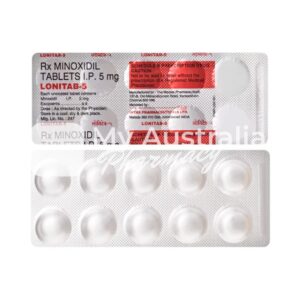
- The form of administration is a topical solution, foam, lotion or gel for hair loss; tablets are used orally for hypertension.
- It may start to work in about 2 to 4 months, although some people notice early shedding before improvement.
- The effect lasts only while you keep using it; continuous treatment is usually needed to maintain results.
- There is no strict alcohol warning for topical minoxidil, but alcohol can worsen dizziness or low blood pressure, especially with oral minoxidil, so limit alcohol and avoid heavy drinking if using the oral form.
- The most common side effects are scalp irritation, itching, dryness or flaking, and temporary increased hair shedding; less commonly, unwanted body hair growth, dizziness, swelling, or a fast heartbeat can occur.
- Would you like to try minoxidil without a prescription?
Basic Minoxidil Information
- INN (International Nonproprietary Name): Minoxidil
- Brand names available in Australia: Rogaine, Regaine, Alocutan
- ATC Code: D11AX01
- Forms & dosages: Topical solution or foam 2%, 3%, 5%, 7.5%; oral tablets 2.5 mg, 5 mg, 10 mg; topical gel or lotion 5%, 10%
- Manufacturers in Australia: Not specified
- Registration status in Australia: Topical minoxidil is pharmacy-based or OTC in many markets; oral minoxidil is prescription only
- OTC / Rx classification: Topical minoxidil is pharmacy/OTC depending on product; oral minoxidil is Rx only
Latest Research Findings In Europe: What Minoxidil Actually Does
People usually ask one simple question first: does minoxidil really work, or is it just another hair-loss product on a crowded shelf?
In European pharmacy practice, including Austrian settings, topical minoxidil remains the best-established first-line treatment for androgenetic alopecia.
It sits in the dermatological ATC group as D11AX01, which reinforces that it is recognised as a real medicinal treatment rather than a cosmetic add-on.
Topical minoxidil is widely registered across the EU for hair loss, while oral minoxidil tablets at 2.5 mg, 5 mg, and 10 mg are primarily used for hypertension and are generally prescription only.
That matters because the evidence base is strongest for minoxidil topical use on the scalp, not for self-started oral hair regrowth treatment.
Patent expiry has also driven generic competition, so patients now see Regaine, Rogaine, and multiple minoxidil generic products in pharmacies and e-shops.
The practical takeaway is straightforward: minoxidil can support hair regrowth, but it works best when used continuously and early enough in the course of androgenetic alopecia.
| Form | What The Evidence Supports | What It Does Not Support | Austrian Availability |
|---|---|---|---|
| Topical solution / foam | First-line therapy for androgenetic alopecia and slowed progression | Guaranteed full regrowth or permanent cure | Widely available via pharmacies and e-shops |
| Oral tablets | Approved for hypertension; specialist-led off-label use exists | Routine self-treatment for hair loss | Prescription only |
| Topical gel / lotion | Hair-loss use in some markets | Superior outcomes compared with standard topical minoxidil | Less common |
In real-world use, initial results are usually seen in 2 to 4 months, the peak effect is often around 12 months, and ongoing use is needed to keep the result.
Clinical Effectiveness In Austrian Patients: Realistic Outcomes And Adherence
What should a patient in Vienna, Graz, or a smaller regional town actually expect after starting hair loss treatment?
Most people notice less shedding first, then some improvement in density, and sometimes slower thinning rather than dramatic new hair growth.
That is why clinicians frame minoxidil for hair loss as a stabilising treatment as much as a hair regrowth treatment.
Continuous treatment is required to maintain gains, and early discontinuation is one of the common reasons people say it “didn’t work”.
In practice, adherence can be affected by cost sensitivity, irritation, and the temptation to stop once the first short-term shedding phase appears.
That shedding phase can be unsettling, but it is not always treatment failure, because old hairs can shift out as the follicle cycle changes.
A pharmacist’s counselling makes a real difference here, especially when someone is buying over-the-counter hair regrowth products and wants quick answers at the counter.
Oral medicines, by contrast, often move through e-card-linked prescription workflows, so the pharmacy can also help with medication review and follow-up.
- Regrowth
- Visible improvement in hair density or coverage.
- Maintenance
- Keeping the hair you have and preventing faster loss.
- Stabilisation
- Slowing progression so the pattern does not worsen as quickly.
Data highlight: A temporary increase in shedding is common early on, especially in the first weeks, and it does not automatically mean minoxidil is not working.
Indications And Expanded Uses: Approved, Common, And Off-Label
Which product should a patient actually choose, and when does oral minoxidil become a bad idea?
The main approved indication is androgenetic alopecia, and topical minoxidil is the standard option for both men and women.
Within the product data, 2% is often used for women, while 5% is mainly used for men, although some women’s products and situations also use 5%.
Oral minoxidil tablets at 2.5 mg, 5 mg, and 10 mg are intended for hypertension, and off-label use for hair loss is growing but remains non-standard in many places.
That means Austrian pharmacy counselling should steer patients away from self-starting oral minoxidil for hair loss without specialist oversight.
Global brands such as Rogaine and Regaine show how the same active ingredient can be presented differently for men’s and women’s routines.
| Indication | Form | Approval Status In Austria / EU | Key Cautions |
|---|---|---|---|
| Androgenetic alopecia | Topical solution / foam | Commonly registered and used | Scalp irritation and initial shedding can occur |
| Hypertension | Oral tablets | Prescription only | Blood pressure monitoring is needed |
| Off-label hair loss use | Oral tablets | Not standard | Specialist supervision required |
For most shoppers, the safest starting point is still a topical hair loss treatment that fits into a daily routine.
Composition And Brand Overview In Austria: What Patients Actually Buy
When someone walks into an Austrian pharmacy or browses online, what ends up in the basket is usually a topical solution or foam, not a complex prescription product.
The active ingredient is minoxidil, and the most common presentations are 60 ml bottles or foam cans.
Alocutan is the most relevant Austria-linked example in the supplied product data, with 2% and 5% solution packs often in 60 ml format.
Regaine is familiar across Europe, while Rogaine is the better-known international name, and both are often sold in solution and foam versions.
The patent has expired, so minoxidil generic products are common and buyers often compare the brand, pack size, and minoxidil price before choosing.
That is especially true for people who expect long-term use and want a product they can afford month after month.
| Brand | Form | Market Relevance In Austria |
|---|---|---|
| Regaine | Solution / foam, 2% and 5% | Well recognised in Europe |
| Rogaine | Solution / foam, 2% and 5% | Internationally familiar |
| Alocutan | Solution, often 20 mg/ml in 60 ml | Austrian-relevant example |
| Minoxidil generic | Solution or foam | Common after patent expiry |
For many buyers, the real decision is not brand prestige but which minoxidil solution or foam best suits their scalp and budget.
Contraindications And Precautions: Who Should Be Careful
Before starting treatment, the key question is not just “does it work?” but “is it safe for me?”
Known hypersensitivity to minoxidil or excipients is an absolute contraindication.
For topical use, severe scalp eczema or psoriasis is also a major concern because irritated skin can react badly and may absorb more product.
For oral use, pheochromocytoma or severe heart disease is a clear contraindication.
- Absolute contraindication
- A situation where the medicine should not be used.
- Relative contraindication
- A situation where use may be possible, but only with monitoring.
- Monitoring needed
- Regular review of symptoms, blood pressure, and any side effects.
Pregnancy, breastfeeding, cardiovascular disease, renal or hepatic dysfunction, older age, and childhood use all require extra caution.
Patients with heart symptoms should not rely on self-diagnosis, and any oral use should stay within prescription care through E-Medikation and pharmacy review.
If dizziness, faintness, or hypotension occurs, driving and safety-sensitive work should be reconsidered until the problem is assessed.
Dosing Guidelines In Austria: Topical Use, Oral Use, And Mistakes To Avoid
How much should be used, and what is the most common dosing error?
The usual topical dose for men is 5% solution or foam, 1 ml, twice daily to the scalp.
For women, the standard starting point is often 2% solution or foam once or twice daily, with some products using 5% in selected situations.
Oral tablets at 2.5 mg, 5 mg, and 10 mg are for hypertension under doctor supervision, not routine hair loss use.
| Form | Usual Dose | Timing | Supervision |
|---|---|---|---|
| Topical solution / foam, men | 1 ml of 5% | Twice daily | Pharmacist advice helpful |
| Topical solution / foam, women | 2% or sometimes 5% | Once or twice daily | Pharmacist advice helpful |
| Oral tablets | 2.5 mg to 10 mg | As prescribed | Doctor only |
Apply to a dry scalp, do not double doses, and remember that continuous use is needed to keep results.
Initial changes are usually seen after 2 to 4 months, and the peak effect is often reached by 12 months.
That is why pharmacists often spend time explaining application technique when a customer buys in person or through an online pharmacy.
Interactions And Absorption: Alcohol, Medicines, And Practical Austrian Counselling
Topical minoxidil has fewer interaction concerns than oral minoxidil, but oral treatment can interact with blood pressure management and make dizziness worse.
Alcohol can make light-headedness more noticeable in sensitive users, and caffeine may make palpitations easier to feel.
Overdose with oral minoxidil can cause severe hypotension and tachycardia, so urgent medical attention is needed if that ever occurs.
For topical use, overdose is usually handled by washing the area with water and seeking advice if systemic symptoms appear.
- Red flag symptoms: dizziness, fainting, swelling, palpitations, or a very fast heartbeat.
- When to seek help: symptoms that are severe, persistent, or affect daily function.
- Medication review matters: antihypertensives and other cardiovascular medicines should be checked carefully.
E-Medikation helps pharmacists and prescribers identify concurrent medicines more reliably, which is especially useful for patients already taking blood pressure treatment.
Cultural And Patient-Centred Factors In Austria: How People Really Use Minoxidil
Australians do not all shop the same way, and Austrian patients are similar in that urban and rural access shapes how minoxidil gets used.
In city areas, chain pharmacies and independent Apotheken are easy to reach, while rural patients may rely more on online ordering or cross-border shopping.
Benu, dm pharmacy counters, and independent pharmacies can all play a role in counselling and supply, depending on location.
Price comparison is common, especially for a treatment that may need to be used for months or years.
On health forums, the recurring questions are usually the same: why is there irritation, why does shedding happen, is the cost worth it, and do you need a prescription.
| Patient Concern | Cultural Factor | Pharmacist Response |
|---|---|---|
| “It stings my scalp.” | Sensitive skin and frequent washing habits | Review application, product type, and scalp condition |
| “Why is my hair shedding more?” | Low tolerance for early setbacks | Explain the early shedding phase |
| “Is it worth the price?” | Cost sensitivity and long-term use | Compare pack size, brand, and generic options |
| “Do I need a prescription?” | Different rules for scalp and oral products | Clarify OTC topical versus Rx oral use |
In our online pharmacy, minoxidil is available without a prescription, with discreet delivery to Australia in 5 to 14 days.
Availability And Price In Austria: OTC Reality, Pharmacy Channels, And Reimbursement
What is actually available at the counter, and what does the system pay for?
Topical minoxidil is generally pharmacy-dispensed or OTC in much of the EU context, while oral minoxidil is rezeptpflicht.
That split matters because the Österreichische Apothekerkammer framework, local price regulation, and social insurance norms all affect what people can buy and whether it is reimbursed.
Cosmetic hair-loss treatment is often not reimbursed, so patients usually pay privately.
Pack size also matters, with 60 ml bottles being common and foam often sold in aerosol cans.
| Channel | Access | Price And Availability Notes |
|---|---|---|
| Independent pharmacy | Pharmacist counselling available | Strong for advice and follow-up |
| Chain pharmacy | Broad retail access | Useful for quick comparison |
| dm pharmacy counter | Retail-oriented access | Selection may vary by location |
| Online pharmacy | Convenient ordering | Good for discreet repeat supply |
| Cross-border purchase | Possible for price shoppers | Availability varies by formulation |
For long-term therapy, consistency matters more than chasing the cheapest box once.
Comparable Medicines And Preferences: How Minoxidil Fits In Austrian Treatment Choices
Patients often compare minoxidil with finasteride, dutasteride, alfatradiol, and in some women, spironolactone used off-label.
The main trade-off is simple: minoxidil is non-hormonal and broadly accessible, while finasteride may be more potent for some men but is prescription only and has different side-effect considerations.
That is why many Austrians like a treatment that fits a normal self-care routine and can be bought from the pharmacy without a specialist appointment.
| Medicine | Mechanism | Prescription Status In Austria | Main Limitation |
|---|---|---|---|
| Minoxidil | Topical hair regrowth support | Topical often pharmacy/OTC; oral Rx only | Needs continuous use |
| Finasteride / Propecia | Oral anti-androgen | Rx only | Different side-effect profile |
| Dutasteride | Oral anti-androgen | Rx only | Specialist-led use |
| Alfatradiol | Topical anti-androgen | Varies by product | Often less familiar to consumers |
Frequently Asked Questions From Austrian Pharmacy Consultations
These are the questions that come up most often at the counter or in online chat.
- How long until minoxidil works?
- Initial results usually appear in 2 to 4 months, with the maximum effect by around 12 months.
- Can I stop once my hair improves?
- No, treatment needs to continue to maintain the result.
- Is foam better than solution?
- Either can work; the choice usually comes down to comfort, scalp sensitivity, and preference.
- Can women use 5%?
- Yes, some women’s products and situations use 5%, although 2% is often the starting point.
- Do I need a prescription in Austria?
- Topical products are generally pharmacy-accessible, while oral minoxidil remains prescription only.
For women looking at Regaine 2% or Regaine 5%, a pharmacist can help decide which format is more practical.
Correct Use And Pharmacist Advice In Australia: How To Apply Minoxidil Safely
How do you make sure the treatment is used properly rather than wasted on the hair shaft?
Topical minoxidil should be applied only to the scalp, using the measured dose rather than guessing by eye.
Wash your hands after use, and avoid wet scalp application unless the product instructions specifically allow it.
Topical solutions are flammable, so keep them away from heat and never store them near open flames or hot surfaces.
- Apply the product to a dry scalp.
- Use the measured dose only.
- Spread it over the thinning area, not the hair length.
- Wash hands straight after use.
- Let the scalp dry before styling or bedding down.
- Store at room temperature, between 15 and 30°C.
- Keep bottles tightly closed and protected from heat, moisture, and light.
If a dose is missed, apply it when remembered unless it is nearly time for the next one, and do not double up.
Seek help if severe irritation, palpitations, dizziness, swelling, or fainting occurs.
In Australian pharmacy practice, pharmacists in both independent stores and chain counters are often the first point of contact for correct use, adherence support, and referral.
Delivery Across Australia
| City | Region | Delivery time |
|---|---|---|
| Sydney | New South Wales | 5-7 days |
| Melbourne | Victoria | 5-7 days |
| Brisbane | Queensland | 5-7 days |
| Perth | Western Australia | 5-7 days |
| Adelaide | South Australia | 5-7 days |
| Canberra | Australian Capital Territory | 5-7 days |
| Hobart | Tasmania | 5-7 days |
| Darwin | Northern Territory | 5-7 days |
| Gold Coast | Queensland | 5-7 days |
| Newcastle | New South Wales | 5-7 days |
| Wollongong | New South Wales | 5-9 days |
| Geelong | Victoria | 5-9 days |
| Townsville | Queensland | 5-9 days |
| Launceston | Tasmania | 5-9 days |
| Bendigo | Victoria | 5-9 days |