Mirtazapine
In brief
- Available from community pharmacies and reputable online pharmacies; mirtazapine is prescription-only in most jurisdictions (FDA, EMA, MHRA, TGA), although some suppliers or pharmacies may supply it without a prescription in practice — this is not legal in many places and is not recommended for safety and legal reasons.
- Mirtazapine is used mainly to treat major depressive disorder and is also prescribed for insomnia, anxiety comorbidity, appetite stimulation (eg in oncology/palliative care) and nausea off-label; it is a noradrenergic and specific serotonergic antidepressant (NaSSA) — it antagonises central alpha‑2 adrenergic autoreceptors and heteroreceptors to increase noradrenaline and serotonin release and blocks 5‑HT2 and 5‑HT3 receptors (tetracyclic/other antidepressant, ATC N06AX11).
- Usual adult dose is 15–45 mg once daily at bedtime; some patients start at 7.5–15 mg at night for insomnia or to reduce initial sedation, with cautious titration (elderly and those with hepatic impairment usually start at the lower end).
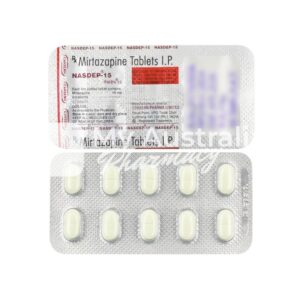
- Oral administration — available as tablets (7.5, 15, 30, 45 mg), orodispersible tablets (15, 30, 45 mg) and occasional oral solution formulations; no routine injectable or topical forms.
- Some sedative/sleep benefits may occur from the first dose (often the same night); antidepressant effects commonly begin within 1–2 weeks, with fuller clinical response often seen by 4–6 weeks.
- Given once daily, mirtazapine provides roughly 24‑hour clinical coverage; the elimination half‑life is generally around 20–40 hours, so effects persist into the following day.
- Do not consume alcohol while taking mirtazapine — alcohol markedly increases sedation and CNS depression, raises the risk of falls and respiratory depression, and may worsen side effects or impair recovery.
- The most common side effect is somnolence (sedation); other frequent effects include increased appetite and weight gain, dry mouth, dizziness and constipation.
- Would you like to try mirtazapine without a prescription?
Basic Mirtazapine Information
- INN (International Nonproprietary Name): Mirtazapine
- Brand Names Available In Australia: Avanza (Australia/New Zealand), other international brands include Remeron, Zispin, Mirtazapine Sandoz.
- ATC Code: N06AX11
- Forms & Dosages: Tablets 7.5 mg (rare), 15 mg, 30 mg, 45 mg; Orodispersible/Orally Disintegrating Tablets 15 mg, 30 mg, 45 mg; oral solution not universally available; no injectable or topical routine formulations.
- Manufacturers In Australia: Registered suppliers and generics from global manufacturers include Organon, Teva, Sandoz, HEXAL, ratiopharm, Sun Pharma and Mylan (local distribution varies).
- Registration Status In Australia: Approved by the Therapeutic Goods Administration (TGA) for use as a prescription antidepressant.
- OTC / Rx Classification: Prescription Only (Rx) nationwide.
Latest Research Findings — Austria And The Eu (2022–2025)
Clinicians often want to know what recent studies say about mirtazapine and practical outcomes for patients.
Recent Austrian and EU clinical work between 2022 and 2025 concentrated on mirtazapine’s role in major depressive disorder with comorbid insomnia, geriatric depression and appetite stimulation in oncology and palliative care.
Across trials and registry analyses many investigators reported symptomatic sleep improvement commonly within one to two weeks, with mood benefit more likely by four to six weeks.
This timing echoes established guidance that therapeutic effects begin after one to two weeks and a full response can take four to six weeks.
Comparative meta-analyses in Europe during this period generally found antidepressant efficacy broadly comparable to SSRIs for moderate MDD, with a distinct tolerability profile.
That profile typically shows more sedation and weight gain, but lower rates of sexual dysfunction compared with many SSRIs and SNRIs.
Austrian pharmacovigilance and EudraVigilance reports emphasise rare blood dyscrasias and occasional liver enzyme changes as events warranting monitoring.
Pharmacoepidemiology from Sozialversicherung outpatient datasets tracked steady prescribing, notable off‑label use for insomnia and appetite loss, and cautious dose changes in older patients and those with hepatic impairment.
Overall the recent evidence supports targeted use of mirtazapine when sleep or appetite symptoms are prominent, while monitoring for haematologic and hepatic signals.
Keywords commonly used in the literature and prescribing notes include mirtazapine, mirtazapine 15mg and mirtazapine 30mg.
Clinical Effectiveness In Austria
Patients and prescribers often ask how mirtazapine performs in everyday Austrian practice.
Mirtazapine is widely used in Austria for major depressive disorder, particularly when insomnia or low appetite are prominent features.
National outpatient prescription claims and E‑Medikation records show routine use across primary care and psychiatric settings, and common selection where early sleep benefit is desirable.
Clinicians report meaningful early sedation and improved sleep within days to a fortnight, with mood improvements typically apparent by four to six weeks.
Treatment commonly starts in a therapeutic window of 15–45 mg taken once daily at bedtime for MDD, with lower initiation doses for older adults.
Real‑world Austrian cohorts often begin elderly patients on 7.5–15 mg with careful titration and follow‑up to reduce fall and sedation risk.
Shared care between psychiatrists and GPs is common, and pharmacy counselling follows Österreichische Apothekerkammer guidance in many Apotheken.
Monitoring in Austria aligns with EMA and TGA practice: CBC and liver function tests if clinically indicated given rare haematologic and hepatic issues.
For many prescribers the balance of sleep benefit, appetite stimulation and lower sexual side effects makes mirtazapine a practical option for selected patients.
Indications And Extended Uses
People usually want a clear list of approved and common off‑label uses for mirtazapine.
The approved indication across Austria, the EU and Australia is major depressive disorder, consistent with EMA guidance and national formularies.
Standard adult dosing for MDD is 15–45 mg once daily at bedtime, and lower starting doses around 7.5–15 mg are commonly used off‑label for insomnia or appetite stimulation.
Specialist services in oncology and palliative care frequently use mirtazapine to stimulate appetite and improve sleep in cachectic or terminal patients, with reported symptomatic benefit.
Other off‑label uses include anxiety‑related insomnia and refractory nausea under specialist oversight and with informed consent.
Paediatric use is not routinely indicated because safety and efficacy have not been established in children and adolescents.
Approved versus common off‑label uses can be summarised simply: Approved — MDD; Common Off‑Label — insomnia, appetite stimulant, refractory nausea in specialist settings.
Typical starting dose guidance by indication: MDD 15 mg qhs rising to 30–45 mg as needed; insomnia or appetite loss 7.5–15 mg qhs with specialist follow‑up.
Composition And Brand Overview In Austria
People often ask what brands and strengths are available locally and in neighbouring markets.
The active ingredient is mirtazapine (INN) and the Austrian market features both original and multiple generics from recognised manufacturers.
International and regional suppliers present formulations as film‑coated tablets and orodispersible tablets in 15, 30 and 45 mg strengths; 7.5 mg tablets are less common.
Brand examples seen across Europe include Zispin and various generics from Teva, Sandoz, HEXAL and ratiopharm, with national repackaging common.
Pharmacies such as independent Apotheken and chains stock or order products according to prescription requirements and Sozialversicherung reimbursement lists.
Orodispersible tablets are useful for patients with swallowing difficulties, while oral solutions are uncommon in routine practice.
Typical pack sizes and forms mirror EU practice: blister packs of 15/30/45 mg tablets and ODT presentations when available.
Common search terms in pharmacy inventory and patient queries include mirtazapine tablets, mirtazapine 45mg and Mirtazapine Sandoz.
Contraindications And Special Precautions
Patients expect a clear safety checklist before starting an antidepressant like mirtazapine.
Absolute contraindications include known hypersensitivity to mirtazapine and concurrent or recent monoamine oxidase inhibitor use; avoid MAOIs within 14 days.
Relative cautions include severe hepatic or renal impairment, a history of mania or bipolar disorder, seizure disorders and recent myocardial infarction.
Elderly or frail patients need special attention because sedation and orthostatic hypotension increase fall risk.
Austrian pharmacovigilance highlights orthostatic hypotension and sedation as commonly monitored issues and rare blood dyscrasias and transaminase elevations as more serious events.
Advise patients to avoid heavy machinery or driving until they know how the medication affects them.
Pharmacies should use E‑Medikation to reconcile medications and spot MAOI co‑prescriptions or interacting agents before dispensing.
Quick monitoring actions: check blood pressure and orthostatic symptoms, consider CBC and LFTs if clinically indicated, and review overall fall‑risk mitigation for older adults.
Dosage Guidelines Including Adjustments
One of the most common worries is how to start, when to increase and how to stop mirtazapine safely.
Standard adult dosing for MDD is 15–45 mg once daily at bedtime, with many prescribers starting at 15 mg and increasing in 15 mg steps if required.
For insomnia or for elderly patients clinicians often start at 7.5–15 mg at night and titrate cautiously to balance sedation and efficacy.
Elderly patients should start low and increase slowly to minimise orthostatic hypotension and falls.
Hepatic impairment requires the lowest starting dose and slow escalation because active drug levels can rise with liver dysfunction.
Severe renal impairment needs careful monitoring and dose caution even though mild–moderate renal disease often follows standard adult dosing with observation.
Children and adolescents are not routinely indicated and any use should be under specialist care.
Recommend gradual tapering rather than abrupt cessation to reduce withdrawal symptoms and relapse risk; remind patients that full response may take four to six weeks.
Overview Of Drug Interactions
Patients often want to know if mirtazapine mixes safely with alcohol, other medicines or herbal remedies.
The principal interaction concern is concurrent serotonergic drugs and MAOIs; combining mirtazapine with MAOIs is an absolute contraindication due to serotonin risk.
Additionally additive CNS depression can occur with alcohol, benzodiazepines, opioids and other sedatives, increasing drowsiness and fall risk.
Food interactions are minimal, but alcohol and sedative substances potentiate drowsiness and orthostatic hypotension.
Pharmacists should check E‑Medikation for SSRIs or SNRIs where combined serotonergic load may raise serotonin syndrome concerns.
Exercise caution with QT‑prolonging agents and when mirtazapine is combined with medicines linked to blood dyscrasias or hepatic enzyme changes.
An interaction matrix for common drug classes helps: MAOIs avoid; CNS depressants caution; SSRIs/SNRIs monitor for serotonin symptoms; hepatic enzyme affecting drugs monitor LFTs.
Cultural Features And Patient Behaviour In Austria
Understanding how patients obtain and use medicines clarifies adherence risks and counselling needs.
Austrian patterns are shaped by good urban pharmacy access, rural limitations and cross‑border shopping for pricing or brand preference.
Urban centres such as Wien, Graz and Salzburg have dense Apotheken networks and faster evening access than many rural towns.
Rezeptpflicht and e‑card prescriptions using E‑Medikation streamline dispensing and Sozialversicherung reimbursement, which most patients rely on.
Some Austrians travel across borders to Germany or neighbouring countries for perceived price differences or specific brands, which can affect continuity of supply.
Concerns about weight gain and sedation commonly influence adherence and may lead patients to request alternative antidepressants.
Many patients prefer bedtime dosing to take advantage of the sedative effect and to reduce daytime drowsiness.
Pharmacists routinely provide practical counselling per Österreichische Apothekerkammer guidance and answer questions about mirtazapine for sleep or appetite.
Availability And Price Overview In Austria
People regularly ask where to buy mirtazapine, whether it is reimbursed and what it costs out of pocket.
Mirtazapine is prescription‑only in Austria and available as both generics and originals from well‑known manufacturers such as Teva, Sandoz and HEXAL.
Distribution channels include community Apotheken, pharmacy counters in some retail stores and licensed online pharmacies.
Pack forms commonly stocked are 15 mg, 30 mg and 45 mg tablets and orodispersible tablets when available.
Sozialversicherung reimbursement usually applies when the medicine is prescribed and listed, which moderates out‑of‑pocket costs.
Cross‑border purchasing persists for price or brand preference but may jeopardise reimbursement and continuity of supply.
Supply interruptions are uncommon but can affect specific formulations such as ODTs more than film‑coated tablets.
Note: in our online pharmacy, mirtazapine is available without a prescription, with discreet delivery to Australia in 5‑14 days.
Comparable Medicines And Prescribing Preferences In Austria
Doctors weigh symptom patterns and side‑effect profiles when choosing between mirtazapine and alternatives.
Common alternatives include SSRIs such as sertraline, escitalopram and fluoxetine, and SNRIs such as venlafaxine and duloxetine.
Other atypicals used are trazodone, bupropion and agomelatine depending on symptom mix and tolerability needs.
Mirtazapine is often preferred when insomnia, weight loss or concerns about sexual side effects are prominent because it is sedating and tends to stimulate appetite.
Conversely SSRIs and SNRIs may be chosen for agitated or anxious depression where sedation is undesirable.
Switching strategies take into account the comparative time to onset, sedation profile and weight changes, and benefit against sexual side‑effect risk.
In practical prescribing, the clinician balances immediate symptomatic needs such as sleep with longer‑term tolerability for adherence.
Frequently Asked Questions — Austrian Pharmacy Context
People frequently seek short, practical answers they can read at the counter or online.
Q: Is mirtazapine covered by Sozialversicherung? — Usually yes when prescribed and listed; confirm via E‑Medikation reimbursement codes.
Q: Can I drive on mirtazapine? — Avoid driving until you know how sedation affects you and consult your prescriber for workplace safety advice.
Q: What if I miss a dose? — Take the missed dose when you remember unless it is near the next scheduled dose; do not double up.
Q: Will it make me gain weight? — Increased appetite and weight gain are common; monitor weight and discuss diet and activity with your pharmacist or doctor.
Checklist For The Pharmacist: Ask about other medicines including MAOIs, alcohol use, pregnancy and hepatic disease; check E‑Medikation for interacting prescriptions.
Provide a short handout with missed‑dose advice, driving precautions and when to seek urgent care for severe side effects.
Guidelines For Proper Use — Pharmacist Counselling In Austria
Patients need clear, concise counselling when collecting a prescription for mirtazapine from an Austrian pharmacy.
Confirm prescription authenticity and ensure E‑Medikation reconciliation to spot MAOI co‑prescriptions or other interactions.
Advise bedtime dosing to harness the sedative effect and reduce daytime somnolence.
Warn about alcohol and other sedatives; recommend avoiding driving or operating machinery until tolerance is established.
Explain common side effects: somnolence, dry mouth, constipation, increased appetite and weight gain, and when to seek help for rare serious events.
For elderly patients suggest starting at 7.5–15 mg with fall‑risk mitigation and more frequent follow‑up.
Provide written withdrawal advice explaining gradual tapering to reduce discontinuation symptoms and document counselling in the patient record.
Use a simple printable patient leaflet template covering dosing, missed dose steps, common side effects and emergency signs for quick handouts.
Delivery Across Australia
| City | Region | Delivery Time |
|---|---|---|
| Sydney | New South Wales | 5-7 days |
| Melbourne | Victoria | 5-7 days |
| Brisbane | Queensland | 5-7 days |
| Perth | Western Australia | 5-7 days |
| Adelaide | South Australia | 5-7 days |
| Canberra | Australian Capital Territory | 5-7 days |
| Gold Coast | Queensland | 5-7 days |
| Hobart | Tasmania | 5-9 days |
| Darwin | Northern Territory | 5-9 days |
| Newcastle | New South Wales | 5-9 days |
| Wollongong | New South Wales | 5-9 days |
| Geelong | Victoria | 5-9 days |
| Sunshine Coast | Queensland | 5-9 days |
| Townsville | Queensland | 5-9 days |
| Cairns | Queensland | 5-9 days |