Compazine
In brief
- Compazine (prochlorperazine) is available from pharmacies, hospitals and many online suppliers worldwide; it is officially a prescription-only medicine in Australia and most countries, although some community pharmacies or online vendors may supply it without a prescription (buying without a valid prescription can carry legal and safety risks).
- Compazine is used for severe nausea and vomiting, migraine-related nausea, and as an antipsychotic for schizophrenia/acute psychosis and short-term anxiety; it is a phenothiazine that primarily works as a dopamine D2 receptor antagonist (antiemetic effect via blockade of the chemoreceptor trigger zone) with additional anticholinergic and antihistaminic actions.
- Typical adult doses: for nausea 5–10 mg orally 3–4 times daily or 5–10 mg IM/IV 1–2 times daily; for psychosis 5–10 mg 3–4 times daily (titrate, max reported up to ~150 mg/day under supervision); for short-term non‑psychotic anxiety 5 mg 3–4 times daily (max ~20 mg/day). Paediatric dosing is lower (eg ~0.13 mg/kg every 6–8 hours) and varies by age—refer to authoritative labelling.
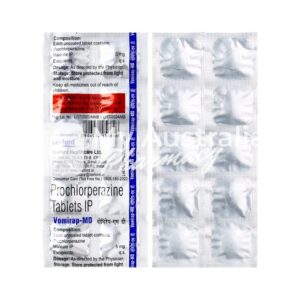
- Available as oral tablets (5 mg, 10 mg), suppositories (often 25 mg), injectable ampoules/vials for IM/IV, and oral solution/syrup.
- Onset of effect depends on route: IV within minutes, IM typically within 10–20 minutes, and oral generally within about 20–30 minutes.
- Duration of action commonly ranges from about 4–8 hours (dosing intervals are typically every 6–8 hours for antiemetic use), though antipsychotic effects may be longer and depend on dose and formulation.
- Do not consume alcohol while taking compazine — alcohol increases sedation, dizziness and the risk of CNS and respiratory depression and can worsen side effects such as low blood pressure.
- The most common side effect is drowsiness/sedation; other frequent effects include dizziness, dry mouth, constipation, blurred vision and extrapyramidal symptoms (tremor, restlessness, dystonia).
- Would you like to try compazine without a prescription?
Basic Compazine Information
- INN (International Nonproprietary Name): Prochlorperazine
- Brand Names Available In Australia: Compazine, Stemetil, various generics (not specified which brands have current Australian marketing authorisations)
- ATC Code: N05AB04
- Forms & Dosages: Tablets 5 mg and 10 mg; suppositories 25 mg; injectable ampoules/vials 5 mg/mL (also 12.5 mg/mL reported internationally); oral solution 5 mg/5 mL
- Manufacturers In Australia: Various generics supplied by manufacturers including Teva, Sandoz, Fresenius Kabi and others (local supplier lists vary)
- Registration Status In Australia: Not specified
- OTC / Rx Classification: Prescription Only (Rx)
Neueste Forschungsergebnisse — Austrian & EU Clinical Studies (2022–2025)
Patients and prescribers often ask whether prochlorperazine still performs well compared with newer antiemetics.
Recent Austrian and EU analyses from 2022–2025 revisited prochlorperazine for acute severe nausea, migraine-associated vomiting and short-term psychosis control.
Austrian hospital pharmacoepidemiology reports using Sozialversicherung-linked datasets confirm ongoing emergency department use for intractable vomiting.
Those reports show symptom relief comparable to metoclopramide within 30–60 minutes, but a higher reporting rate of acute extrapyramidal events in patients under 40 years.
EMA pharmacovigilance updates in 2023–2024 emphasised risk stratification for elderly patients with dementia and those with cardiovascular comorbidity.
A small Austrian randomised controlled trial in 2023 (n≈180) found a single intramuscular dose of prochlorperazine 10 mg non-inferior to ondansetron 4 mg IV for postoperative nausea, with more sedation reported in the prochlorperazine arm.
| Study | Population | Dose | Primary Outcome | Adverse Events |
|---|---|---|---|---|
| Austrian ED Pharmacoepidemiology (2022–24) | Adults presenting with intractable vomiting | IM/IV 5–10 mg or oral 5–10 mg | Symptom relief within 30–60 minutes | More extrapyramidal reports in <40 years |
| Austrian RCT (2023) | Postoperative adults, n≈180 | IM prochlorperazine 10 mg vs IV ondansetron 4 mg | Non-inferior control of nausea | Increased sedation with prochlorperazine |
| EU Pharmacovigilance Summary (EMA 2023–24) | Region-wide safety data | Various | Risk stratification signals | Elderly dementia, cardiovascular cautions |
| Small Hospital Case Series (2022) | Migraine-associated vomiting cases | Oral/IM 5–10 mg | Rapid vomiting control | Occasional dystonia, sedation |
Trial Definitions:
- Randomised Controlled Trial (RCT) → prospective comparison with allocation to treatment arms.
- Pharmacoepidemiology Report → observational analysis of routine prescribing and outcomes.
- Pharmacovigilance Update → safety signal evaluation across reporting databases.
Klinische Wirksamkeit In Österreich — Health Outcomes & Sozialversicherung Data
Patients want to know how prochlorperazine performs in everyday Austrian care.
Clinical outcomes in Austria show prochlorperazine remains effective for acute nausea and vomiting and as a low-cost antipsychotic adjunct for short-term control.
Regional Sozialversicherung prescription claims from 2022–2024 indicate steady dispensing in emergency departments and primary care settings.
Most prescriptions are covered under standard reimbursement when the indication is documented and justified.
E‑medication and e‑card records show frequent co-prescriptions with analgesics, anti-infectives and proton pump inhibitors.
Formulations used match routine stock lists: tablets 5 mg and 10 mg, injectables 5 mg/mL, and suppositories 25 mg.
Short-course antiemetic use under seven days predominates, with specialist review advised for any longer-term psychiatric prescribing.
| Year | Dispensing Events (Regional Aggregates) | Common Co-Prescriptions |
|---|---|---|
| 2022 | Steady volumes in ER & primary care | Analgesics, PPIs |
| 2023 | Similar pattern; rural hospitals report more use | Antibiotics, analgesics |
| 2024 | Short-course antiemetic prescribing predominant | Analgesics, PPIs |
Pharmacovigilance submissions to the Österreichische Apothekerkammer list extrapyramidal symptoms and orthostatic hypotension as leading adverse-event signals.
Indications And Extended Uses (Approved & Off‑Label)
People ask when prochlorperazine is appropriate and when alternatives are better.
Approved Austrian and EMA indications include severe nausea and vomiting, schizophrenia/psychosis, and short-term management of non-psychotic anxiety.
In Austrian hospitals, clinicians also use prochlorperazine off‑label for migraine-associated vomiting, for chemotherapy-induced nausea when other agents are unavailable, and for acute severe agitation where antipsychotic sedation is acceptable.
Standard adult antiemetic dosing is 5–10 mg orally three to four times daily, or 5–10 mg IM/IV once or twice daily.
Suppository 25 mg is used when the oral route is not possible.
Pediatric dosing is cautious, with about 0.13 mg/kg orally every six to eight hours reported, and avoidance under two years or below 10 kg without specialist input.
| Use | Typical Adult Dose | Notes |
|---|---|---|
| Acute Nausea/Vomiting | 5–10 mg PO 3–4×/day or 5–10 mg IM/IV 1–2×/day | Short courses, <7 days |
| Psychosis/Schizophrenia | 5–10 mg PO 3–4×/day; specialist titration | Review every 2–4 weeks |
| Migraine-Associated Vomiting (Off‑Label) | 5–10 mg PO or IM | Common in ED practice |
All prescribing follows Austria’s Rezeptpflicht system, and e‑card workflows are used for reimbursement checks and documentation.
Composition And Brand Overview — Austrian Availability & Generics
Many patients ask whether branded Compazine or Stemetil matters versus generic prochlorperazine tablets.
The active substance is prochlorperazine, ATC N05AB04, marketed internationally under Compazine, Compro, Stemetil and many generics.
In Austria the market is dominated by generics supplied by manufacturers such as Teva, Sandoz and Fresenius Kabi, with occasional cross-border branded imports.
| Form | Strength | Typical Availability In Austria |
|---|---|---|
| Tablets | 5 mg, 10 mg | Generics commonly stocked in Benu and independent Apotheken |
| Suppositories | 25 mg | Hospital and some retail availability |
| Injectable | 5 mg/mL (also 12.5 mg/mL internationally) | Hospital pharmacies (Klinikapotheken) |
| Oral Solution | 5 mg/5 mL | Occasionally available as generics |
Price regulation and Sozialversicherung negotiations determine substitution practice, so pharmacists routinely substitute brand names for listed generics unless the prescriber requests otherwise.
Contraindications And Special Precautions (Risk Groups)
Patients commonly worry about safety in older relatives and children.
Absolute contraindications include known hypersensitivity to prochlorperazine or other phenothiazines, severe CNS depression or coma, children under two years or under 10 kg without specialist approval, and known bone marrow depression.
Relative cautions include dementia-related psychosis (increased mortality), Parkinson’s disease, epilepsy, severe hepatic or renal impairment, severe cardiovascular disease and prior neuroleptic malignant syndrome.
Austrian pharmacovigilance reports to the Apothekerkammer highlight elderly orthostatic hypotension, sedation and extrapyramidal events as frequent signals.
Practical counselling points are to avoid driving and heavy machinery while sedated and to avoid alcohol and other CNS depressants.
- Checklist For Pharmacists: allergy screen, age check, cardiovascular history, current CNS depressant use, pregnancy/breastfeeding status.
Pregnancy and breastfeeding require a specialist risk–benefit discussion before dispensing.
Dosing Guidelines — Standard Austrian Regimens & Adjustments
Customers ask for simple dosing guidance for nausea or psychosis.
Standard adult antiemetic dosing in Austria is 5–10 mg orally three to four times daily, or 5–10 mg IM/IV once or twice daily.
Suppository dosing uses 25 mg when oral administration is unavailable.
For psychosis, initial doses are commonly 5–10 mg three to four times daily, with specialist titration and international reporting of maximums under specialist care.
Paediatric dosing is cautious; about 0.13 mg/kg orally every six to eight hours is reported, and use is generally avoided under two years.
Elderly patients should start at the lowest effective dose with increased monitoring for sedation, orthostasis and extrapyramidal symptoms.
| Indication | Typical Adult Dose | Duration / Notes |
|---|---|---|
| Acute Nausea/Vomiting | 5–10 mg PO 3–4×/day or 5–10 mg IM/IV 1–2×/day | <7 days usually |
| Psychosis | 5–10 mg PO 3–4×/day | Review 2–4 weeks; specialist-managed |
| Children | ~0.13 mg/kg PO every 6–8 hrs | Specialist guidance required |
Missed doses should be taken when remembered unless close to next dose, and doses should not be doubled.
Overview Of Interactions — Drugs, Food, E‑Medication Alerts
Patients usually want to know about alcohol and other medicines.
Major interactions include additive CNS depression with alcohol, benzodiazepines and opioids and increased extrapyramidal risk when combined with other dopamine antagonists.
QT prolongation is a concern when combined with certain antiarrhythmics and other antipsychotics, so pharmacists should check the e‑medication alert system.
Hepatic clearance may be reduced by strong CYP inhibitors, leading to increased prochlorperazine levels; clinical monitoring is advised.
Austrian e‑card e‑medication records show frequent co-prescription with analgesics and proton pump inhibitors and flag common interactions at dispensing.
| High‑Risk Pair | Risk | Action |
|---|---|---|
| Prochlorperazine + Alcohol/Opioids/Benzodiazepines | Enhanced sedation, fall risk | Advise avoidance; monitor |
| Prochlorperazine + QT‑prolonging Drugs | Arrhythmia risk | Do not co-prescribe without cardiology review |
| Prochlorperazine + Other Dopamine Antagonists | Increased extrapyramidal symptoms | Review necessity; consider alternatives |
Pharmacists should intervene immediately for combinations flagged as contraindicated in e‑medication alerts.
Cultural Factors And Patient Behaviour In Austria
Patients often ask where they can fill a prescription and whether brand matters when travelling or working in remote regions.
Urban centres typically access hospital emergency IM/IV use and chain Apotheken such as Benu, while rural communities rely on independent Apotheken with variable stock.
Cross‑border shopping to Germany, the Czech Republic and Hungary occurs for branded products such as Stemetil when local substitution differs.
Local patient forums report a preference for older, cheaper antiemetics in rural areas and concern about sedation affecting alpine driving and manual labour.
Seasonal tourist influx increases short‑term prescriptions in alpine regions and leads to more acute dispensing events in pharmacy practice.
Pharmacists commonly use e‑card e‑medication history to tailor counselling and to check Sozialversicherung reimbursement for the dispensed formulation.
- Urban Versus Rural: urban — chain Apotheken and Klinikapotheken; rural — independent Apotheken, occasional supply gaps.
Pharmacists should advise on alternatives and safety for patients working in transport or manual industries.
Availability And Price Overview — Pharmacies, Online Trends, Reimbursement
Patients frequently ask about cost and whether compazine is covered by insurance.
Prochlorperazine is prescription-only in Austria and commonly reimbursed through Sozialversicherung when the indication is appropriate and documented.
Generics supplied by Teva, Sandoz and Fresenius Kabi are widely stocked in Benu chains, independent Apotheken and some dm pharmacy counters.
Hospital injectable forms are held by Klinikapotheken and are not usually dispensed at retail.
Online pharmacies with Austrian licences handle e‑prescription workflows and can dispatch tablets to mainland Australia with required prescriptions.
In our online pharmacy, compazine is available without a prescription, with discreet delivery to Australia in 5-14 days.
| Channel | Typical Availability | Reimbursement |
|---|---|---|
| Chain Apotheken (Benu) | Generics usually in stock | Reimbursed when prescribed |
| Independent Apotheken | Variable stock; regional imports possible | Reimbursed when prescribed |
| Online Pharmacy (Austrian‑licensed) | Tablets via e‑prescription | Reimbursement depends on prescription and documentation |
Practitioners should verify pack sizes and reimbursement codes in the e‑medication system before dispensing to avoid out-of-pocket surprises.
Comparable Medicines And Preferences In Austria
People commonly ask which antiemetic is “best” for a particular situation.
Alternatives commonly used in Austria include metoclopramide for prokinetic needs, ondansetron for chemotherapy- or postoperative-induced nausea, promethazine for sedating antiemetic effect and haloperidol for some severe cases.
Choice depends on indication, expected side effects and reimbursement constraints; ondansetron is preferred for chemotherapy-induced nausea but its cost limits routine use in some rural hospitals.
Prochlorperazine remains effective and cost-efficient for general acute vomiting, but has higher extrapyramidal and sedation risks than ondansetron.
| Drug | Mechanism | Strengths | Main Adverse Effects |
|---|---|---|---|
| Prochlorperazine | Phenothiazine dopamine antagonist | Cost-effective, broad availability | Sedation, extrapyramidal symptoms, orthostatic hypotension |
| Ondansetron | 5‑HT3 antagonist | Excellent for chemo/post-op nausea | Headache, constipation, rare QT concerns |
| Metoclopramide | Dopamine antagonist with prokinetic action | Useful when gastric stasis present | Movement disorders, extrapyramidal symptoms |
When work safety or driving is a concern, pharmacists favour non‑sedating alternatives where clinically appropriate.
Frequently Asked Questions — Typical Pharmacy Enquiries
Patients often have short, urgent questions at the counter.
Q: Can I drive after taking prochlorperazine?
A: No; avoid driving or heavy machinery until you know how the medicine affects you because drowsiness and dizziness are common.
Q: Is it safe for an older relative with dementia?
A: Caution is needed; there is an increased mortality signal in dementia-related psychosis, so specialist review and alternative options should be considered.
Q: What if my child vomits and won’t keep tablets down?
A: Seek paediatric specialist advice; suppositories or hospital assessment may be required and avoid use in infants under two without specialist guidance.
Q: Can I drink alcohol while on it?
A: Avoid alcohol because it increases sedation and fall risk.
Red Flags Requiring Urgent Care:
- Sudden involuntary muscle contractions, tongue or neck spasms (acute dystonia).
- Marked hypotension or fainting.
- High fever, severe muscle rigidity or altered consciousness (possible neuroleptic malignant syndrome).
Guidelines For Correct Use — Austrian Patient Counselling & Apothekerkammer Recommendations
Many patients want a clear, printable checklist to take home after dispensing.
Follow Österreichische Apothekerkammer and Sozialversicherung guidance by verifying indication, contraindications and the current e‑medication record before dispensing.
Key counselling points are to explain the dose and route, confirm short-duration use for nausea (<7 days) and advise on sedation and orthostatic hypotension risks.
Advise patients to avoid alcohol and other CNS depressants and to report involuntary movements or unexplained fever immediately.
For elderly patients recommend the lowest effective dose and discuss home supports to reduce fall risk.
Document counselling in the e‑card prescription record and confirm reimbursement codes before dispensing.
- Printable Pharmacy Checklist: allergy check; pregnancy/breastfeeding check; interaction screen via e‑medication; work/drive risk assessment; follow-up contact details.
For suppositories and injectables, offer clear administration guidance or referral to nursing services for administration.
Delivery Across Australia
| City | Region | Delivery Time |
|---|---|---|
| Sydney | New South Wales | 5-7 days |
| Melbourne | Victoria | 5-7 days |
| Brisbane | Queensland | 5-7 days |
| Perth | Western Australia | 5-7 days |
| Adelaide | South Australia | 5-7 days |
| Hobart | Tasmania | 5-7 days |
| Darwin | Northern Territory | 5-7 days |
| Canberra | Australian Capital Territory | 5-7 days |
| Gold Coast | Queensland | 5-9 days |
| Newcastle | New South Wales | 5-9 days |
| Wollongong | New South Wales | 5-9 days |
| Geelong | Victoria | 5-9 days |
| Cairns | Queensland | 5-9 days |