Diflucan
In brief
- Diflucan (fluconazole) is available through pharmacies in Australia and many other countries, usually as a prescription-only medicine, although some pharmacies may supply certain forms or strengths under pharmacist supervision where permitted. It is widely stocked by major brands and generic suppliers.
- Diflucan is used to treat fungal and yeast infections such as vaginal candidiasis, oral thrush, oesophageal candidiasis, systemic candidiasis and cryptococcal meningitis. It works as a triazole antifungal by inhibiting fungal cell membrane ergosterol synthesis, which stops the fungus from growing.
- The usual dose depends on the infection: for vaginal thrush, 150 mg as a single dose; for oral thrush, 200 mg once then 100 mg daily for 7–14 days; for more serious infections, doses may range from 200 mg to 400 mg daily as directed by a doctor.
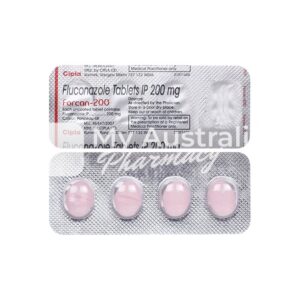
- It is available as tablets or capsules, oral suspension, and intravenous infusion.
- Diflucan typically starts working within a few hours, although symptom improvement may take 1–3 days depending on the infection.
- The duration of action is long, allowing once-daily dosing for most infections and single-dose treatment for some conditions such as vaginal candidiasis.
- Alcohol is not absolutely contraindicated, but it is best to avoid or limit alcohol because it can worsen stomach upset and may put extra strain on the liver.
- The most common side effects are nausea, abdominal pain, diarrhoea, headache, dizziness, rash and taste changes.
- Would you like to try Diflucan without a prescription?
Latest Research Findings
- INN (International Nonproprietary Name): Fluconazole
- Brand names available in Australia: Diflucan and generic fluconazole products
- ATC Code: J02AC01
- Forms & dosages: Tablets or capsules 50mg, 100mg, 150mg, 200mg; oral suspension; IV infusion
- Manufacturers in Australia: Pfizer originator, with generics from Sandoz, Teva, and Zentiva in broader markets
- Registration status in Australia: Registered
- OTC / Rx classification: Prescription only in the vast majority of regions
What does the latest European evidence say about Diflucan and fluconazole for Candida infections?
Across Austria and the EU, 2022 to 2025 guidance still supports fluconazole for uncomplicated vaginal candidiasis and mucosal candidiasis, especially when a short course improves adherence.
That lines up with IDSA and ESCMID-style use patterns, and fluconazole remains widely registered across Europe, including Austria.
The big change is not that fluconazole has stopped working, but that Candida resistance is getting more attention in some species, especially in recurrent or refractory infections.
That is why susceptibility-aware prescribing matters more than ever when symptoms keep returning after a fluconazole 150mg dose.
| Evidence theme | 2022–2025 take-away |
|---|---|
| Single-dose adherence | Single-dose fluconazole remains attractive for completion and convenience. |
| Comparative efficacy | Comparable to other azoles for many common Candida infections. |
| Resistance trends | Azole resistance is increasingly relevant in selected Candida species. |
| Safety monitoring | Interaction checks and liver or QT-risk review remain important. |
Clinical Effectiveness In Austria
Wondering whether Diflucan Austria patients actually get good outcomes in everyday care?
In real-world Austrian practice, fluconazole tablets Austria pharmacists see most often are used for vaginal thrush treatment, oral thrush, and selected systemic infections under medical supervision.
Single-dose therapy supports adherence, which matters when symptoms are uncomfortable and people want a simple plan they can complete correctly.
Pharmacy counselling also helps patients understand when treatment should work quickly and when ongoing symptoms need medical review rather than another repeat dose.
In the Sozialversicherung environment, continuity of prescribing and medication review are practical advantages, especially when the E-Medikation record shows other medicines that might interact.
Data highlight: Fluconazole is prescription-only and is usually supplied through standard ambulatory pathways rather than self-selection.
That is particularly important for recurrent or resistant infections, because repeated empiric use can delay the right diagnosis and may not solve the problem.
Indications And Expanded Uses
Which Candida infections does fluconazole actually cover, and when is it used in hospital care?
- Vaginal candidiasis
- A common cause of thrush symptoms treated with a 150mg oral single dose.
- Oropharyngeal candidiasis
- Oral thrush that can affect eating, drinking, and comfort.
- Oesophageal candidiasis
- A deeper mucosal infection that usually needs a longer course.
- Systemic candidiasis or candidemia
- A serious bloodstream infection managed in hospital.
- Cryptococcal meningitis
- A specialist indication that needs prolonged treatment and monitoring.
- Prophylaxis in immunosuppression
- Prevention in selected high-risk patients under specialist care.
Fluconazole is not a broad “all fungus” medicine, and it is not active against every pathogen.
For example, it is not active against Aspergillus or Mucorales, so the diagnosis needs to fit the drug.
In primary care, vaginal and oral thrush are the most common managed indications, while systemic disease and prophylaxis usually belong in hospital or specialist settings.
Composition And Brand Overview
What is actually in Diflucan, and how do the available forms differ?
The INN is fluconazole, and the ATC code is J02AC01, which places it in systemic antifungals, triazole derivatives.
Diflucan is the best-known brand internationally, while generics are common across Europe and in Austrian supply channels.
| Dosage form | Strengths available | Common use |
|---|---|---|
| Tablets or capsules | 50mg, 100mg, 150mg, 200mg | Most outpatient use |
| Oral suspension | 50mg/5mL, plus other market-specific strengths | Swallowing difficulties or paediatric use |
| IV infusion | 2mg/mL | Hospital treatment |
Pfizer supplies the originator product, while Sandoz, Teva, and Zentiva are common generic suppliers.
Austrian patients may see different packaging depending on the pharmacy channel, import source, or cross-border supply route.
Contraindications And Special Precautions
Are there situations where Diflucan should be avoided or checked very carefully first?
- Absolute contraindications: hypersensitivity to fluconazole or other azole antifungals, and combination use with QT-prolonging drugs such as cisapride, pimozide, erythromycin, quinidine, astemizole, or terfenadine at 400mg or more.
- Relative contraindications or monitoring needs: hepatic dysfunction, renal impairment, pregnancy, electrolyte disturbances, heart disease, arrhythmias, and Long QT syndrome.
These matter because fluconazole side effects can become more serious when liver function is already reduced or when the heart rhythm is vulnerable.
In plain language, QT prolongation can raise the risk of dangerous rhythm changes, so medication review is not optional in polypharmacy.
That is where the E-Medikation record is useful, because it helps the pharmacist and prescriber spot interactions that might be missed otherwise.
If dizziness or headache occurs, caution is sensible with driving, operating machinery, or safety-sensitive work.
Severe rash, jaundice, palpitations, or fainting need urgent medical review.
Dosing Guidelines
How much fluconazole is usually taken, and what changes with age or kidney function?
| Condition | Typical adult dose | Usual duration |
|---|---|---|
| Vaginal candidiasis | 150mg orally, single dose | 1 day |
| Oropharyngeal candidiasis | 200mg once, then 100mg once daily | 7–14 days |
| Oesophageal candidiasis | 200mg once, then 100–400mg once daily | 14–30 days |
| Systemic candidiasis or candidemia | 400mg once, then 200–400mg once daily | As prescribed |
| Cryptococcal meningitis | 400mg once, then 200–400mg daily | 10–12 weeks or longer |
| Prophylaxis in immunosuppression | 400mg daily | Specialist-directed |
Children are usually dosed by weight at 3 to 12mg/kg/day, with higher doses sometimes used for severe infections and a maximum of 400mg/day.
Elderly patients generally use adult doses, but renal function decline is common and dose reduction is often needed.
If creatinine clearance is below 50mL/min, the maintenance dose is usually halved.
Hepatic impairment needs caution and may require adjustment with liver monitoring.
Because this is a Rezeptpflicht medicine, pharmacists will usually advise “as prescribed only” rather than casual repeat use.
Interactions Overview
Which medicines, drinks, or everyday products can cause trouble with fluconazole?
| Interaction type | Examples | What to do |
|---|---|---|
| QT-risk combinations | Cisapride, pimozide, erythromycin, quinidine, astemizole, terfenadine | Avoid and seek prescriber advice |
| CYP450 interactions | Many prescription medicines and some OTC or herbal products | Tell the pharmacy about everything taken |
| Alcohol | Not an absolute contraindication | Use caution if liver issues or side effects occur |
| Coffee | Can aggravate nausea in sensitive people | Reduce if stomach upset is present |
Fluconazole interactions are often picked up during medication review, especially when E-Medikation shows multiple regular medicines.
That is why patients should mention prescription medicines, OTC products, vitamins, and herbal supplements every time.
Pharmacists take the absolute no-go combinations seriously because the QT risk can turn into a dangerous heartbeat problem rather than a simple nuisance side effect.
Alcohol is not automatically forbidden, but if liver function is already a concern, it is better to be cautious.
Cultural Aspects And Patient Behaviour In Austria
How do people in Austria actually look for treatment for vaginal thrush and other Candida problems?
Urban patients often value convenience and quick access, while rural patients may need to plan around distance to the nearest pharmacy or doctor.
Independent Apotheken remain important, BENU is visible in some areas, and some people also use pharmacy counters in dm for advice and stock checks where available.
Cross-border shopping in Germany, Czech Republic, and Hungary can shape brand familiarity and price expectations, even when Austrian prescribing rules still apply.
- Asking for “the 150 mg single dose”.
- Wanting fast symptom relief before the weekend.
- Comparing prices between brands and generics.
- Checking stock before visiting a pharmacy.
In our online pharmacy, diflucan is available without a prescription, with discreet delivery to Australia in 5-14 days.
Even so, many Austrian patients still recognise the originator name Diflucan first, then compare it with generic fluconazole options from broader EU supply.
Availability And Price Overview
Where can patients usually get fluconazole in Austria, and why do prices vary so much?
| Channel | Access style | Typical advantage |
|---|---|---|
| Local pharmacy | Prescription-only supply | Direct counselling and medication review |
| Online pharmacy | Order with delivery | Convenience and discreet service |
| Chain-linked outlet | Retail pharmacy access | Stock visibility and broader opening hours |
| Cross-border pharmacy | Imported supply | Perceived savings or preferred packaging |
Austrian pricing is shaped by reimbursement logic, product origin, and whether a patient is choosing originator Diflucan or a generic fluconazole tablet.
Some patients compare packaging, supplier name, and availability before deciding, especially when a repeat course is needed.
Pharmacy stock management can also affect what is immediately on hand.
The Österreichische Apothekerkammer remains a key professional reference point for safe supply and counselling.
Comparable Medicines And Preferences
When might a prescriber choose an alternative to fluconazole?
| Medicine | Spectrum or role | Typical preference point |
|---|---|---|
| Itraconazole | Broader spectrum | May be chosen when fluconazole is unsuitable, but interactions are more common |
| Ketoconazole | Topical or oral, less used systemically | Limited by toxicity concerns |
| Voriconazole | Severe or systemic mycoses | Specialist or ICU use |
| Miconazole | Topical and oral gel | Local treatment for mouth or skin |
| Clotrimazole | Primarily topical | Skin or local mucosal use |
Diflucan vs itraconazole is a common comparison because fluconazole is often chosen for single-dose convenience, while itraconazole may be preferred for broader coverage in selected cases.
Austrian prescribers may switch agents when resistance, recurrence, or drug interactions make fluconazole less suitable.
For many people, the practical choice comes down to convenience, interaction burden, and whether the infection is truly Candida and not something else.
Frequently Asked Questions
Can I take Diflucan 150 mg for a yeast infection? Yes, a 150mg oral single dose is the standard regimen for vaginal candidiasis.
How quickly does it work? Symptoms often start improving after treatment begins, but persistent symptoms need medical review.
Can I drink alcohol? It is not an absolute contraindication, but caution is sensible if you have liver problems or side effects.
What if I missed a dose? Take it as soon as remembered unless it is nearly time for the next dose, and do not double up.
Pregnancy, recurrent infections, jaundice, rash, or ongoing pain are all reasons to speak with a doctor or pharmacist promptly.
Proper Use And Austrian Counselling Standards
What should patients do to use fluconazole correctly and safely?
- Take it exactly as prescribed.
- Do not double a missed dose.
- Store it at 15–30°C.
- Protect tablets or capsules from moisture and light.
- Shake oral suspension well before use.
- Check the brand instructions if the suspension needs refrigeration or has a discard date.
- Seek immediate help for overdose or severe adverse effects.
Fluconazole oral suspension may need special handling, and some brands say to discard unused suspension after 14 days.
Overdose symptoms can include hallucinations, paranoia, and abnormal heart rhythms, so urgent care is required if too much is taken.
Ongoing or recurrent symptoms should not be managed by repeating self-treatment, especially in pregnancy, liver disease, renal impairment, or suspected resistant Candida.
Pharmacist counselling, as aligned with Österreichische Apothekerkammer standards, is just as important as the dose itself because adherence and interaction checks drive the outcome.
Delivery Across Australia
| City | Region | Delivery time |
|---|---|---|
| Sydney | New South Wales | 5-7 days |
| Melbourne | Victoria | 5-7 days |
| Brisbane | Queensland | 5-7 days |
| Perth | Western Australia | 5-7 days |
| Adelaide | South Australia | 5-7 days |
| Canberra | Australian Capital Territory | 5-7 days |
| Hobart | Tasmania | 5-7 days |
| Darwin | Northern Territory | 5-7 days |
| Gold Coast | Queensland | 5-7 days |
| Newcastle | New South Wales | 5-7 days |
| Wollongong | New South Wales | 5-9 days |
| Geelong | Victoria | 5-9 days |
| Townsville | Queensland | 5-9 days |
| Cairns | Queensland | 5-9 days |