Hydroquinone
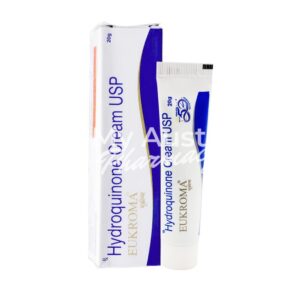
In brief
- Hydroquinone cream is available from some pharmacies and online retailers in Australia and internationally, but prescription requirements vary by country and strength. In many regulated markets, 2% products may be sold without a prescription, while 4% and higher strengths are usually prescription-only. Local rules should always be checked before purchase.
- Hydroquinone is used to treat melasma, hyperpigmentation, age spots, lentigines, and post-inflammatory hyperpigmentation. It works by inhibiting tyrosinase, an enzyme needed for melanin production, which helps reduce excess skin pigmentation.
- The usual dose is a thin layer applied to the affected area 1–2 times daily for 2–4 months for melasma or hyperpigmentation, and up to 3 months for age spots, as directed by a health professional.
- The form of administration is topical, most commonly as a cream, but it is also available as a gel or lotion, and sometimes in combination products with tretinoin or corticosteroids.
- The effect of hydroquinone usually begins gradually, with visible lightening often noticed after 4–6 weeks of regular use.
- The duration of action lasts only while treatment is continued; therapy is usually limited to a few months because prolonged use increases the risk of side effects such as ochronosis.
- Avoid drinking alcohol excessively if using combination skin products that may irritate the skin, and do not apply hydroquinone to damaged skin, as irritation can be worsened.
- The most common side effects are mild redness, burning, stinging, dryness, peeling, and temporary skin lightening.
- Would you like to try hydroquinone without a prescription?
Latest Research Findings On Hydroquinone In Austria And The EU
Basic Hydroquinone Information
- INN (International Nonproprietary Name): Hydroquinone
- Brand names available in Australia: Not specified
- ATC Code: D11AX11
- Forms & dosages: Cream 2%, 4%, 5%; gel 2%, 4%; lotion 2%, 4%; combination products
- Manufacturers in Australia: Not specified
- Registration status in Australia: Not specified
- OTC / Rx classification: Prescription in most regulated markets for 2% to 4% and higher strengths; OTC for ≤2% in some regions
Is hydroquinone still worth discussing when so many newer pigment treatments are being talked about online?
Yes, because it remains one of the most effective topical depigmenting agents for melasma and post-inflammatory hyperpigmentation.
In Austrian dermatology practice, and across EU dermatology more broadly, the clinical picture is familiar: good short-term efficacy, but enough safety concern to keep access tightly controlled.
Hydroquinone is a phenol derivative, also described as a benzenediol, and it sits in ATC group D11AX11.
As of July 2025, most regulated markets treat 2% to 4% strengths as prescription-only, while some ≤2% products may be OTC in selected jurisdictions.
In the EU, availability should always be checked against current national regulator listings, including public databases such as ANMDMR where relevant.
| Context | Efficacy | Relapse | Adverse Events | Regulatory Access |
|---|---|---|---|---|
| Austria practice pattern | Often strong for melasma and hyperpigmentation | Common without sun protection | Irritation, dermatitis, rare ochronosis | Usually prescription-based |
| EU dermatology evidence | Consistently effective in short courses | Relapse can occur after stopping | Dose- and duration-related risk | Mostly Rx, country-specific checks needed |
Safety and regulatory change highlight: long-term or high-strength use is discouraged because of exogenous ochronosis, chronic irritation, and the broader GHS hazard profile, which includes allergic skin reactions and serious eye damage.
Clinical Effectiveness In Austrian Patients And Real-World Outcomes
What happens in the real world when a patient finally gets a hydroquinone prescription and wants to know if it will work fast?
In Austrian patients, outcomes are shaped by prescription-only access, dermatologist follow-up, and E-Medikation through the e-card system.
That makes it easier to track concurrent treatments and to reduce duplication when a patient is already using another topical depigmenting cream.
Hydroquinone cream is typically used for melasma, lentigines, and skin hyperpigmentation after inflammation.
Visible change often begins after several weeks, but the result depends heavily on daily sunscreen use and careful application.
Austrian reimbursement usually depends on the diagnosis, product status, and whether treatment is medically necessary rather than cosmetic.
That distinction matters, because a patient asking for “skin lightening” may be viewed differently from someone being treated for medically documented melasma.
Adherence is usually better when patients understand that treatment is time-limited and that overuse raises the risk of irritant dermatitis and ochronosis.
- Patient-reported improvement is usually linked to consistent use rather than higher frequency.
- Community pharmacy counselling helps patients avoid applying too much or using it on broken skin.
- Sun protection is the difference between steady progress and a frustrating relapse.
Data highlight: pharmacy follow-up matters because short, supervised courses tend to deliver better outcomes than open-ended use.
Indications And Expanded Use In Austrian Dermatology Practice
Which pigment problems are actually appropriate for hydroquinone cream 4%, and which are not?
In Austrian dermatology, the evidence-supported indications are straightforward.
- Melasma
- The most common reason to use hydroquinone, especially when patches are persistent or psychologically distressing.
- Age spots and lentigines
- Used for localised areas where lightening is desired over a short course.
- Post-inflammatory hyperpigmentation
- Considered when dark marks remain after acne, eczema, or minor injury.
Hydroquinone is used topically only, and it should not be framed as a general skin-care brightener or a cosmetic shortcut.
When specialists use it, the course is usually short and reviewed regularly, especially in people with sensitive skin or darker Fitzpatrick types.
Triple combination creams, meaning hydroquinone plus tretinoin plus a corticosteroid, are more common in some international settings than in routine Austrian practice.
Those combinations may be used off-label under specialist supervision, particularly for refractory melasma.
Any off-label use should be clearly documented so the patient understands the reason, the duration, and the expected monitoring.
In practice, the safest question is not “Can I brighten my skin?”, but “Is there a confirmed pigment disorder that needs treatment?”
Composition, Strengths, And Brand Availability Relevant To Austria
Patients often ask whether the product they saw online is the same as what a pharmacist can supply locally.
The short answer is that hydroquinone products vary a lot by country, name, and packaging.
| Form | Dosage | Typical Use | Example Availability |
|---|---|---|---|
| Cream | 2%, 4%, 5% | Most common form | Tubes of 15 g to 60 g |
| Gel | 2%, 4% | Oily skin types | Less common |
| Lotion | 2%, 4% | Larger surface areas | Less common |
| Combination | Various | Often with tretinoin or corticosteroids | Seen in some regions |
Global examples include Albothyl Hydrochinon, HQderm, and Iklen in some European markets, usually at 2%, 4%, or 5% strengths.
Manufacturers mentioned in the international data include Cantabria Labs, Terapia, and Zentiva in some markets.
Austrian availability may differ from neighbouring EU countries, so the safest approach is to ask an Apotheke whether a listed product is currently supplied.
Pharmacists can also verify official supply routes and help patients avoid confusing brand names with the actual active ingredient.
Contraindications, Safety Warnings, And Who Should Avoid Hydroquinone
When should hydroquinone be left out altogether?
There are clear situations where the risk is too high.
- Known allergy or hypersensitivity to hydroquinone or any excipient.
- Eczema, broken skin, or recent sunburn on the treatment area.
- Pregnancy or breastfeeding unless a specialist explicitly recommends use.
| Relative Risk | Why It Matters |
|---|---|
| Psoriasis or atopic dermatitis | Inflammation can worsen irritation |
| Previous reaction to phenols or resorcinol | Higher chance of allergy |
| Vitiligo | May worsen depigmentation |
Long-term or high-strength use increases the risk of exogenous ochronosis and chronic irritant dermatitis.
That is why the cream should never be treated as an everyday skin lightening product for open-ended use.
Workplace safety also matters in Austria.
Avoid applying it immediately before heat exposure, face masks, PPE use, or any activity where accidental eye contact is more likely.
Driving is not usually restricted, but patients should be cautious if the skin becomes irritated or if watery eyes are a problem.
Safety highlight: hydroquinone may cause allergic skin reactions, serious eye damage, and is suspected of causing genetic defects and cancer, with aquatic toxicity also listed in hazard information.
Dosage Guidance And Practical Treatment Schedules In Austria
How much should a patient actually put on?
The answer is usually less than they expect.
| Indication | Typical Strength | Frequency | Duration |
|---|---|---|---|
| Melasma, hyperpigmentation | 2% to 4% cream | 1 to 2 times daily | Limit to 2 to 4 months, then review |
| Lentigines, age spots | 2% to 4% cream | Once daily | Until fading, maximum 3 months |
| Post-inflammatory hyperpigmentation | 2% to 4% cream | 1 to 2 times daily | 2 to 6 months, with reassessment |
The standard pattern is a thin layer on cleansed affected skin, avoiding the eyes and mucous membranes.
Hydroquinone should never be used on broken or irritated skin, and sunscreen is not optional.
SPF 30+ should be used during treatment and afterwards.
Children under 12 years do not have established safety and efficacy data, while older adults may be more sensitive.
There is no formal dose adjustment for kidney or liver impairment, but caution is sensible and a dermatology review may be appropriate.
If a dose is missed, apply it as soon as remembered unless the next dose is close.
Do not double apply.
If too much is used, wash off the excess and watch for irritation.
If the cream is swallowed or a large amount gets into the mouth, urgent medical help is needed because serious toxicity can occur.
Interactions, Combination Products, And Monitoring In E-Medikation
Does hydroquinone interact with lots of other medicines?
Topically, not usually in a major systemic way, but combination products can make irritation much more likely.
- Tretinoin
- Commonly combined in triple creams, but it can increase stinging and peeling.
- Topical corticosteroids
- Useful in some combinations, though prolonged use adds its own risks.
- Exfoliants and harsh cleansers
- Can worsen irritant dermatitis and should be kept simple.
| Monitoring Point | Pharmacy Check |
|---|---|
| Concurrent retinoid use | Watch for excessive irritation |
| Concurrent corticosteroid use | Check duration and indication |
| Duplicate depigmenting products | Reduce overlap and confusion |
There is no strong evidence-based food interaction, and alcohol or caffeine are not major direct interaction drivers.
That said, alcohol can worsen flushing in some people and can also make adherence worse.
For Austrian dispensing, E-Medikation is useful because it helps detect concurrent dermatological therapies when products are supplied through the e-card linked pharmacy system.
That extra check can prevent a patient from layering multiple pigment treatments at once and ending up with unnecessary irritation.
Cultural And Patient-Centred Considerations In Austria
How do Austrian patients usually approach pigment treatment in practice?
The answer depends a lot on where they live and how quickly they can access a dermatologist.
- Urban patients often see a dermatologist sooner.
- Rural patients may rely more on GPs and community pharmacies.
- Online forums often focus on fairness, skin brightening, and how fast results appear.
- Counselling should reframe the issue as treating a pigment disorder, not cosmetic whitening.
| Access Pattern | Typical Experience |
|---|---|
| City-based care | Earlier specialist review |
| Regional care | More pharmacy-led questions |
| Cross-border shopping | Searches for alternatives in Germany, Czech Republic, or Hungary |
Some patients buy dermocosmetics across borders when local supply is limited, especially if they have heard about alternative brands online.
That is understandable, but unsupervised cross-border purchases of prescription-strength hydroquinone are not a good idea.
Fair and darker skin types can both experience distress from hyperpigmentation, so the advice should stay individual, respectful, and non-judgemental.
For some customers, there is also a practical ordering question.
In our online pharmacy, hydroquinone is available without a prescription, with discreet delivery to Australia in 5-14 days.
Availability, Prescription Rules, And Price Realities In Austria
Can you simply walk into a pharmacy and buy hydroquinone?
In regulated Austrian practice, the answer is generally no for prescription strengths, especially 2% to 4% products.
Access usually runs through a dermatologist or GP, then dispensing through a community pharmacy using the e-card and E-Medikation system.
| Channel | Access | Practical Notes |
|---|---|---|
| Dermatologist | Prescription assessment | Best for diagnosis and monitoring |
| GP | May initiate treatment | Depends on case and local practice |
| Community pharmacy | Dispensing and counselling | Checks use, storage, and red flags |
| Online pharmacy | Convenient ordering | Authenticity and legal status must be checked |
Patients may ask at Benu, dm pharmacy counters, or independent Apotheken, but the product pathway can differ.
Price regulation and Sozialversicherung coverage depend on whether the use is medically justified.
Cosmetic skin-lightening use is unlikely to be reimbursed.
Convenience is attractive with online pharmacies, but storage, transport, and product authenticity still matter.
That is especially important with topical hydroquinone because quality and proper counselling are part of safe use.
Alternatives And Comparisons For Austrian Treatment Decisions
What if hydroquinone is not tolerated, not available, or simply not the best fit?
There are several practical alternatives used in pigment care.
| Option | Main Strength | Main Limitation |
|---|---|---|
| Azelaic acid | Often better tolerated | May be slower |
| Tretinoin | Improves cell turnover | More irritating |
| Kojic acid | Popular in pigment care | Variable tolerability |
| Arbutin creams | Gentler for some users | May be less potent |
| Corticosteroid combinations | Useful in some triple creams | Needs specialist supervision |
| Tranexamic acid | Often discussed for melasma | Not suitable for everyone |
Hydroquinone is often faster and more potent for pigment reduction, which is why it remains the benchmark in many treatment discussions.
Azelaic acid and arbutin may be better tolerated, while tretinoin can help turnover but often irritates more.
Tranexamic acid is increasingly discussed for melasma, especially when vascular or hormonal factors are involved.
In Austria, many patients prefer stepwise therapy that balances efficacy, tolerability, and reimbursement realities.
Common Patient Questions From Austrian Pharmacy Consultations
How long does hydroquinone take to work?
Improvement often appears after several weeks, but the cream needs sun protection and regular use to do its job.
Can I buy hydroquinone without a prescription in Austria?
Prescription-strength hydroquinone is generally regulated, so check current availability with a pharmacist or prescriber.
What should I do if my skin becomes red or stings?
Stop using it, wash the area if needed, and seek medical advice if symptoms persist or worsen.
Can I use hydroquinone with sunscreen or tretinoin?
Sunscreen should be used every day, and tretinoin may be combined in some regimens under supervision.
Persistent irritation, eye exposure, or any sign of allergy needs medical review.
Correct Use According To Austrian Pharmacy Standards And Counselling Points
What is the safest way to use the cream at home?
- Cleanse and dry the skin before application.
- Apply a thin layer only to the pigmented area.
- Wash hands after use.
- Avoid the eyes, lips, and mucous membranes.
- Use SPF 30+ every day.
- Keep the course time-limited and review progress.
Do not use rules: do not apply to broken, irritated, or freshly sunburned skin, and do not leave the tube open or exposed to heat.
Storage should stay below 25°C, protected from light and moisture, with the original container tightly sealed.
Red flags such as worsening redness, severe burning, darkening of the treated area, or signs of ochronosis need prompt review.
Austrian pharmacists can help verify the product, check the e-card prescription, and counsel on safe, time-limited use.
Delivery Across Australia
| City | Region | Delivery time |
|---|---|---|
| Sydney | New South Wales | 5-7 days |
| Melbourne | Victoria | 5-7 days |
| Brisbane | Queensland | 5-7 days |
| Perth | Western Australia | 5-7 days |
| Adelaide | South Australia | 5-7 days |
| Canberra | Australian Capital Territory | 5-7 days |
| Hobart | Tasmania | 5-7 days |
| Darwin | Northern Territory | 5-7 days |
| Gold Coast | Queensland | 5-7 days |
| Newcastle | New South Wales | 5-7 days |
| Wollongong | New South Wales | 5-9 days |
| Geelong | Victoria | 5-9 days |
| Townsville | Queensland | 5-9 days |
| Ballarat | Victoria | 5-9 days |