Mebendazole
In brief
- You can buy mebendazole from pharmacies and e-pharmacies in Australia and many other countries; it is usually a prescription medicine, but some limited-size packs may be available without a prescription depending on local rules.
- Mebendazole is used to treat worm infections such as pinworm, roundworm, whipworm, hookworm, and some tapeworm infections. It works by blocking the worms’ ability to absorb glucose, which depletes their energy and kills them.
- The usual dose depends on the infection: for pinworm, 100 mg once and repeat after 2–3 weeks if needed; for roundworm, whipworm, and hookworm, 100 mg twice daily for 3 days; for some other worm infections, 200 mg twice daily for 3 days.
- The form of administration is oral tablets, chewable tablets, or oral suspension.
- Mebendazole starts working within hours, but symptom improvement may take a few days as the worms are cleared from the body.
- The duration of action is usually 1–3 days for most infections, although a repeat dose after 2–3 weeks may be needed to prevent reinfection, especially for pinworm.
- Alcohol is best avoided during treatment, as it may increase stomach upset and is generally not recommended when taking medicines for parasite infections.
- The most common side effects are abdominal pain, diarrhoea, and nausea.
- Would you like to try mebendazole without a prescription?
Basic Mebendazole Information
- INN (International Nonproprietary Name): Mebendazole
- Brand names available in Australia: Vermox is the best-known reference brand; imported packs may also be seen as Emverm, Fluvermal, Mebendazol-ratiopharm, Pantelmin, Wormin and Helmazole in other markets.
- ATC code: P02CA01
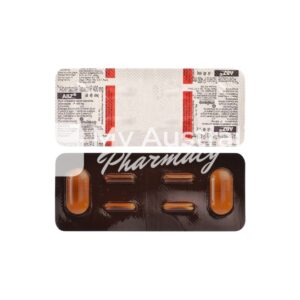
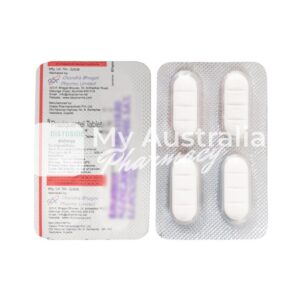
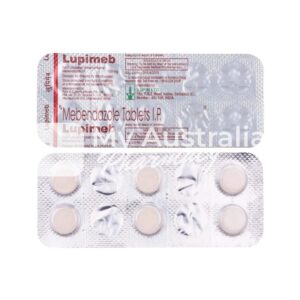
- Forms & dosages: Tablets 100 mg, chewable tablets 100 mg, oral suspension 20 mg/mL, 100 mg/5 mL, 30 mL
- Manufacturers in Australia: not specified; overseas suppliers and exporters include Teva, Sandoz and Mylan
- Registration status in Australia: not specified; in the EU it is EMA-approved and Rx in most states
- OTC / Rx classification: Usually prescription (Rx), though limited-size packages may be OTC in select countries
Latest Research Findings In Austria And The EU
Are people still asking whether Vermox really works for common worms?
That question comes up a lot in pharmacy counselling, especially when a child has pinworm, a school notice has gone out, or several people in one household are itchy at night.
Between 2022 and 2025, recent European reviews and guidance have continued to support mebendazole for common intestinal nematodes, particularly pinworm, roundworm, whipworm and hookworm.
The strongest practical message is unchanged: it works well for the usual intestinal helminths, but reinfection is common, so treatment success depends on hygiene and repeat dosing when advised.
Austrian-specific outcome datasets are limited, so much of what is used in local practice is extrapolated from EU evidence and routine primary care experience across similar school-age populations.
That matters because Austrian pharmacies dispense on a prescription basis, and counselling standards are shaped by the Österreichische Apothekerkammer as well as local prescribing practice.
For pinworm, the practical goal is symptom relief and stopping transmission, not just treating one person in isolation.
For roundworm, whipworm and hookworm, current EU guidance still supports short-course benzimidazole treatment with good expected response when taken correctly.
Recent clinical reviews also continue to stress that a second dose after 2 to 3 weeks is important for pinworm when reinfection risk is high.
That repeat dose is not a sign that the first treatment failed.
It is a practical step to catch worms that have developed after the first dose or eggs picked up again from the environment.
| Indication | Expected Response | Key Safety Signals | Practical Notes |
|---|---|---|---|
| Pinworm / threadworm | Usually good symptom improvement after 1 dose, with repeat treatment often needed | Abdominal pain, diarrhoea, nausea, rash | Household treatment and hygiene are essential |
| Roundworm | Good practical clearance with a 3-day course | GI upset, headache, raised liver enzymes | Use prescribed dose exactly |
| Whipworm | Usually responds to a 3-day course | Rash, abdominal discomfort, liver enzyme changes | Recheck if symptoms persist |
| Hookworm | Generally favourable response with short-course therapy | GI effects and rare blood dyscrasias | Medical review if anaemia or ongoing symptoms are present |
Data highlights.
Mebendazole remains the familiar deworming medicine for common helminth infections in European community practice.
For pinworm, a single 100 mg dose is still standard, but the repeat dose after 2 to 3 weeks is often the difference between temporary relief and lasting control.
For ascaris, trichuris and hookworm, the usual 3-day course remains well established and easy to explain in a pharmacy setting.
The main safety signals are usually gastrointestinal and mild, but liver enzyme elevation and rare blood dyscrasias are the red flags that need medical attention.
Clinical Effectiveness In Austrian Patients
What does mebendazole look like in real life, in a family that has just found threadworm at home?
In Austrian practice, the pattern is usually the same as elsewhere in Europe.
A parent notices night-time itching, a child is irritable, and the family wants a quick fix before school, kindergarten or sports starts again.
Real-world effectiveness is strongest when the diagnosis is likely, the dose is taken correctly, and everyone in the household follows the same prevention plan if the doctor recommends it.
Public Austrian outcome datasets are sparse, so prescribers and pharmacists often infer use from Sozialversicherung patterns, community demand and E-Medikation prescribing workflows rather than from large published local studies.
That still gives useful clues.
When a household presents with repeat requests, recurrence is usually driven by reinfection, missed doses, or untreated close contacts rather than poor drug activity.
This is why single-dose pinworm therapy so often needs a repeat dose after 2 to 3 weeks.
The first dose reduces the active worms.
The second dose helps clear worms that have emerged after the first treatment or have been picked up again from contaminated surfaces, bedding or hands.
In school-age children, adherence can be the biggest problem.
Families may be juggling after-school care, shared bathrooms, and language barriers that make instructions harder to follow.
Where this is the case, a short dosing plan and simple hygiene steps are more effective than complicated advice.
| Condition | Dose | Duration | Expected Practical Outcome |
|---|---|---|---|
| Pinworm | 100 mg once, repeat after 2 to 3 weeks if needed | 1 to 2 doses over 3 weeks | Often rapid symptom control if household measures are followed |
| Ascaris | 100 mg twice daily | 3 days | Good response in routine intestinal infection |
| Trichuris | 100 mg twice daily | 3 days | Practical clearance when taken as prescribed |
| Hookworm | 100 mg twice daily | 3 days | Usually effective for uncomplicated infection |
| Strongyloides | 200 mg twice daily | 3 days, sometimes longer | Specialist review may be needed |
| Taenia | 200 mg twice daily | 3 days, sometimes longer | Diagnosis and follow-up matter |
For children, the practical issue is often not the tablet itself but whether the family can administer it properly.
Chewable formulations or suspension can help when swallowing is a problem.
School attendance, childcare attendance and shared household routines all affect whether treatment succeeds the first time.
When instructions are given clearly and the repeat dose is not forgotten, mebendazole performs well in everyday Austrian use.
Indications And Expanded Uses
Which worm infections does mebendazole actually cover?
In EMA-aligned practice, the main indication is intestinal nematode infection.
That means the common worms seen in primary care and community settings, rather than every parasite under the sun.
The classification is ATC P02CA01, which places it in the benzimidazole anthelmintics.
In simple terms, it is a mebendazole for worms medicine used for a narrow but important group of intestinal infections.
- Pinworm
- The most common family outbreak scenario, often involving children and repeat exposure at home or in childcare.
- Roundworm
- A common intestinal nematode that usually responds to the standard short course.
- Whipworm
- Treated with the same general class, with a 3-day course usually used in practice.
- Hookworm
- Covered by the standard intestinal worm regimen in appropriate cases.
- Strongyloides and Taenia
- Can be discussed in specialist settings, but routine use should follow physician judgement and local diagnosis.
On-label use in Austria centres on common intestinal worms, while occasional off-label discussion belongs in specialist care rather than routine pharmacy advice.
That distinction matters because routine dispensing should follow the prescribed dose and the approved treatment plan.
Children under 2 years are generally not routine candidates.
Under 1 year, use is not recommended, and from 1 to 2 years the medicine should be used only with caution and medical direction.
Specialists may handle exceptional cases differently, but that is not something to improvise in community pharmacy.
| Context | Typical Use | Comments |
|---|---|---|
| On-label | Common intestinal nematodes | Most pharmacy counselling fits here |
| Specialist discussion | Selected stronger or less typical infections | Follow physician judgement |
| Young children | Usually avoided under 2 years | Use only when prescribed and supervised |
Composition And Brand Overview In Austria
Patients often ask whether Vermox is the only name to know.
The active ingredient is mebendazole, the INN used internationally, while brand naming and packaging vary a lot by country.
In Australia, patients may encounter imported packs or online pharmacy descriptions that reference Vermox 100 mg, Vermox suspension, mebendazole chewable tablets or mebendazole tablets from other markets.
That can be confusing if the pack looks different from the one they saw overseas.
The important point is to focus on the active ingredient, strength and authorised local dispensing advice rather than the colour of the box.
| Brand | Form | Strength | Availability Context |
|---|---|---|---|
| Vermox | Tablets, suspension | 100 mg tablets; 20 mg/mL or 100 mg/5 mL suspension | UK and EU reference brand |
| Emverm | Tablets, chewables | 100 mg | US market |
| Fluvermal | Oral suspension | 2% | France |
| Mebendazol-ratiopharm | Tablets | 100 mg | Germany |
| Pantelmin | Tablets, oral suspension | Varies by market | Mexico and Latin America |
Packaging differs between countries because product registration, local label rules and pack-size preferences differ.
That is why a German 10-tablet box may not match a French suspension bottle or a US chewable pack.
Australian counselling should rely on Australian authorisation and dispensing rules, even if the patient has bought imported packs through cross-border shopping or an online pharmacy.
Contraindications And Special Precautions
Who should pause before taking mebendazole?
The main absolute contraindications are hypersensitivity to mebendazole or any component, and pregnancy, especially the first trimester because of potential embryotoxicity.
That is why pregnancy status needs to be checked carefully in pharmacy counselling.
It is also why liver disease and the medicines listed in E-Medikation matter so much.
| Risk Group | Why It Matters | Pharmacist or Doctor Advice |
|---|---|---|
| Pregnancy, especially first trimester | Potential embryotoxicity | Avoid unless specifically advised by a doctor |
| Hypersensitivity | Risk of allergic reaction | Do not use if allergy is known |
| Severe hepatic impairment | Possible accumulation | Use only with specialist oversight |
| Very young children | Higher caution below 2 years | Not routine unless prescribed |
| Concomitant CYP450-modulating medicines | Potential change in exposure | Check the medication list carefully |
Common side effects are usually mild and include abdominal pain, diarrhoea, nausea and headache.
Rash and urticaria can occur, and raised hepatic enzymes are a practical monitoring issue when treatment is prolonged or the patient has liver disease.
Rare but important red flags include blood dyscrasias such as neutropenia, as well as seizures in high doses or overdose.
- Persistent rash or hives
- Stop and seek medical advice promptly.
- Severe stomach pain or vomiting
- Needs review, especially after a dose error.
- Yellowing of the skin or eyes
- Could point to liver trouble and should be checked.
- Fever or unusual infections
- Could suggest a rare blood problem.
Driving impairment is not the usual concern unless the person feels unwell from symptoms or side effects.
In practice, feeling sick is the bigger issue than any direct effect on driving.
Dosage Guidelines For Austrian Practice
What dose is actually used in day-to-day pharmacy counselling?
The standard Austrian-style dosing follows the same condition-based approach used in much of Europe.
For pinworm, 100 mg once is the usual dose, with a repeat dose after 2 to 3 weeks if needed.
For ascaris, trichuris and hookworm, the standard is 100 mg twice daily for 3 days.
For stronger infections such as strongyloides or taenia, 200 mg twice daily for 3 days is used, sometimes longer under medical supervision.
| Condition | Usual Dose | Duration | Practical Notes |
|---|---|---|---|
| Pinworm | 100 mg once | Repeat after 2 to 3 weeks if needed | Household and hygiene measures are crucial |
| Ascaris | 100 mg twice daily | 3 days | Short-course treatment is standard |
| Trichuris | 100 mg twice daily | 3 days | Follow the prescribed regimen exactly |
| Hookworm | 100 mg twice daily | 3 days | Medical review if symptoms continue |
| Strongyloides or Taenia | 200 mg twice daily | 3 days, sometimes longer | Specialist input may be needed |
Children under 2 years are generally not recommended candidates unless a specialist specifically prescribes treatment.
Under 1 year, mebendazole is not recommended.
There is no specific renal dose adjustment, but liver disease needs caution because plasma levels may rise.
Storage advice is simple but worth repeating: keep the medicine below 25°C, and protect it from moisture and light.
- Missed dose: Take it as soon as remembered unless the next dose is nearly due.
- Do not double up: Extra tablets do not improve cure rates and may increase side effects.
- Overdose: Nausea, vomiting and abdominal pain are possible; seek medical advice if symptoms are significant.
Interactions With Medicines, Food, And Drink
Do patients need to avoid certain foods with mebendazole?
Usually, the main issue is not food.
The bigger concern is co-medication review, especially drugs that induce or inhibit CYP450 enzymes and could change mebendazole exposure.
That is one reason the E-Medikation record is so useful in Austria, because it makes interaction checking much easier in pharmacies and medical practices.
| Interaction Type | Possible Effect | Pharmacist or Doctor Advice |
|---|---|---|
| CYP450 inducers | May reduce exposure | Check the full medicine list before treatment |
| CYP450 inhibitors | May increase exposure | Use caution, especially with liver disease |
| Alcohol | No specific food-style restriction is listed in the data | Practical advice is to avoid excess if feeling unwell |
| Coffee | No specific interaction is established in the data | No routine restriction; focus on the medicine review |
Patients often ask whether they can have a drink on a Friday evening after collecting their medicine.
There is no specific food restriction highlighted in the data, and the practical priority is the interaction check rather than a long list of dietary bans.
If the person is already nauseated, though, alcohol is unlikely to help how they feel.
For pharmacy counselling, a short medication reconciliation is usually the safest approach.
Cultural Factors And Patient Behaviour In Austria
Why do so many people wait until the issue becomes obvious before asking for help?
With worm treatment, embarrassment is common.
People may try self-treatment first, worry that their child will miss school, or hope the itching will just go away.
That delay can make recurrence more likely because the rest of the household may already be exposed.
In Austria, behaviour also varies by location.
City patients may pop into a chain pharmacy or a nearby independent Apotheken, while rural patients may rely on one local pharmacy and telephone advice that feels like telepharmacy.
Cross-border shopping is also part of the picture, especially near Germany, the Czech Republic and Hungary, where price-sensitive patients may compare packs or look for product availability.
Family routines matter too.
Childcare settings, school outbreaks and shared bathrooms all shape demand for threadworm treatment.
When one child brings home pinworm, parents often ask whether everyone needs treatment and whether the same pack can be used for the whole family.
That is where simple counselling helps most.
- Embarrassment often delays consultation until symptoms are hard to ignore.
- Families frequently worry about reinfection more than the first infection itself.
- Urban patients may have easier pharmacy access, while rural patients may depend on a single local pharmacy.
- Cross-border shopping can influence expectations about brand names and price.
- Childcare and school outbreaks drive repeat demand for deworming medicine.
Data highlight.
In practice, access is easier when the family understands the repeat dose, the hygiene steps and the need to treat contacts if advised.
That is often more important than the brand on the box.
Availability And Price Overview
How do Austrian patients usually get mebendazole?
The answer depends on prescription rules, local supply, and whether a registered product is stocked by the wholesaler.
In Austria, pricing and reimbursement are shaped by Rezeptpflicht, price regulation and Sozialversicherung rules.
That means the same medicine can feel very different to a patient depending on whether it is dispensed on prescription, bought through a pharmacy channel, or compared with an imported pack online.
In our online pharmacy, mebendazole is available without a prescription, with discreet delivery to Australia in 5-14 days.
That said, Austrian patients should still use legal channels and pharmacist counselling, especially when the pack is imported or the treatment is for a child.
| Channel | Likely Access | Price / Reimbursement Considerations |
|---|---|---|
| Independent Apotheken | Registered products through normal pharmacy supply | Depends on prescription status and local reimbursement rules |
| Benu | Pharmacy chain channel where stocked | Pricing depends on registered product and supply |
| dm pharmacy counter | Limited pharmacy-related access depending on jurisdiction and product status | May not carry the full prescription range |
| Online pharmacy | Interest is high for convenience and privacy | Use legal channels and check counselling support |
| Cross-border purchase | Patients sometimes compare German, Czech or Hungarian packs | Availability and price vary widely |
Common product formats in the market include Vermox 100 mg box of 6 tablets and mebendazole 20 mg/mL suspension.
Actual supply depends on registered products and wholesaler stock, not just what is listed online.
Comparable Medicines And Patient Preferences
What if mebendazole is not the right fit, or a patient is asking about something else?
In Austria, the main alternatives discussed are albendazole, pyrantel pamoate, levamisole and praziquantel.
Patients often compare them on price, availability and dosing convenience, especially when supply is patchy or they have seen a different brand across the border.
| Ingredient | Spectrum | Typical Use | Advantages | Limitations and Austrian Relevance |
|---|---|---|---|---|
| Albendazole | Broad anthelmintic coverage | Alternative deworming option | Well known class member | Different ATC code; may be preferred in specific settings |
| Pyrantel pamoate | Common intestinal worms | Threadworm medicine and other nematodes | Familiar for simple cases | Spectrum and dosing differ from mebendazole |
| Levamisole | Antinematodal use | Selected worm infections | Another option when chosen by a clinician | Less commonly chosen by patients who want a familiar brand |
| Praziquantel | Different parasite coverage | Used for different worm types | Important when the parasite is not a nematode | Not a like-for-like substitute for common threadworm treatment |
Mebendazole is often preferred for common intestinal worms because the dosing is familiar and pharmacy counselling is straightforward.
Some patients still choose an alternative if it is cheaper, easier to find, or the doctor prefers a different agent for a specific parasite.
That preference is especially noticeable when cross-border shopping or stock issues affect availability.
Frequently Asked Questions From Austrian Pharmacy Counselling
How fast does mebendazole work?
For pinworm, many people feel better after the first dose, but the repeat dose after 2 to 3 weeks is often needed to reduce reinfection.
For other intestinal worms, the usual 1 to 3 day course is the key part of treatment.
Does the whole family need treatment?
In pinworm outbreaks, household management is often important because spread between family members is common.
Whether contacts should be treated depends on medical advice and local circumstances.
Is it safe in children?
It is commonly used in children over 2 years, but children under 2 years are generally not routine candidates unless a specialist prescribes it.
For parents looking for pinworm medicine for children, simple dosing and hygiene advice are especially helpful.
What if a dose is missed?
Take it as soon as remembered unless the next dose is nearly due, and do not double up.
If vomiting or marked abdominal pain follows a dose, medical advice is sensible.
Can it be bought online or across the border?
Availability depends on the country and the product, because mebendazole is usually prescription-only, although limited-size packs may be OTC in some places.
Austria’s counselling standards still favour legal channels and pharmacist review, even when patients are comparing brands online or across the border.
Correct Use Guidance According To Austrian Counselling Standards
What does good counselling actually look like at the counter?
It starts with confirming the likely diagnosis where possible and then following the prescribed dose exactly.
For worm infections, a small mistake in timing can easily lead to repeat symptoms.
Pharmacists in Austria are expected to reinforce adherence, not invent a new regimen on the spot.
The Österreichische Apothekerkammer provides the professional context for safe dispensing and counselling, especially when families need simple instructions they can actually follow.
- Confirm the likely worm infection and the prescribed regimen.
- Check E-Medikation for other medicines and potential CYP450 issues.
- Ask about pregnancy, breastfeeding concerns and liver disease.
- Explain the dose, timing and whether a repeat dose is needed.
- Remind the patient about hygiene measures and household management.
- Advise storage below 25°C and away from moisture and light.
- Tell the patient to seek review if side effects are significant or symptoms persist.
| Do | Don’t |
|---|---|
| Use the prescribed dose and repeat timing | Do not guess the dose or shorten the course without advice |
| Treat contacts when advised | Do not assume one household member taking it is enough |
| Keep up hygiene measures | Do not rely on medicine alone if reinfection risk is high |
| Check pregnancy and liver history | Do not ignore safety questions at the counter |
Good pharmacy counselling turns a short course of Vermox tablets or Vermox suspension into a much better outcome for the whole family.
That is the practical difference between just buying a product and actually clearing the infection.
Delivery Across Australia
| City | Region | Delivery time |
|---|---|---|
| Sydney | New South Wales | 5-7 days |
| Melbourne | Victoria | 5-7 days |
| Brisbane | Queensland | 5-7 days |
| Perth | Western Australia | 5-7 days |
| Adelaide | South Australia | 5-7 days |
| Canberra | Australian Capital Territory | 5-7 days |
| Hobart | Tasmania | 5-7 days |
| Darwin | Northern Territory | 5-7 days |
| Gold Coast | Queensland | 5-7 days |
| Newcastle | New South Wales | 5-9 days |
| Wollongong | New South Wales | 5-9 days |
| Geelong | Victoria | 5-9 days |
| Townsville | Queensland | 5-9 days |
| Cairns | Queensland | 5-9 days |