Priligy
In brief
- Priligy (dapoxetine) can be purchased from Australian pharmacies and reputable e-pharmacies as a prescription-only medicine; in some online pharmacies it may be offered without a prescription, but it is officially registered as Rx in Australia.
- Priligy is used for the treatment of premature ejaculation in men aged 18–64 years. It works as a selective serotonin reuptake inhibitor (SSRI), helping to increase serotonin activity and delay ejaculation.
- The usual dose is 30 mg taken as needed, 1–3 hours before sexual activity; if needed and tolerated, the dose may be increased to 60 mg. Do not take more than one dose in 24 hours.
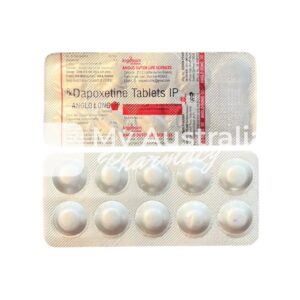
- It is taken by mouth as a film-coated tablet.
- It usually starts working within about 1–3 hours after taking it.
- The effect is short-acting and is intended for on-demand use, lasting long enough for the planned sexual activity rather than for all-day coverage.
- Avoid or limit alcohol, as it can increase dizziness, fainting, and other side effects.
- The most common side effects are dizziness, nausea, headache, diarrhoea, fatigue, insomnia, and increased sweating.
- Would you like to try Priligy without a prescription?
Latest Research Findings On Priligy In Austria And The EU
For Australian patients comparing overseas advice, the most useful evidence comes from Europe rather than from scattered local trial reports.
Priligy, with the active ingredient dapoxetine, is approved by the EMA and MHRA for men aged 18 to 64 years, and it is registered by the TGA in Australia as a prescription-only medicine.
The FDA has not approved it, which explains why some overseas websites give mixed messages about access and safety.
Across 2022 to 2025, European evidence has stayed consistent: on-demand dapoxetine remains the main short-acting SSRI option for premature ejaculation, with repeated gains in intravaginal ejaculatory latency time and better patient-reported control in many men.
The main trade-off is tolerability, especially dizziness and nausea, which remain the side effects most often discussed in pharmacy counselling.
Basic Priligy Information
- INN (International Nonproprietary Name): Dapoxetine
- Brand names available in Australia: Priligy
- ATC Code: G04BX14
- Forms & dosages: Tablet, 30 mg and 60 mg
- Manufacturers in Australia: Menarini Group
- Registration status in Australia: Registered and available as prescription-only
- OTC / Rx classification: Prescription-only (Rx) almost universally
Research and guideline summaries can be easier to scan side by side, especially when a man is trying to work out whether a premature ejaculation medication is actually worth discussing with a doctor.
| Study/Guideline | Population | Main finding | Relevance To Austria |
|---|---|---|---|
| EMA and MHRA approval summaries | Men aged 18–64 years with PE | Dapoxetine remains the approved on-demand SSRI option | Sets the practical standard for Austrian prescribing and counselling |
| European pharmacovigilance updates | Real-world users across the EU | Dizziness and nausea remain the main tolerability issues | Supports careful screening before a PE medication is dispensed |
| Recent European clinical practice reviews | Men with clinically significant PE | Improved ejaculatory control and patient satisfaction with on-demand use | Useful for Austrian GPs and urologists reviewing treatment response |
Data highlight: Priligy is approved for men aged 18 to 64 years, and the usual starting strength is Priligy 30 mg.
In practical terms, that makes the medicine a targeted option rather than a daily antidepressant-style approach.
For men in Austria who are reading about dapoxetine on local or cross-border pharmacy websites, the key point is simple: the evidence supports on-demand use for premature ejaculation, not casual long-term self-treatment.
Clinical Effectiveness In Austrian Patients
What does “working” actually look like for a man using Priligy tablets?
In Austrian practice, the answer is usually based on EU data plus GP or urologist review, because public Austria-specific outcome datasets are limited.
The standard Priligy dosage instructions are straightforward: 30 mg once as needed, with the option to increase to 60 mg, taken 1 to 3 hours before sexual activity and not more than once in 24 hours.
That on-demand approach suits men who want help only when they need it, rather than a daily routine.
Response is usually judged by ejaculatory control, distress, and sexual satisfaction rather than by repeated lab tests.
- Improved control
- Many men notice more control over timing and less feeling of “rushing”.
- Reduced distress
- Performance worry often eases once the man has a predictable plan.
- Better satisfaction
- Couples often report a more relaxed sexual experience after a few uses.
| What Patients Usually Notice | First Few Uses | Practical Meaning |
|---|---|---|
| More control | Often noticeable if the dose is taken correctly | Helps with planning and confidence |
| Less anxiety | Common when the medicine fits the person’s routine | May improve sexual satisfaction |
| Mild side effects | Can occur early, especially dizziness or nausea | Needs review if troublesome |
In Austria, prescriptions may appear in the e-card system through E-Medikation, which helps with medication reconciliation when more than one doctor is involved.
That matters for continuity, especially if a patient sees a GP, a urologist, and then collects the script from a community pharmacy.
Indications And Extended Use In Austrian Practice
The approved indication is narrow and clear: premature ejaculation in men aged 18 to 64 years.
Priligy is not recommended for chronic daily use, and it is not a depression monotherapy.
That matters because some online discussions blur dapoxetine tablets with standard antidepressants, even though the way this medicine is used is very different.
Austrian clinicians may still discuss off-label options when PE overlaps with anxiety, erectile dysfunction, or relationship distress, but those uses are outside the labelled indication.
Rezeptpflicht applies, so a doctor’s prescription is normally needed through a GP, urologist, or sexual health specialist.
| Indication | On-Label Or Off-Label | Austrian Prescribing Context |
|---|---|---|
| Premature ejaculation | On-label | Standard use for men aged 18–64 years |
| PE with anxiety or relationship distress | Off-label discussion only | May be considered alongside counselling or other treatment |
| Depression treatment | Not the indication | Should not be used as daily antidepressant therapy |
Patients searching for Priligy 30mg tablets or dapoxetine tablets online should still check the local register, because packaging and supply differ by country.
That is especially important if a website is listing cross-border stock with a different label or language.
Composition, Brand Names, And Packaging Available In Austria
Behind the brand name, the active ingredient is dapoxetine, and the ATC code is G04BX14.
That classification places it in the genito-urinary system and sex hormones group, within other urologicals.
The main brand in this market is Priligy, supplied as 30 mg or 60 mg film-coated tablets in 1-, 3-, or 6-tablet blister packs.
Local availability can vary by wholesaler and pharmacy ordering patterns, but the strength and pack information must match local requirements.
Menarini Group is a major European supplier, while generic or parallel-distribution product availability can differ by region.
| Brand | Strength | Pack Size | Austrian Relevance |
|---|---|---|---|
| Priligy | 30 mg | 1, 3, or 6 tablets | Common strength for starting treatment |
| Priligy | 60 mg | 1, 3, or 6 tablets | Used if 30 mg is tolerated but not enough |
Data highlight: Dapoxetine is the INN, and G04BX14 is the ATC code.
In e-pharmacies, the product may appear as Priligy Dapoxetine tablets or Priligy 30 mg/60 mg.
For patients comparing packaging online, the practical point is to match the medicine to the prescriber’s instructions, not just the brand image on the box.
Contraindications And Special Precautions For Austrian Patients
Some men should not take Priligy at all, and that is where careful pharmacy screening matters most.
Absolute contraindications include allergy to dapoxetine, heart failure, arrhythmia, a history of syncope, significant psychiatric disorders such as severe depression or mania, moderate or severe liver impairment, and concurrent use of MAO inhibitors, other SSRIs or SNRIs, thioridazine, or certain antifungals and macrolides.
Relative cautions include mild renal or hepatic impairment, a history of bleeding disorders, seizure disorders, orthostatic hypotension, and use with other serotonergic medicines or St John’s Wort.
For Austrian patients, the driving and work safety message is important because dizziness and fainting can matter on the road, on machinery, or during alpine and field work.
That is especially relevant for rural patients who drive longer distances and may not have a clinic nearby if symptoms start.
- Absolute contraindication: do not use unless a prescriber has specifically reviewed the risk.
- Relative caution: may be possible, but only with close monitoring and clear counselling.
- Urgent review: fainting, palpitations, severe mood change, or chest symptoms.
Taking the tablet with a large glass of water and avoiding standing suddenly may reduce syncope risk, but that does not replace proper screening.
Dosage Guidance Used In Austria
The usual starting point is simple: 30 mg once as needed.
If the medicine is tolerated but the benefit is not enough, the dose may be increased to 60 mg as a maximum single dose.
Priligy dosage instructions also require timing discipline: take it 1 to 3 hours before anticipated sexual activity, and do not take more than once in 24 hours.
There is no daily maintenance schedule, and there is no missed-dose concept because the medicine is used only when needed.
In Austrian practice, dose changes are usually discussed after a few uses if side effects are acceptable but the response is still insufficient.
| Patient Group | Dosing Recommendation | Key Caution |
|---|---|---|
| Adults with PE | Start at 30 mg once as needed | Take 1 to 3 hours before sex |
| Adults needing more effect | May increase to 60 mg | Maximum one dose per 24 hours |
| Under 18 years | Not indicated | Use not established |
| Over 65 years | Limited data | Not recommended due to higher adverse risk |
Data highlight: This is on-demand only, not a daily medicine.
Interactions, Alcohol, And Medicines Recorded In E-Medikation
The most important interactions are with serotonergic medicines and CYP3A4 inhibitors.
That includes SSRIs, SNRIs, MAO inhibitors, thioridazine, some antifungals, some macrolides, and St John’s Wort.
Alcohol can make dizziness, fainting, and impaired judgement more likely, which is why it should be discussed openly during counselling.
Caffeine is less central, but in sensitive patients it may aggravate anxiety or palpitations.
E-Medikation is useful because it helps pharmacists and prescribers see overlapping therapies, even when a patient has scripts from different providers.
| Interaction Type | Examples | What Austrian Pharmacists Usually Advise |
|---|---|---|
| Serotonergic medicines | SSRIs, SNRIs, MAO inhibitors | Avoid combination unless a prescriber has reviewed it carefully |
| CYP3A4 inhibitors | Some antifungals, some macrolides | Check before dispensing |
| Alcohol | Beer, wine, spirits | Limit or avoid because of dizziness and fainting risk |
| Herbal products | St John’s Wort | Do not combine without advice |
That interaction check is especially useful for patients who move between private specialists, public services, and community pharmacy counselling.
Cultural And Patient-Centred Realities In Austria
Many men do not ask straight away about premature ejaculation medication.
Some read discreetly online first, while others only raise it after relationship strain or performance anxiety starts to affect confidence.
Rural patients often rely on local independent Apotheken, while urban patients may have easier access to specialists and larger pharmacy networks such as BENU or dm pharmacy counters where available.
Privacy concerns can delay help-seeking, so calm and non-judgemental counselling matters a lot.
Priligy is searched in multiple scripts and local-language websites, which reflects how people compare information across borders and languages.
Some Austrians also look at Germany, Czech Republic, and Hungary for prices or supply, but prescription rules still apply.
- Common concern: “Will this be obvious at the pharmacy?”
- Common concern: “Do I need to explain everything to the doctor?”
- Common concern: “Can I compare prices across borders?”
| Access Pattern | Typical Situation | Practical Point |
|---|---|---|
| Rural | Local pharmacy and GP are the main touchpoints | Privacy and travel time matter |
| Urban | More specialist access and more pharmacy choice | Faster review and easier follow-up |
For Australian readers buying from an online pharmacy, Priligy is available without a prescription with discreet delivery to Australia in 5 to 14 days, which can be useful for men who prefer privacy.
Availability And Price Landscape In Austria
Priligy is prescription-only in Austria, and access depends on wholesaler stock and local ordering.
Price and reimbursement are shaped by Austrian pharmacy standards, price regulation, and Sozialversicherung coverage rules.
For many PE cases, reimbursement may be limited or absent, so it is sensible to confirm the cost before starting.
Online searches such as Dapoxetine 30mg buy online often mix genuine pharmacy supply with grey-market offers, so checking the national register and registered pharmacies remains important.
The usual packaging sizes are 1-, 3-, or 6-tablet blisters, which makes trial starts and short treatment runs easier to manage.
| Channel | Access | Pros | Cons |
|---|---|---|---|
| Independent pharmacy | Prescription supply | Personal counselling | Stock may need ordering |
| Pharmacy chain | Prescription supply | Broader ordering systems | Availability can still vary |
| Online option | Registered supply only | Convenient and discreet | Grey-market risk if the seller is not verified |
Data highlight: Check the official register before ordering, especially if the pack language looks different from what the prescriber described.
Comparable Medicines And Patient Preferences In Austria
Priligy is often compared with off-label SSRIs such as paroxetine, sertraline, and fluoxetine, as well as tramadol, clomipramine, and topical lidocaine-prilocaine products.
The practical difference is that dapoxetine is on-demand with rapid onset, while many alternatives are daily or pre-planned and may carry different side-effect burdens.
That makes patient preference a major part of counselling, not just the diagnosis.
Some men want convenience and spontaneity, while others prefer a topical option to avoid systemic effects.
Others want oral treatment because it feels more natural within a couple’s routine.
| Option | On-Demand? | Common Downside | Typical Austrian Use Case |
|---|---|---|---|
| Priligy | Yes | Dizziness, nausea | Men wanting quick, event-based treatment |
| Off-label SSRIs | No | Daily exposure and ongoing side effects | Men already on long-term treatment plans |
| Topical anaesthetic spray or cream | Pre-planned | Local application issues | Men wanting to avoid oral medicines |
| Tramadol or clomipramine | Usually no | Off-label use and tolerability concerns | Selected specialist cases |
For men comparing dapoxetine vs SSRIs for PE, the decision usually comes down to convenience, privacy, and whether they are willing to accept the nausea and dizziness profile.
Frequently Asked Questions From Austrian Pharmacy Consultations
- Can I take Priligy with alcohol?
- Alcohol can increase dizziness, fainting, and impaired judgement, so caution is sensible.
- Do I need a prescription in Austria?
- Yes, it is prescription-only, and prescriptions may be visible in E-Medikation.
- Is 30 mg or 60 mg better to start with?
- Start with 30 mg once as needed, then only increase if advised.
- Can I buy it online from abroad?
- Only if the seller is legitimate and the medicine is properly registered for the destination market.
Correct Use And Austrian Counselling Standards
The safest way to use Priligy tablets is to take them 1 to 3 hours before sex, keep to one dose per 24 hours, and store them at 25°C.
Original packaging matters because it protects the tablets from moisture and sunlight and keeps the label details intact.
That is also why they should stay away from children during storage and transport.
Pharmacists in Austria are expected to check for interactions, confirm the script on E-Medikation when available, and advise on hydration, standing slowly, and avoiding alcohol excess.
The Österreichische Apothekerkammer is the professional reference point for safe dispensing standards, and its focus on counselling aligns with sensible PE medication use.
- Take the tablet only when you anticipate sexual activity.
- Do not take more than one dose in 24 hours.
- Use 30 mg first unless the prescriber has instructed otherwise.
- Avoid alcohol excess and be careful with driving or machinery.
- Seek review if response is poor after several uses or side effects are troubling.
Warning box: Stop and seek medical help if syncope, palpitations, severe mood changes, or other worrying symptoms occur.
For ongoing use, a quick pharmacy review after a few doses can help decide whether the starting dose is enough or whether another option fits better.
Delivery Across Australia
| City | Region | Delivery time |
|---|---|---|
| Sydney | New South Wales | 5-7 days |
| Melbourne | Victoria | 5-7 days |
| Brisbane | Queensland | 5-7 days |
| Perth | Western Australia | 5-7 days |
| Adelaide | South Australia | 5-7 days |
| Canberra | Australian Capital Territory | 5-7 days |
| Hobart | Tasmania | 5-7 days |
| Darwin | Northern Territory | 5-7 days |
| Gold Coast | Queensland | 5-7 days |
| Newcastle | New South Wales | 5-7 days |
| Wollongong | New South Wales | 5-7 days |
| Geelong | Victoria | 5-7 days |
| Townsville | Queensland | 5-9 days |
| Cairns | Queensland | 5-9 days |
| Bendigo | Victoria | 5-9 days |