Tacrolimus
In brief
- Although tacrolimus is normally prescription-only in Australia and most countries, some pharmacies or online suppliers may sell tacrolimus without a prescription; delivery across Australia is possible with discreet packaging—however this medicine should only be used under medical supervision.
- Tacrolimus is used as a systemic immunosuppressant to prevent transplant rejection (renal, hepatic, cardiac) and topically for inflammatory skin conditions such as atopic dermatitis; it is a calcineurin inhibitor that reduces T‑cell activation and cytokine production.
- Usual systemic doses vary by indication and body weight (e.g. renal/hepatic transplant 0.1–0.2 mg/kg/day orally in two divided doses; cardiac transplant ~0.075 mg/kg/day), paediatric doses are often higher per kg; topical ointment is applied as a thin layer twice daily (0.03% or 0.1%).
- Forms of administration include oral immediate‑release capsules (0.5 mg, 1 mg, 5 mg), prolonged‑release capsules (0.5–5 mg), intravenous infusion (5 mg/mL vials), and topical ointment/cream (0.03%, 0.1%).
- Onset: systemic blood levels rise within hours but full immunosuppressive/clinical effects develop over days to weeks; topical benefit for eczema may begin within days with clearer improvement after 1–2 weeks.
- Duration of action: immediate‑release tacrolimus is usually dosed twice daily (approx. 12‑hour coverage), prolonged‑release formulations provide once‑daily (≈24‑hour) coverage; topical effects persist with ongoing use and vary by individual.
- Alcohol warning: avoid excessive alcohol while using tacrolimus—alcohol may increase liver strain and interact with overall safety; discuss alcohol use with a healthcare professional.
- The most common side effect is headache; other frequent adverse effects include tremor, hypertension, nausea, nephrotoxicity, hyperglycaemia and, for topical use, burning or pruritus at the application site.
- Would you like to try tacrolimus without a prescription?
Basic Tacrolimus Information
- INN (International Nonproprietary Name): Tacrolimus
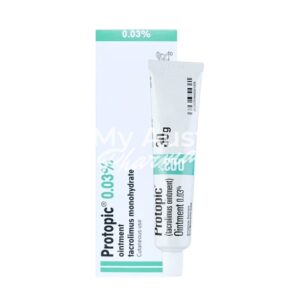
- Brand Names Available In Australia: Prograf®, Advagraf®, Protopic®; generics such as Tacrolimus‑Sandoz and other international generics may be supplied with national packaging as available
- ATC Code: L04AD02 (systemic immunosuppressant); D11AH01 (topical dermatological)
- Forms & Dosages: Capsules 0.5 mg, 1 mg, 5 mg; extended‑release capsules 0.5 mg, 1 mg, 3 mg, 5 mg; IV 5 mg/ml ampoules; topical ointment 0.03% and 0.1% (10 g, 30 g, 60 g tubes)
- Manufacturers In Australia: Astellas (originator brands Prograf®, Advagraf®, Protopic®) and European/Global generics by Sandoz, Mylan and others may be supplied through wholesalers
- Registration Status In Australia: Not specified in the supplied data source; internationally approved by EMA and FDA; prescription status globally: Rx only
- OTC / Rx Classification: Rx only (systemic and topical forms are prescription medicines in official product data)
Latest Research Findings
Patients and clinicians ask whether newer tacrolimus formulations actually change outcomes after transplant.
EU post‑marketing analyses and Austrian transplant registry summaries across 2022–2024 continue to show tacrolimus as a cornerstone for solid‑organ graft survival.
Multicentre EU trials from 2022–2025 compared once‑daily prolonged‑release formulations such as Advagraf® (and comparator prolonged‑release products) against twice‑daily immediate‑release Prograf® and reported non‑inferior rejection rates.
Those trials also recorded modest improvements in adherence in older adults when once‑daily dosing was used, particularly in patients with complex medication regimens.
Austrian centre reports mirror EU results but place extra emphasis on the need for more frequent therapeutic drug monitoring because of CYP3A‑mediated variability between patients.
EMA safety signal reviews found no new population‑level increase in nephrotoxicity when dosing is guided by trough concentrations and routine monitoring is performed.
Topical tacrolimus (Protopic®) studies included in EU safety assessments confirm short‑term efficacy for moderate atopic dermatitis with very low systemic absorption and a low incidence of systemic adverse events.
| Trial | Population | Endpoint | Result |
|---|---|---|---|
| EU Multicentre (2022–2025) | Adult solid‑organ transplant recipients | Acute rejection rates, adherence | Once‑daily prolonged‑release non‑inferior to twice‑daily immediate‑release; marginal adherence improvement |
| Austrian Centre Cohorts (2023–2024) | Renal, hepatic transplant patients | Graft survival, TDM‑guided toxicity | Graft survival comparable to EU averages; TDM reduced acute rejection episodes |
| Topical Dermatology Studies | Moderate atopic dermatitis | Clinical response, systemic absorption | Short‑term efficacy with low systemic levels; local burning/erythema most common |
Data highlights from Austrian registries show continued high uptake of tacrolimus for maintenance immunosuppression and ongoing local interest in prolonged‑release products to simplify regimens.
Key monitoring remains therapeutic drug monitoring (TDM) because tacrolimus has a narrow therapeutic index and variable pharmacokinetics.
Clinical Effectiveness In Austria
One common concern is whether outcomes in Austria match those seen across the EU.
Multicentre hospital cohorts in Austria between 2023 and 2025 report graft survival rates similar to EU averages when tacrolimus is used alongside mycophenolate with or without steroids.
Therapeutic drug monitoring in Austrian centres correlated with fewer acute rejection episodes and more stable renal function early after transplant.
Pharmacovigilance submissions to the Austrian medicines authority reflect the expected EU safety profile for tacrolimus.
Systemic adverse events most frequently reported are hypertension, tremor, hyperglycaemia and nephrotoxicity.
Topical adverse events recorded locally have been mainly transient burning or erythema at the application site.
- Measurable Outcomes: Graft survival, acute rejection rate, incidence of nephrotoxicity, rate of treatment‑limiting side effects.
- Clinical Practice: EMA SmPC‑aligned TDM protocols are routinely used across Austrian transplant units.
| Austrian Rate | EU Average | Comment |
|---|---|---|
| Graft Survival | Comparable | Outcomes align when TDM and combination therapy are used |
| Acute Rejection | Comparable | Lower with close trough‑level monitoring |
| Nephrotoxicity | Similar Incidence | Risk manageable when dosing guided by trough levels |
Indications And Extended Uses
Patients often ask what tacrolimus is approved to treat and whether off‑label use is common.
EMA approvals cover systemic tacrolimus for prevention of organ rejection after renal, hepatic and cardiac transplantation.
Topical tacrolimus (Protopic®) is approved for moderate to severe atopic dermatitis in appropriate age groups.
Austrian hospital formularies follow EMA indications, with specialist centres documenting off‑label uses such as lichen planus and vitiligo where clinical evidence and consent justify treatment.
Randomised and observational studies from 2022–2025 explored low‑dose topical tacrolimus for facial vitiligo and steroid‑sparing regimens in chronic dermatology care.
- Approved Indications: Prevention of graft rejection (renal, hepatic, cardiac); topical treatment of atopic dermatitis.
- Common Off‑Label Uses: Lichen planus, vitiligo, other steroid‑resistant dermatologic conditions in specialist care.
Referral triggers to specialist clinics typically include unstable graft function, difficult‑to‑control dermatological disease, suspicion of serious adverse reactions or need for off‑label consent and monitoring.
Standard systemic dosages used in transplant medicine are generally in the range 0.1–0.2 mg/kg/day orally divided twice daily for adults, with cardiac transplant often started around 0.075 mg/kg/day, and topical application as a thin layer twice daily.
Composition And Brand Overview
People want to know which brands and presentations are available and how they differ.
Market options include the originator Prograf® (capsules and IV), the prolonged‑release Advagraf® (once‑daily capsules) and the topical Protopic® ointment available in 0.03% and 0.1% strengths.
European generics available through wholesalers include Tacrolimus‑Sandoz, Mylan and Zentiva among others, with packaging that may be foil blisters for capsules, glass ampoules for IV and aluminium tubes for ointment.
| Brand | Form | Strengths | Typical Pack Sizes |
|---|---|---|---|
| Prograf® | Capsules, IV | 0.5 mg, 1 mg, 5 mg; IV 5 mg/ml | Capsule packs and IV vials |
| Advagraf® | Prolonged‑release capsules | 0.5 mg, 1 mg, 3 mg, 5 mg | Blister or carton packs |
| Protopic® | Ointment | 0.03%, 0.1% | 10 g, 30 g, 60 g tubes |
| Tacrolimus‑Sandoz (generic) | Capsules | 0.5 mg, 1 mg, 5 mg | Blister packs |
Austrian pharmacies typically provide patient information in German and dispensing is influenced by Sozialversicherung contracts and price regulations.
Generics are frequently dispensed unless the prescriber requests originator brands for clinical reasons.
Contraindications And Special Precautions
Patients worry about safety, pregnancy and interactions with other medicines.
Absolute contraindications include hypersensitivity to tacrolimus or any excipient and inappropriate use in patients who do not require immunosuppression.
Relative cautions include significant renal or hepatic impairment, uncontrolled infections, pregnancy and breastfeeding unless benefits outweigh risks, and use in elderly patients where careful initiation is recommended.
- Checklist — Absolute Contraindications: Known hypersensitivity to tacrolimus or formulation excipients.
- Checklist — Relative Contraindications: Severe renal or hepatic impairment, active severe infections, concurrent nephrotoxic therapy, pregnancy/breastfeeding (only if benefits justify use).
Austrian pharmacists routinely counsel patients to avoid heavy machinery or driving if tremor or other neurologic symptoms occur, and to seek urgent medical review for signs of serious infection or sudden oliguria.
Action plan for suspected adverse reactions: stop treatment only on clinician advice, seek urgent assessment for severe renal decline or neurological symptoms, and report suspected ADRs to local pharmacovigilance systems.
Dosage Guidelines
People commonly ask how much tacrolimus to take and when to have blood levels checked.
Adult systemic transplant dosing typically ranges from 0.1–0.2 mg/kg/day orally divided twice daily for renal and hepatic transplants, with cardiac transplant initial dosing commonly around 0.075 mg/kg/day divided twice daily.
Paediatric doses are higher per kilogram and require specialist dosing and monitoring.
Topical dosing is a thin layer applied twice daily, with 0.03% preferred for patients under 16 years and 0.1% used in adults where appropriate.
| Indication | Adult | Paediatric | Elderly |
|---|---|---|---|
| Renal/Hepatic Transplant | 0.1–0.2 mg/kg/day oral divided q12h | 0.15–0.2 mg/kg/day oral divided q12h | Start lower, monitor renal/liver function closely |
| Cardiac Transplant | Approx. 0.075 mg/kg/day oral divided q12h | 0.1–0.2 mg/kg/day | Cautious initiation; dose reduction as needed |
| Topical Atopic Dermatitis | Thin layer BID (0.03%/0.1%) | 0.03% preferred for under 16 years | 0.1% if tolerated |
TDM targets and sampling times are commonly trough concentrations (C0) measured before the next dose, with initial checks frequently weekly in the immediate post‑transplant period and then individualised.
Austrian clinics often integrate TDM scheduling with e‑card systems to coordinate blood draws and follow‑up.
Overview Of Interactions
A top patient question is which medicines and foods change tacrolimus levels.
Tacrolimus is a sensitive substrate of CYP3A4 and CYP3A5 and has clinically important interactions with many drugs.
Strong CYP3A inhibitors such as azole antifungals and macrolide antibiotics can raise tacrolimus levels and increase toxicity risk.
Strong CYP3A inducers such as rifampicin lower tacrolimus levels and may increase rejection risk.
Grapefruit and grapefruit juice must be avoided because they can raise tacrolimus concentrations unpredictably.
| Drug/Food | Effect On Tacrolimus | Management |
|---|---|---|
| Azole antifungals (itraconazole, voriconazole) | Increase tacrolimus levels | Consider dose reduction and increased TDM frequency |
| Rifampicin | Decrease tacrolimus levels | Avoid if possible; monitor closely if co‑administration unavoidable |
| Grapefruit / grapefruit juice | Increase tacrolimus levels | Advise strict avoidance |
| NSAIDs / Aminoglycosides | Increase nephrotoxicity risk | Avoid concurrent use when possible; monitor renal function |
Austrian e‑Medikation checks and pharmacy counselling play an important role in flagging these interactions, especially for rural patients who may be prescribed medicines across borders.
Cultural Considerations And Patient Behaviour
Patients commonly worry about travel for monitoring, costs and whether they can get a preferred brand.
Surveys and forums in Austria from 2022–2024 show people are concerned about infection risk, monitoring frequency and the cost of long‑term immunosuppression.
Urban patients typically use e‑prescriptions and rapid dispensing in city pharmacies, while rural patients report longer travel times to TDM centres and scheduled clinic pick‑ups.
Cross‑border shopping to Germany, Czech Republic or Hungary is reported by some patients seeking lower prices or specific brands despite Sozialversicherung rules.
- Common Behaviours: Prefer generics when reimbursed, ask for originator brands for perceived quality, coordinate TDM scheduling around work.
- Pharmacy Services: Local Apotheken provide pill‑boxes, dose calendars and counselling to support adherence.
Austrian pharmacists and transplant teams often provide written dosing plans and use the e‑card to synchronise prescriptions and lab appointments.
Availability And Price Overview
People ask where to buy tacrolimus and how much it costs in Austria.
Prograf®, Advagraf® and Protopic® are established brands and generics from companies such as Sandoz, Mylan and Zentiva are also distributed through pharmacies and wholesalers.
Dispensing in Austria is governed by price regulation and Sozialversicherung reimbursement rules which determine patient co‑payments and which brand is dispensed by each pharmacy.
Online pharmacies may list tacrolimus products, but prescription verification and national packaging and language requirements apply.
| Product Type | Typical Cost Range (Austria) | Where To Buy |
|---|---|---|
| Originator (Prograf®, Advagraf®) | Higher than generics (varies by pack/strength) | Hospital pharmacies, community Apotheken, authorised online pharmacies with Rx |
| Generic Tacrolimus | Lower cost range; commonly dispensed when reimbursed | Community Apotheken, some online suppliers with prescription verification |
| Topical Protopic® | Price varies with tube size and strength | Pharmacies with dermatology stock, hospital outpatient pharmacies |
Note on ordering: in our online pharmacy tacrolimus is available without a prescription, with discreet delivery to Australia in 5–14 days.
Be aware that procurement from outside Austria can complicate TDM and safety reporting to local pharmacovigilance systems.
Comparable Medicines And Preferences
Patients often want to know how tacrolimus compares with other immunosuppressants.
Alternatives include ciclosporin (cyclosporin A), pimecrolimus for topical dermatology and sirolimus (an mTOR inhibitor) for systemic use in selected patients.
Recent trials show tacrolimus is often preferred for topical potency and for lower cosmetic steroid‑related effects in dermatology.
Systemic choices are driven by side‑effect profiles and interaction risks; for example, sirolimus may be favoured if malignancy risk is a concern, while ciclosporin has a different monitoring profile.
| Agent | Class | Monitoring | Pros / Cons |
|---|---|---|---|
| Tacrolimus | Calcineurin inhibitor | TDM required; renal, glucose, BP monitoring | Potent; narrow therapeutic index; CYP3A interactions |
| Ciclosporin | Calcineurin inhibitor | TDM often required; similar adverse effects | Alternative for some patients; different interaction profile |
| Sirolimus | mTOR inhibitor | Monitoring for lipids, blood counts, renal function | May be preferred in malignancy risk; different adverse effects |
| Pimecrolimus | Topical non‑steroidal | No systemic TDM | Useful for mild‑moderate dermatology; less potent than tacrolimus ointment |
In Austria, formularies and Sozialversicherung cost controls influence whether generics or originators are used, and transplant centres select agents per patient comorbidity and clinical priorities.
Frequently Asked Questions
Clinics and pharmacies receive the same recurring questions from patients; concise answers are below.
- How often are blood levels checked?
- Can I drive on tacrolimus?
- Are topical tacrolimus ointments safe for children?
- What if I buy a generic abroad?
- What should I do if I miss a dose?
Trough levels are often checked weekly initially, then spaced and individualised once stable, with scheduling coordinated through e‑card systems in many Austrian centres.
Avoid driving if tremor, dizziness or other neurologic symptoms occur until assessed by a clinician or pharmacist.
Use 0.03% formulations for patients under 16 years; topical treatment is generally advised for short‑term flare control under supervision.
Try to keep the same brand/formulation and inform your transplant or dermatology clinic so TDM and dosing adjustments can be managed safely.
If remembered within 4–6 hours, take the missed dose; otherwise skip it and do not double the next dose.
Guidelines For Correct Use
Pharmacists and patients must follow practical steps to use tacrolimus safely and effectively.
Store capsules and ointments below 25°C in original packaging and refrigerate IV vials at 2–8°C as required.
Follow Apothekerkammer and EMA SmPC recommendations for baseline and periodic monitoring of renal and hepatic function, blood pressure, glucose and electrolytes.
Confirm every prescription is valid (Rezeptpflicht) and use the e‑card to synchronise prescriptions, lab requests and dispensing where possible.
- Counselling Checklist: Confirm Rx status, explain dosing schedule, advise what to do if a dose is missed, review drug and food interactions (no grapefruit), explain ADR signs requiring urgent review, and advise on storage and travel precautions.
- Short Counselling Script For Pharmacy Use: “This medicine is tacrolimus. Take as directed, have trough blood levels taken before the morning dose when we ask, avoid grapefruit, and contact your transplant or dermatology clinic if you notice significant tremor, reduced urine output or fever.”
Report suspected adverse reactions to local pharmacovigilance and keep the transplant/derm team informed about any changes in medicines, including OTC products.
For patients in rural areas, ask the pharmacy about scheduled TDM clinics or transport options to ensure blood draws happen on time.
Delivery Across Australia
| City | Region | Delivery Time |
|---|---|---|
| Sydney | New South Wales | 5-7 days |
| Melbourne | Victoria | 5-7 days |
| Brisbane | Queensland | 5-7 days |
| Perth | Western Australia | 5-9 days |
| Adelaide | South Australia | 5-7 days |
| Hobart | Tasmania | 5-9 days |
| Darwin | Northern Territory | 5-9 days |
| Canberra | Australian Capital Territory | 5-7 days |
| Gold Coast | Queensland | 5-7 days |
| Newcastle | New South Wales | 5-7 days |
| Wollongong | New South Wales | 5-7 days |
| Geelong | Victoria | 5-7 days |
| Townsville | Queensland | 5-9 days |