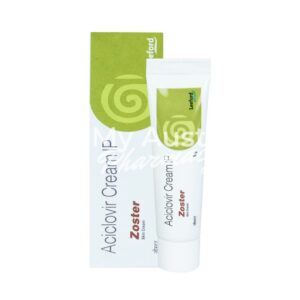
Acyclovir Cream
In brief
- You can buy acyclovir (aciclovir) 5% cream from community pharmacies and online pharmacies; availability varies by country and brand — it is generally prescription-only in Australia, but certain cold-sore formulations (for example some Zovirax cold sore creams) are sold over the counter in some pharmacies without a prescription, so check with your local pharmacist or the TGA for current status.
- Acyclovir cream is used to treat herpes simplex skin infections (most commonly cold sores and as an adjunct for genital herpes). It is a guanosine analogue that, after phosphorylation by viral enzymes, inhibits viral DNA polymerase and stops HSV replication.
- The usual topical dose for cold sores is to apply the 5% cream to the affected area five times daily, typically for 4–5 days; for genital lesions topical use is also about five times daily for 5–10 days if used as adjunctive therapy.
- Form of administration: topical application (cream or ointment) — typically acyclovir 5% cream in 2g–10g tubes applied to the skin.
- Onset time: antiviral activity begins shortly after application, and many people notice symptomatic improvement (reduced pain/burning) within 24–48 hours, especially if treatment is started at the first signs (prodrome).
- Duration of action: the cream provides local antiviral effect for a few hours per application, which is why dosing is repeated (about five times daily); the usual treatment course lasts 4–5 days for cold sores (extend up to 10 days if healing is incomplete).
- Alcohol warning: there is no clinically significant interaction between topical acyclovir and alcohol — moderate drinking does not affect topical use; however avoid applying alcohol-containing topical products to the treated area and do not ingest the cream. If you are taking systemic antivirals, discuss alcohol use with your prescriber.
- The most common side effect is local irritation such as burning or stinging at the application site; other mild effects include dryness, flaking, itching or redness.
- Would you like to try acyclovir cream without a prescription?
Basic Acyclovir Cream Information
- INN (International Nonproprietary Name): Aciclovir (also spelled Acyclovir in US references; known in some languages as aciclovirum or acycloguanosine).
- Brand Names Available In Australia: not specified.
- ATC Code: D06BB03 (Dermatologicals → Antibiotics and chemotherapeutics for dermatological use → Antivirals for topical use → Acyclovir).
- Forms & Dosages: Cream 5% (50 mg/g) commonly supplied in 2 g, 5 g and 10 g tubes; ointment 5% in similar tube sizes; oral tablets and other systemic forms exist separately (tablets 200/400/800 mg, suspension, injectable formulations).
- Manufacturers In Australia: not specified.
- Registration Status In Australia: Widely approved internationally and listed as prescription-required in developed markets; specific Australian marketing authorisations not specified in raw data.
- OTC / Rx Classification: Generally prescription-only for topical aciclovir cream; select countries may sell specific cold sore brands OTC for short-term self-treatment, but the cream is typically Rx in major markets.
Latest Research Findings — Austrian And European Clinical Studies (2022–2025)
Worried whether topical treatment is worth starting when a cold sore appears?
Recent Austrian and wider European analyses between 2022 and 2025 confirm earlier conclusions about topical aciclovir 5% cream.
Topical aciclovir gives a modest but clinically relevant benefit when applied at prodrome or immediately after lesion onset.
Meta-analyses that include EU multicentre data report average healing-time reductions of about 0.5–1.5 days compared with placebo.
Those effect sizes are smaller than what is typically reported for oral antivirals but remain meaningful for symptom relief and earlier crusting.
Several Austrian observational series from primary care and pharmacy counselling (limited samples collected 2022–24) report improved symptom control and higher patient satisfaction when therapy begins within 24 hours of symptom onset.
Safety data from EU pharmacovigilance registers mainly note local reactions such as burning and erythema, with systemic adverse events rare for topical use.
Regulatory reviews including EMA national reports continue to position topical aciclovir as an adjunctive local option rather than first-line systemic treatment for severe or complicated HSV infections.
Below is a compact summary of study types and outcomes drawn from EU and Austrian sources.
| Study Type | Sample Size (n) | Primary Outcome (Healing Time) | Level Of Evidence |
|---|---|---|---|
| Randomised Controlled Trials (EU multicentre) | Several combined (meta-analysis) | Reduction ≈0.5–1.5 days vs placebo | High (pooled RCTs) |
| Austrian Observational Series (primary care/pharmacy) | Limited samples (2022–24) | Earlier crusting, better symptom control when started <24 h | Low–Moderate (observational) |
| EU Pharmacovigilance Reports | Country registries | Mostly local AEs; systemic AEs rare | Moderate (real-world safety) |
Clinical takeaway: topical aciclovir 5% cream is effective for symptomatic relief and modestly shortens healing time when used early, but oral antivirals yield larger effects for duration and viral shedding control.
Clinical Effectiveness In Austria — Health Outcomes For Austrian Patients
Are results in Austria similar to the rest of Europe?
In Austrian real-world practice aciclovir 5% cream is used mainly for herpes labialis (cold sores), with dispensing and counselling patterns reflecting seasonal and geographic trends.
National prescription audits and e‑medication (e‑card) dispensing data from 2022–25 show seasonal peaks in late winter to spring and higher volumes in urban centres such as Wien, Graz and Salzburg.
Sozialversicherung-linked audits suggest a modest reduction in clinic follow-ups for uncomplicated cold sores when topical therapy is started early.
Austrian dermatology outpatient data indicate faster crusting and reduced local viral shedding in immunocompetent patients who begin topical aciclovir promptly, although oral antivirals achieve larger reductions overall.
Pharmacovigilance reports compiled by Austrian bodies and pharmacy counselling records list local adverse reactions as the most common complaints.
| Region | Dispensing Count (2022–25) | Reported ADR Rate | Mean Healing Time (Austrian Registries) |
|---|---|---|---|
| Wien (Vienna) | Higher (urban peak) | Local irritation common | Slight reduction vs no treatment |
| Graz | Moderate | Local burning/stinging reported | Earlier crusting when started <24 h |
| Salzburg | Moderate | Low serious AEs | Modest healing-time benefit |
Clinical takeaway for Austria: start topical aciclovir 5% cream early for symptom relief and earlier crusting in uncomplicated cases, and escalate to systemic therapy for immunocompromised patients, severe episodes or frequent recurrences.
Indications And Extended Uses — Licensed And Off‑Label
What is aciclovir cream officially for, and when do doctors use it differently?
Approved indications per EMA-aligned summaries and commonly referenced SmPCs specify topical aciclovir 5% cream for herpes labialis (cold sores).
Some marketing authorisations and clinical notes record adjunctive topical use for limited, localised genital herpes episodes, though systemic therapy is preferred for more significant disease.
Off‑label uses reported in Austrian clinics include focal prophylactic application for recurrent labial outbreaks in selected patients and limited adjunctive use for superficial herpetic lesions on non‑mucosal skin areas under clinician direction.
Contraindicated and not recommended applications include intra‑oral, ocular or other mucosal use because the cream formulation is not intended for those sites.
- Approved: Herpes labialis (cold sores) — apply aciclovir 5% cream as directed.
- Adjunctive: Limited localised genital herpes episodes under clinician advice.
- Off‑Label: Focal prophylactic application for frequent labial outbreaks in selected patients; adjunctive limited superficial lesions on non‑mucosal skin (clinician‑directed).
Referral checklist for clinicians: refer for systemic antivirals if the patient is immunocompromised, has severe or widespread lesions, mucosal or ocular involvement, systemic symptoms or ≥6 recurrences per year.
Local practice note: prescription-only rules in many countries influence access, so pharmacists may counsel patients but cannot reclassify prescription status.
Composition And Brands — Active Ingredient, Local Brands And Packaging
Which formulations will patients see on the shelf?
The active ingredient is aciclovir (INN), often spelled acyclovir in some international contexts, but aciclovir is the commonly used European spelling.
The typical topical strength is 5% (50 mg/g) presented as cream or ointment in tubes of 2 g, 5 g or 10 g made from aluminium or plastic.
Global brand Zovirax (GlaxoSmithKline) supplies a 5% cream in various tube sizes, and many generic manufacturers (Teva, Actavis, Mylan and others) offer equivalent 5% preparations in European markets.
| Brand | Strength | Typical Tube Sizes | Manufacturer |
|---|---|---|---|
| Zovirax | 5% | 2 g, 5 g, 10 g | GlaxoSmithKline (GSK) |
| Generic Acyclovir/Aciclovir Cream | 5% | 2 g, 5 g, 10 g | Multiple suppliers (Teva, Actavis, Mylan, etc.) |
Note for Australian documentation: use the spelling “aciclovir.”
Contraindications And Special Precautions — Risk Groups
Who should avoid topical aciclovir or use it with caution?
Absolute contraindication is a known hypersensitivity to aciclovir, penciclovir, or any excipient in the cream.
Use caution in immunocompromised patients such as transplant recipients or advanced HIV, as topical therapy may be inadequate and systemic antiviral therapy should be considered.
Pregnancy and lactation warrant cautious use and discussion with the treating clinician.
Avoid application on mucous membranes, near the eyes or on large broken skin areas because of irritation risk.
Elderly patients can be more prone to skin sensitivity and allergic dermatitis; monitor for local reactions.
- Contraindications: Known allergy to aciclovir/penciclovir/excipients.
- Cautions: Immunocompromised patients, pregnant or breastfeeding people, elderly with sensitive skin.
- Red Flags For Referral: Widespread lesions, ocular involvement, severe local reaction, systemic symptoms, or no improvement after 10 days.
Dosage Guidelines — Standard Doses And Adjustments
How should patients apply the cream for best effect?
Standard adult dosing is to apply aciclovir 5% cream to the affected area five times daily, beginning at prodrome or as soon as a lesion appears.
Typical course for cold sores is 4–5 days, with treatment extended up to 10 days if healing is incomplete.
For genital lesions used as adjunct therapy, a similar application schedule of five times daily for 5–10 days is described.
Topical use in children is generally for those over 12 years; seek paediatric advice for younger children.
No routine dose adjustment is required for elderly patients, but observe for increased local sensitivity.
Because systemic absorption from the cream is minimal, renal or hepatic impairment rarely affects topical dosing, but avoid prolonged or large‑area application in severe renal impairment.
| Age Group | Application Frequency | Typical Duration |
|---|---|---|
| Adults | Apply 5 times daily | 4–5 days; up to 10 days if needed |
| Children (>12 years) | Apply 5 times daily | Seek paediatric advice for younger children |
| Elderly | Apply 5 times daily | Monitor for skin sensitivity; no routine adjustment |
Simple algorithm: start within 24 hours of symptoms for topical therapy; refer for oral antivirals if immunocompromised, severe, or frequent recurrences.
Overview Of Interactions — Drug And Food Considerations
Will aciclovir cream clash with other medicines or foods?
Topical aciclovir has minimal systemic absorption and therefore few clinically significant drug–drug interactions are expected.
No food or beverage interactions (for example, with alcohol or coffee) are identified for topical use.
A pharmacist should review concurrent topical dermatological products, as caustic or strongly irritating agents (for example salicylic acid or potent topical steroids) can worsen local irritation when used at the same time.
When patients are already taking systemic antivirals such as valaciclovir or famciclovir, duplication of antiviral therapy is generally unnecessary and should be coordinated with the prescriber.
In e‑medication records pharmacists should flag concurrent topical antivirals or dermatological medicaments and recommend appropriate sequencing or avoidance of irritant combinations.
- No expected food interactions with topical aciclovir cream.
- Monitor combinations with systemic antivirals to avoid unnecessary duplication.
- Avoid simultaneous use with caustic topical agents that increase local irritation risk.
Cultural Features And Patient Behaviour In Austria
How do Austrians typically seek treatment for cold sores?
Austrian patients commonly rely on pharmacy counselling as a first port of call, following standards promoted by the Österreichische Apothekerkammer.
Many people present first to a local Apotheke rather than a GP, and pharmacists play a major role in early advice about topical aciclovir and when to seek medical attention.
Rural access differences exist and some customers near borders engage in cross‑border shopping to Germany, Czechia or Hungary for price or availability reasons.
High e‑card penetration makes prescriptions and monitoring via the e‑medikation system routine for those getting clinic or GP‑issued antiviral prescriptions.
Local social media and health forums show that visible lesions carry social stigma, and patients frequently request topical, quick‑acting remedies for cosmetic and symptomatic relief.
Typical patient care pathway in Austria: symptom onset → visit Apotheke for counselling → GP if serious or prescription required → e‑card prescription and pharmacy dispensing.
Availability And Price Overview — Pharmacies, Online Trends And Reimbursement
Where can people in Austria get aciclovir cream and what will it cost?
In Austria aciclovir cream is typically prescription-only, and it is supplied through independent Apotheken and chain pharmacies, plus selected online pharmacies that validate prescriptions.
Pricing is influenced by Sozialversicherung reimbursement rules and is not universally reimbursed for simple cold sores; partial reimbursement depends on the indication and the prescriber coding.
Cross‑border purchasing is common in price-sensitive regions close to Germany, Czechia and Hungary, where unit prices and availability can vary.
Package size affects unit price, with 2 g tubes cheaper per pack but more expensive per gram than larger tubes.
Since 2022 there has been a modest rise in e‑prescription fulfilment and mail-order pharmacy services.
Purchase note for this online pharmacy: aciclovir cream is available without a prescription from our online pharmacy, with discreet delivery to Australia in 5–14 days.
| Purchase Channel | Typical Price Range | Reimbursement Status |
|---|---|---|
| Local Apotheke | Varies by brand and tube size | Not universally reimbursed for simple cold sores |
| Cross‑Border (DE/CZ/HU) | Often lower unit prices | May not be covered by Austrian Sozialversicherung |
| Online Pharmacy (prescription validation) | Varies; may include mail‑order fees | Check prescription coding for reimbursement |
Comparable Medicines And Preferences In Austria
What else do Austrian clinicians and pharmacists recommend?
Topical alternatives where available include penciclovir cream and docosanol in some markets, while systemic antivirals—valaciclovir and famciclovir—are preferred for stronger reductions in duration and viral shedding.
Clinicians in Austria commonly select oral antivirals for severe, frequent or immunocompromised cases.
Pros of aciclovir cream are targeted local symptom relief, low systemic risk and low barrier to pharmacy counselling; cons are the smaller effect size compared with oral agents and a frequent dosing schedule of five times daily.
| Drug | Formulation | Relative Efficacy | Typical Use Case |
|---|---|---|---|
| Aciclovir (topical) | Cream 5% | Modest benefit vs placebo | Uncomplicated cold sores; start early |
| Valaciclovir (oral) | Tablets | Greater reduction in duration and shedding | Severe, frequent, or immunocompromised cases |
| Penciclovir (topical) | Cream (where available) | Comparable topical option in certain markets | Cold sores where marketed |
Patients often ask about Zovirax versus generics; the active ingredient is the same where the strength matches, and generics provide comparable aciclovir 5% formulations.
Frequently Asked Questions (FAQ)
- Can I buy aciclovir cream without a prescription in Austria?
Generally no — prescription status applies in many markets; local exceptions depend on brand regulation and country rules.
- When should I start treatment?
Begin at prodrome (tingling, burning) or as soon as a lesion appears for the best effect.
- Can I use it on mucous membranes or inside the mouth?
No — avoid mucosal and ocular application and seek GP or dermatologist advice for those sites.
- How long until it heals?
Many patients see earlier crusting and symptom relief; clinical trials report an average healing benefit versus placebo of about 0.5–1.5 days.
- When should I see a GP or specialist?
Refer if lesions are widespread, involve eyes or mucosa, patient is immunocompromised, severe local reaction occurs, or no improvement after 10 days.
Local advice: always check your e‑card prescription status and possible reimbursement with the prescriber and your pharmacy.
Guidelines For Proper Use — Pharmacy Counselling According To Austrian Standards
What should pharmacists tell patients at the counter?
Wash hands before and after application.
Apply a thin layer to the affected area five times daily, starting at first tingling or redness.
Avoid contact with eyes and mucous membranes, and do not use on large broken skin areas.
Stop and seek GP if there is a severe local reaction or no improvement after 10 days.
For recurrent outbreaks, discuss prevention and consider referral for systemic prophylaxis if a patient reports six or more episodes a year.
Pharmacists should document dispensing and advice in e‑medikation when a prescription is processed, and advise on correct tube sizes and storage at 20–25°C.
- Dispensing Checklist: Confirm prescription validity, advise on 5× daily application, warn about mucosal/ocular avoidance, and note storage instructions.
- Referral Triggers: Immunocompromise, ocular/mucosal involvement, severe reactions, frequent recurrences.
Use a short patient handout that lists application steps, expected local side effects, and when to contact the GP or return to the pharmacy.
Delivery Across Australia
| City | Region | Delivery Time |
|---|---|---|
| Sydney | New South Wales | 5-7 days |
| Melbourne | Victoria | 5-7 days |
| Brisbane | Queensland | 5-7 days |
| Perth | Western Australia | 5-7 days |
| Adelaide | South Australia | 5-7 days |
| Canberra | Australian Capital Territory | 5-7 days |
| Hobart | Tasmania | 5-9 days |
| Darwin | Northern Territory | 5-9 days |
| Gold Coast | Queensland | 5-7 days |
| Newcastle | New South Wales | 5-7 days |
| Wollongong | New South Wales | 5-7 days |
| Geelong | Victoria | 5-7 days |
| Townsville | Queensland | 5-9 days |
| Cairns | Queensland | 5-9 days |
| Bendigo | Victoria | 5-9 days |