Betamethasone
In brief
- In our pharmacy, you can buy betamethasone without a prescription, with delivery across Australia in 5–14 days. Discreet and anonymous packaging.
- Betamethasone is a potent glucocorticoid used for inflammatory and allergic conditions (eg. eczema, psoriasis, rheumatoid disease), severe asthma/COPD exacerbations, certain autoimmune and haematological disorders, and to accelerate foetal lung maturation in threatened preterm birth. It works by binding the glucocorticoid receptor and altering gene transcription to reduce inflammation and immune activity.
- Usual dosage: oral 0.5–5 mg daily for systemic use (adult range, individualised); topical apply a thin layer 1–2 times daily (common strengths 0.05–0.12%); antenatal injection commonly two doses of 12 mg IM 24 hours apart; acute IV/IM doses for exacerbations often 4–8 mg, repeat as needed.
- Form of administration: oral tablets, intramuscular or intravenous injections, topical creams/ointments/lotions/foams, nasal and ophthalmic preparations, and rectal enemas.
- Onset time: topical relief may begin within hours and commonly within 24 hours; systemic effects often start within a few hours; antenatal foetal lung effects begin within 24 hours of completing the course.
- Duration of action: betamethasone is long‑acting — pharmacologic effects can persist for 36–72 hours depending on formulation; topical benefits require continued application and systemic suppression may last longer after prolonged use.
- Alcohol warning: avoid excessive alcohol while using betamethasone — alcohol can worsen side effects (eg. gastrointestinal risk, impaired glucose control, increased infection risk); discuss regular alcohol use with your prescriber or pharmacist.
- The most common side effec are systemic effects such as increased appetite, weight gain, mood changes, insomnia and hyperglycaemia, and topical effects such as skin thinning, striae and local irritation.
- Would you like to try betamethasone without a prescription?
Basic Betamethasone Information
- INN (International Nonproprietary Name): Betamethasone.
- Brand Names Available In Australia: Celestone; Diprosone.
- ATC Code: H02AB01.
- Forms & Dosages: Tablets (0.5 mg, 1 mg, 4 mg, 5 mg); Injectables (4 mg/mL, 6 mg/mL, 7 mg/mL suspensions); Creams/Ointments (0.05%, 0.1%, 0.12%); Lotion/Foam (0.05%, 0.12%); Enema (5 mg, 8 mg); Nasal/Ophthalmic (0.1%, 0.2%).
- Manufacturers In Australia: not specified.
- Registration Status In Australia: Prescription only (Rx) in reviewed markets; products marketed in Australia/NZ include Celestone and Diprosone.
- OTC / Rx Classification: Prescription only (Rx).
Latest Research Findings — Austria And EU Studies
What do clinicians ask first about new evidence for betamethasone?
Austrian hospital registries and multicentre EU analyses from 2022–2025 reinforced betamethasone’s effectiveness for acute inflammatory flares and for antenatal fetal lung maturation.
These data showed comparable fetal respiratory outcomes versus dexamethasone when used as antenatal steroids, while maternal metabolic effects varied between agents across centres.
Austrian pharmacovigilance signals during 2023–2025 emphasised monitoring for hyperglycaemia and delayed wound healing, particularly in older patients following systemic courses.
Population-level Sozialversicherung claims indicate short systemic courses (usually ≤14 days) predominate in Austria, while topical prescriptions concentrate in dermatology clinics.
Austrian tertiary centres favour a single standard antenatal protocol of two doses of 12 mg intramuscularly, 24 hours apart.
Rural patients frequently ask about growth and skin atrophy risks before accepting topical therapy.
The INN and ATC listing remain betamethasone, H02AB01, with topical esters and systemic salts available across product lines.
| Study Source | Key Outcome | Clinical Note |
|---|---|---|
| Austrian Hospital Registries (2022–2025) | High effectiveness for inflammatory flares; pharmacovigilance signal for hyperglycaemia in elderly | Short systemic courses most common; monitor glucose in older patients |
| Multicentre EU Analyses (2022–2025) | Comparable antenatal respiratory benefit to dexamethasone | Maternal metabolic effects variable between centres |
Data Highlight — Antenatal Dosing: Two doses of 12 mg intramuscularly, 24 hours apart, is the standard single-course regimen in tertiary centres.
Clinical Effectiveness In Austria
How well does betamethasone work in everyday Austrian practice?
Austrian clinical audits (2023–2025) and EU registry meta-analyses report high response rates for inflammatory dermatoses when medium‑to‑high potency topical betamethasone esters are used.
Systemic IV/IM administration shows robust benefit for severe asthma exacerbations in hospital settings.
Social insurance prescribing data confirm most systemic use is short-term, commonly for inflammatory flares lasting up to 14 days.
Topical potency correlates with ester type, with dipropionate generally considered stronger than valerate in practice.
Austrian patients expect clear explanations from Apotheker and Ärzte about potency and side effects before starting topical steroids.
Many patients visit their local Apotheke for counselling on application, duration and expected benefits.
- Dipropionate — high potency.
- Valerate — moderate potency.
- Sodium phosphate (systemic) — used for injectable preparations.
| Indication | Typical Austrian Dosing |
|---|---|
| Acute Dermatoses (moderate) | Topical 0.05% cream/ointment, apply thin layer 1–2× daily for 1–2 weeks |
| Severe Asthma Exacerbation | IV/IM 4–8 mg as needed in hospital; short course |
Indications And Expanded Uses
Which conditions is betamethasone typically used for?
EMA-aligned SPCs and Austrian practice list inflammatory and allergic conditions, rheumatic diseases, severe asthma and COPD exacerbations, dermatoses such as eczema and psoriasis, certain autoimmune and haematological disorders, and antenatal use for fetal lung maturation.
Off‑label use is documented in Austrian tertiary centres for resistant dermatologic conditions and some rheumatology rescue protocols, usually with informed consent and hospital documentation.
Prescribers in Austria must record indications in E‑Medikation and explain risks to patients when using off‑label regimens.
- Approved Uses: Inflammatory/allergic disorders; antenatal fetal lung maturation; severe asthma/COPD exacerbations.
- Common Off‑Label Uses: Resistant dermatologic conditions; specific rheumatology rescue scenarios (hospital documented).
Antenatal Protocol (Box): Two doses of 12 mg intramuscularly, given 24 hours apart, is the standard single course for threatened preterm labour.
Composition And Brand Overview Available In Australia
Which brands and formulations might you see in an Austrian or Australian pharmacy?
Australian pharmacies commonly stock Celestone and Diprosone brands and generics with different esters such as dipropionate, valerate or sodium phosphate salts.
Topical forms include creams, ointments, lotions and foams with strengths like 0.05% and 0.1% depending on brand.
Patients often recognise brand names and ask for generics by INN; pharmacists advise on ester potency differences and interchangeability.
| Brand (Example) | Ester / Salt | Typical Potency |
|---|---|---|
| Celestone | Sodium phosphate (injectable) / betamethasone base | Systemic use; injectable forms |
| Diprosone | Betamethasone dipropionate | High topical potency |
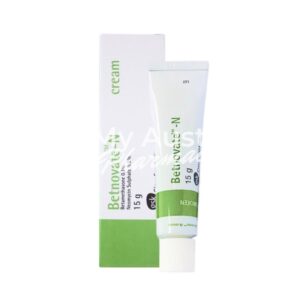
| Betnovate (equivalent) | Betamethasone valerate | Moderate topical potency |
Generics versus originators are commonly available in both chain and independent Apotheken, with selection influenced by tendering and price.
Contraindications And Special Precautions
Who should avoid betamethasone or take special care?
Absolute contraindications include known hypersensitivity to betamethasone or its excipients and systemic fungal infections.
Live vaccines are contraindicated when a patient is immunosuppressed due to systemic corticosteroids.
Relative contraindications requiring monitoring include active infections, glaucoma or cataracts for ocular forms, diabetes, hypertension, osteoporosis and active peptic ulcer disease.
Children and elderly patients need careful assessment because of growth suppression and skin atrophy risks with topical or systemic use.
- Absolute Contraindications: Hypersensitivity; systemic fungal infection; live vaccines when immunosuppressed.
- Relative Contraindications: Active infection; glaucoma/cataracts (ocular); diabetes; hypertension; osteoporosis; peptic ulcer disease.
At dispensing, Austrian Apothekers screen patients and document findings in E‑Medikation to support safe use and ADR reporting.
Dosing Guidelines In Austria
How is betamethasone dosed across common situations?
Standard adult oral dosing for severe inflammation is typically 0.5–5 mg daily, often for 5–14 days and titrated to response.
For antenatal lung maturation the standard single course is two doses of 12 mg IM, 24 hours apart.
Intramuscular or intravenous doses for severe exacerbations such as asthma are commonly 4–8 mg with repeat dosing as needed in hospital.
Topical application is a thin layer 1–2 times daily, with typical courses of 1–2 weeks depending on potency and site.
| Indication | Typical Dose |
|---|---|
| Severe Inflammation (oral) | 0.5–5 mg daily for 5–14 days, titrate |
| Antenatal Lung Maturation | Two doses 12 mg IM, 24 hours apart |
| Topical Dermatoses | Thin layer 1–2× daily, 1–2 weeks typical |
How to Apply Topical: Use the fingertip‑unit method for small areas and a thin film for larger areas to avoid overtreatment.
Overview Of Interactions
Which medicines and supplements can affect betamethasone?
Drug interactions are mainly with medications that induce or inhibit CYP enzymes, which can alter systemic corticosteroid levels.
Other important interactions include hypokalaemia‑inducing agents and anticoagulants that may require closer monitoring.
Live vaccines have reduced efficacy and increased risk when given during systemic corticosteroid immunosuppression.
Herbal supplements such as St John’s wort may affect steroid metabolism and should be disclosed to the Apotheker.
| Drug Class | Interaction / Recommended Monitoring |
|---|---|
| CYP Inducers/Inhibitors | May alter steroid levels; monitor clinical response and adjust dose if needed |
| Anticoagulants | Monitor INR and bleeding signs |
| Hypokalaemia‑inducing Agents | Check electrolytes in prolonged systemic therapy |
In Austria, E‑Medikation flags common interactions during dispensing to help pharmacists identify risks, especially in elderly polypharmacy.
Cultural Nuances And Patient Behaviour In Austria
How do Austrian patients approach steroid treatment?
Many Austrians carry a degree of steroid stigma and prefer topical routes over systemic therapy when appropriate.
Urban patients commonly access specialist dermatology clinics and large Apotheken chains such as Benu for advice and preferred formulations.
Rural communities rely on independent Apotheken and may cross‑border shop near Germany, Czech Republic or Hungary for price reasons.
E‑Medikation and the e‑card are widely used to provide prescription transparency and to prevent repeat systemic courses without review.
- Common Behaviours: Steroid caution; preference for minimal systemic exposure; demand for pharmacist and dermatologist counselling.
- Access Patterns: Urban — easy specialist access; Rural — more reliance on local Apotheker and occasional cross‑border shopping.
Case Vignette: An expectant mother from a rural district asks the local Apotheke about antenatal steroids and is counselled on the two‑dose 12 mg IM regimen, with the e‑card used to confirm hospital documentation.
Availability And Price Overview In Australia
Where and how much does betamethasone cost for patients in Austria and Australia?
Betamethasone formulations are prescription‑only across Austria and commonly stocked brands in Australia include Celestone and Diprosone, with multiple generics available.
Sozialversicherung covers many hospital-administered systemic doses fully, while outpatient prescriptions carry co‑payments depending on reimbursement tier.
Price regulation, tendering and local procurement decisions determine which generics individual Apotheken stock.
Patients often compare pack sizes and prices across the border; pharmacists advise on therapeutic equivalence and legal considerations when cross‑border shopping.
| Product | Typical Retail Cue |
|---|---|
| Celestone Injectable (example) | Hospital stock; often covered by Sozialversicherung when administered in hospital |
| Diprosone Ointment 0.05% | Common retail product; price varies by Apotheke and generic availability |
In our online pharmacy, betamethasone is available without a prescription, with discreet delivery to Australia in 5-14 days.
Patients should check Sozialversicherung guidance or their e‑Medikation record to confirm reimbursement eligibility before filling outpatient prescriptions.
Comparable Medicines And Austrian Preferences
What are common alternatives to betamethasone in Austria?
Alternatives include prednisolone and dexamethasone for systemic needs and clobetasol, mometasone or triamcinolone for topical dermatology indications.
Comparative studies suggest similar systemic anti‑inflammatory efficacy between corticosteroids, while topical ester potency influences clinician choice for skin disease.
Austrian formularies and tender outcomes often guide the preferred agent based on cost‑effectiveness.
| Agent | Pros | Cons |
|---|---|---|
| Prednisolone | Easy to taper; flexible dosing | May require higher doses for equivalent potency in some indications |
| Dexamethasone | Used for antenatal regimens in some centres; potent systemic effect | Different metabolic profile vs betamethasone |
| Clobetasol (topical) | Very high topical potency for resistant plaques | Higher risk of skin atrophy with prolonged use |
Prescribing Preference: Clinicians may favour prednisolone for tapering regimens and reserve betamethasone for specific indications like antenatal use or severe flares as per hospital protocol.
Frequently Asked Questions — Austrian Pharmacy Perspective
Will betamethasone stunt growth in children?
Short systemic courses carry a low risk for growth impact, but prolonged systemic or repeated high‑potency topical use in children requires paediatric specialist oversight.
Can I drive while taking systemic steroids?
Driving is safe unless you experience side effects such as dizziness, marked mood changes or severe insomnia; if those occur avoid driving and seek medical advice.
How long can I use topical steroid without damage?
High‑potency topical steroids used continuously for more than two weeks increase the risk of skin atrophy; pharmacists commonly advise limiting duration and using the lowest effective potency.
When should I seek medical advice?
Seek medical review for new infections, unexplained weight gain, persistent high blood glucose, vision changes, or if topical skin thinning or delayed wound healing occurs.
- Checklist For Seeking Help: New infection; persistent hyperglycaemia; mood disturbances or suicidal thoughts; visual changes; severe local skin reactions.
Practical Guidance For Correct Use — Austrian Standards
How should patients store and use betamethasone safely?
Store most forms at room temperature below 25°C and protect from light and moisture.
Injectable forms may require cold chain during transport—follow the product label and pharmacy advice.
Pharmacy counselling should include fingertip‑unit demonstration for topical application and written instructions on duration and frequency.
Diabetic patients must be advised to monitor blood glucose while taking systemic corticosteroids.
Adverse reactions should be reported to national pharmacovigilance authorities via the usual channels.
| Parameter | Monitoring Advice |
|---|---|
| Blood Glucose | Monitor in diabetics during systemic therapy |
| Blood Pressure | Check in elderly and hypertensive patients during systemic courses |
| Skin Examination | Look for thinning, striae or delayed healing with topical use |
Patient Checklist: Follow prescribed dose and duration; store below 25°C; monitor blood glucose if diabetic; avoid live vaccines when immunosuppressed; contact your GP or Apotheke for concerning signs.
Delivery Across Australia
| City | Region | Delivery Time |
|---|---|---|
| Sydney | New South Wales | 5-7 days |
| Melbourne | Victoria | 5-7 days |
| Brisbane | Queensland | 5-7 days |
| Perth | Western Australia | 5-7 days |
| Adelaide | South Australia | 5-7 days |
| Canberra | Australian Capital Territory | 5-7 days |
| Hobart | Tasmania | 5-7 days |
| Darwin | Northern Territory | 5-7 days |
| Gold Coast | Queensland | 5-9 days |
| Newcastle | New South Wales | 5-9 days |
| Wollongong | New South Wales | 5-9 days |
| Geelong | Victoria | 5-9 days |
| Townsville | Queensland | 5-9 days |
| Cairns | Queensland | 5-9 days |
| Bendigo | Victoria | 5-9 days |
Final Notes For Patients And Pharmacists
Pharmacists should document steroid dispenses in E‑Medikation and confirm indications where possible to prevent overuse and repeated systemic exposure.
When counselling, demonstrate fingertip‑unit application and provide written instructions in German and other local languages where needed for tourists or cross‑border patients.
Report any serious adverse events such as severe hyperglycaemia, psychiatric disturbance, or significant delayed wound healing to national pharmacovigilance authorities.
For product selection, match the diagnosis to the appropriate ester — betamethasone dipropionate is generally stronger than valerate for topical disease.
When in doubt about dosing in children or the elderly, seek specialist advice and document the plan in the patient’s E‑Medikation record.