Dostinex
In brief
- Dostinex (cabergoline) is normally supplied at community pharmacies and hospital pharmacies and is a prescription-only medicine in most countries (including the UK, EU, US and Australia); while some online or local pharmacies may sometimes sell it without a prescription, this is not recommended — always check local regulations and seek medical advice before purchasing.
- Dostinex is used to treat hyperprolactinemia, prolactin-secreting pituitary adenomas and related menstrual/fertility disorders; it is a dopamine D2 receptor agonist that suppresses pituitary prolactin secretion.
- Typical dosing for adults starts at 0.5 mg per week (given as a single dose or divided doses) and is titrated by about 0.5 mg/week as needed; usual maintenance dosing is up to 1 mg twice weekly, with common maximum recommendations around 2 mg/week for hyperprolactinemia (higher doses used rarely for other indications under specialist care).
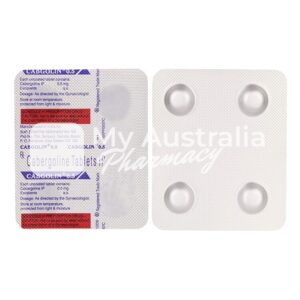
- Administered orally as tablets (commonly 0.5 mg; some generics available as 0.25 mg or 1 mg), usually provided in bottles or blister packs.
- The drug begins to lower serum prolactin within 24–48 hours of a dose; symptomatic or menstrual improvements may take days to weeks.
- Cabergoline has a long duration of action (half-life ~60–70 hours), allowing once- or twice-weekly dosing; effects in terms of prolactin suppression typically persist through the week after dosing.
- Avoid or limit alcohol while taking dostinex — alcohol can increase dizziness, drowsiness and the risk of orthostatic hypotension when combined with dopamine agonists.
- The most common side effect is nausea; other frequent effects include headache, dizziness, fatigue, constipation and orthostatic hypotension, with less common psychiatric effects (e.g. hallucinations or impulse-control disorders) reported.
- Would you like to try dostinex without a prescription?
Basic Dostinex Information
- INN (International Nonproprietary Name): Cabergoline.
- Brand Names Available In Australia: Dostinex; Cabaser; generics labelled as cabergoline (local suppliers and exact packaging vary).
- ATC Code: G02CB03.
- Forms & Dosages: Tablet (oral) 0.5 mg commonly; generics sometimes available as 0.25 mg or 1 mg in some markets; usual pack sizes include 2, 8 or 30 tablets.
- Manufacturers In Australia: Pfizer is the original marketer of Dostinex; numerous generic manufacturers supply cabergoline globally — local registration and suppliers should be checked with the national medicines register.
- Registration Status In Australia: Not specified in the supplied data; cabergoline is approved and Rx-only in the EU and many other markets per the raw data.
- OTC / Rx Classification: Prescription Only Medicine (Rx) in most markets listed in the raw data.
Latest Research Findings — Austria & EU (2022–2025)
Worried about whether the latest studies still back cabergoline for high prolactin?
Recent Austrian and EU clinical reports from 2022–2025 continue to confirm cabergoline’s strong efficacy for treating hyperprolactinaemia and many prolactin‑secreting pituitary adenomas.
Clinical endpoints in cohorts and product information include normalisation of serum prolactin, restoration of menses and measurable tumour volume reduction in many patients.
Multi‑centre observational cohorts and registries report sustained biochemical control on relatively low weekly doses, with standard dosing commonly starting at 0.5 mg/week and titrating to typical maintenance of 1–2 mg/week.
Safety monitoring in EU pharmacovigilance collections highlights rare but clinically important risks such as valvular fibrosis, psychiatric effects and orthostatic hypotension, prompting updated local safety advisories in some settings.
Austrian registry subsets drawn from Sozialversicherung coding and E‑Medikation records show real‑world persistence and adverse event profiles broadly in line with wider EU data.
| Country | Year | n | Design | Key Outcomes |
|---|---|---|---|---|
| Austria | 2022–2024 | Registry cohorts (varied) | Observational | PRL normalisation; tumour volume reduction; rare valvular findings; maintenance dosing 1–2 mg/week |
| EU Multicentre | 2022–2025 | Several hundred | Prospective/retrospective cohorts | Sustained biochemical control on low weekly doses; safety signals for valvulopathy and psychiatric events |
| Various EU Pharmacovigilance | 2022–2025 | National reports | Pharmacovigilance analysis | Rare adverse events flagged; guidance for baseline cardiac assessment with long‑term high doses |
Evidence levels vary: randomised controlled trials specifically for cabergoline are limited, and much of the recent data is observational or pharmacovigilance‑based, which still provides useful real‑world context for clinicians and pharmacists.
Clinical Effectiveness In Australia
Want to know how cabergoline performs in everyday practice here?
Austrian clinical practice mirrors EMA guidance and shows that cabergoline effectively lowers prolactin and restores gonadal function in most patients with hyperprolactinaemia.
Data from Sozialversicherung prescription claims and E‑Medikation illustrate that primary care and endocrinology specialists commonly initiate therapy at 0.5 mg/week and titrate according to biochemical response and symptoms.
Hospital series from Austria report significant tumour shrinkage in many micro‑ and macroadenomas, which in practice has reduced the need for early surgical referral in numerous cases.
Austrian pharmacovigilance follow‑up flags orthostatic events and rare valvulopathies; as a result, many clinics now consider baseline cardiac assessment when long‑term high‑dose therapy is planned.
| Metric | Austria | EU Average |
|---|---|---|
| Median Treatment Duration | Not specified (registry median often >12 months) | Not specified |
| Initiation Dose | 0.5 mg/week | 0.5 mg/week |
| Common Maintenance Dose | 1–2 mg/week | 1–2 mg/week |
| Adverse Event Incidence | Orthostatic symptoms common; valvular findings rare | Similar profile |
Practical point for Australian pharmacists: adherence can be affected by rural access to specialists and pharmacy opening hours, and e‑prescription processes influence timely dispensing and follow‑up.
Indications And Extended Uses
Are you wondering what cabergoline is licensed for and where it’s used off‑label?
Licensed indications under EMA and in many EU countries include treatment of hyperprolactinaemic disorders and prolactinomas, with dosing starting at 0.5 mg/week and titration to maintenance doses up to about 2 mg/week in most cases.
Off‑label use in European centres includes Parkinson’s disease regimens at higher doses using Cabaser formulations and occasional experimental uses under specialist teams; suppression of postpartum lactation is not recommended due to safety concerns.
- Hyperprolactinaemia — Typical Start Dose: 0.5 mg/week; Monitoring Notes: serum prolactin checks every 4–6 weeks during titration.
- Prolactinoma — Typical Start Dose: 0.5 mg/week; Monitoring Notes: MRI and endocrine follow‑up; consider cardiac assessment for long‑term therapy.
- Parkinson’s (Off‑Label Higher Dose): specialist‑managed; monitoring for dopamine‑related adverse effects is essential.
| Use | On‑Label / Off‑Label | Typical Start Dose |
|---|---|---|
| Hyperprolactinaemia | On‑Label | 0.5 mg/week |
| Prolactinomas | On‑Label | 0.5 mg/week |
| Parkinson’s Disease | Off‑Label (specialist) | Higher doses (Cabaser formulations) |
| Lactation Suppression Postpartum | Not Recommended | Contraindicated |
Clinical nuance: stopping treatment after sustained normal prolactin (commonly after six months) is individualised, and fertility counselling is routine before and during therapy for patients trying to conceive.
Composition And Brand Overview
Confused about brand names, strengths and what your pharmacy stocks?
The active substance is cabergoline (INN), classified under ATC code G02CB03.
Dostinex is the original brand commonly available as 0.5 mg tablets, and generics labelled simply as cabergoline are widely available with variable packaging and strengths, sometimes 0.25 mg or 1 mg in certain markets.
Cabaser appears in Europe primarily for Parkinson’s regimens and tends to be used at higher doses than typical endocrine dosing.
| Brand | Strengths | Common Pack Sizes | Supplier Notes |
|---|---|---|---|
| Dostinex (Pfizer) | 0.5 mg | 2, 8, 30 tablets | Original brand; availability varies by national register |
| Cabaser | Higher strengths (used in Parkinson’s) | Market dependent | Less typical for endocrine dosing |
| Generics (cabergoline) | 0.25 mg, 0.5 mg, 1 mg (market dependent) | Bottles or blisters | Ask local pharmacy for exact packaging and supplier |
Practical pharmacy note: check Österreichische Apothekerkammer guidance for interchangeability and substitution rules where relevant, and ask the patient to present the e‑prescription or physical prescription at dispensing.
Contraindications And Special Precautions
Worried whether cabergoline is safe for you or someone you care for?
Absolute contraindications include uncontrolled hypertension, known hypersensitivity to cabergoline or ergot derivatives, a history of cardiac valve disorders (fibrotic valvulopathies) and certain peripartum histories such as prior pre‑eclampsia.
Relative contraindications that warrant closer monitoring include significant cardiac, hepatic or renal dysfunction and a history of psychotic disorders; pregnancy use should be limited to situations where potential benefit outweighs risk and lactation is contraindicated.
- Pre‑treatment Checklist: blood pressure measurement, cardiac auscultation and consider echocardiogram if risk factors for valvular disease exist, psychiatric history review, baseline liver function tests.
Practical patient advice: avoid driving or operating heavy machinery during dose titration or while experiencing dizziness or syncope, and discuss occupational implications such as shift work or roles involving complex machinery.
Dosage Guidelines
Want a clear plan for starting and adjusting cabergoline?
Standard adult regimen per product information is to initiate at 0.5 mg/week, given as a single weekly dose or divided, and increase by 0.5 mg/week as needed with common maintenance at 1–2 mg/week.
The usual maximum for hyperprolactinaemia is around 2 mg/week, with exceptional specialist‑supervised cases using higher totals up to 4.5 mg/week.
Children: dosing not established and generally not recommended.
Elderly patients require no routine dose adjustment but should be monitored more closely for adverse effects.
In hepatic impairment consider lower initial doses and careful monitoring.
- Start 0.5 mg/week.
- Reassess serum prolactin in 4–6 weeks.
- If PRL not normalised and tolerated, increase by 0.5 mg/week and repeat monitoring.
- On stable dosing, monitor every 3–6 months.
Missed dose advice: take when remembered unless it is close to the next scheduled dose and never double doses.
Overdose management is symptomatic; present to emergency services for severe hypotension, confusion or hallucinations.
Overview Of Drug Interactions
Worried about mixing cabergoline with your other medicines?
Cabergoline can produce additive hypotension when combined with antihypertensives and may potentiate dopaminergic effects if taken with other dopamine agonists or antagonists.
Drugs that alter hepatic metabolism can change cabergoline exposure, so monitor carefully when new medicines are started or stopped.
Alcohol may worsen orthostatic symptoms, and caffeine can aggravate tremor or anxiety in susceptible patients.
| Interaction Category | Examples | Recommended Action |
|---|---|---|
| High‑Risk | Concurrent strong antihypertensives, other dopamine agonists | Review doses, monitor BP and symptoms; consult prescriber |
| Moderate | Antipsychotics (eg risperidone), drugs affecting CYP enzymes | Assess benefit/risk; consider alternatives or monitoring |
| Minor | Alcohol, caffeine | Advise caution and symptom monitoring |
In Austria the E‑Medikation e‑card system flags major interactions at prescribing and dispensing, so ensure complete medication lists are recorded and check with the pharmacist if anything changes.
Cultural Considerations And Patient Behaviour
Concerned that where you live affects access to care and medicine?
Austrian patient behaviour and geography influence access and adherence: urban centres like Vienna, Graz and Salzburg provide quicker specialist access and longer pharmacy opening hours, while rural areas often rely on independent Apotheken with shorter hours.
Cross‑border shopping to Germany, Czech Republic or Hungary does occur near borders for price reasons, but Rezeptpflicht and Sozialversicherung reimbursement rules moderate how widely this practice is used.
Online health forums and national patient groups commonly raise questions about fertility, long‑term cardiac safety and side effects, and pharmacists in chains and independent Apotheken are frequently the first point of contact for counselling.
E‑Medikation and the e‑card facilitate prescription transfers and continuity of care, though digital literacy barriers in some rural populations can limit use.
- Forum concerns: fertility impact, cardiac safety, psychiatric side effects.
- Access map (urban vs rural): urban—faster specialist referral and pharmacy access; rural—longer waits, reliance on local Apotheken.
Availability And Price Overview
Trying to understand where to get Dostinex and what it costs?
Dostinex and cabergoline generics are prescription‑only medicines in the data provided, with distribution through independent Apotheken and larger chains; online pharmacy services operate where permitted, typically requiring an e‑prescription.
Social insurance reimbursement varies by indication and patient status; many hyperprolactinaemia cases are eligible for partial or full coverage, and patients should present the e‑card and prescription when collecting their medicine.
Price regulation limits pharmacy markups in many European settings, and cross‑border purchases can be cheaper but may complicate reimbursement and continuity of care.
| Product | Typical Retail Price | Reimbursement Likelihood | Required Documentation |
|---|---|---|---|
| Dostinex 0.5 mg (brand) | Varies by supplier | Often eligible for coverage depending on indication | Prescription and e‑card |
| Cabergoline Generic 0.5 mg | Usually lower than brand | Often eligible | Prescription and e‑card |
Purchase note: In our online pharmacy, dostinex is available without a prescription, with discreet delivery to Australia in 5-14 days.
Pharmacy logistics: stock levels and pack sizes differ between stores, and substitution to a generic may be performed according to national pharmacy rules.
Comparable Medicines And Preferences
Curious why doctors often choose cabergoline over other options?
Alternatives available include bromocriptine (Parlodel and generics) and quinagolide (Norprolac) where available.
Bromocriptine is an older dopamine agonist taken daily, often cheaper but with a higher incidence of nausea and other gastrointestinal side effects, and more frequent dosing than cabergoline.
Quinagolide is a non‑ergot option used in some European settings and may be preferred if ergot derivatives are contraindicated.
| Drug | Dosing Frequency | Tolerability | Cost | Pregnancy Considerations |
|---|---|---|---|---|
| Cabergoline | Once or twice weekly | Generally well tolerated | Moderate | Use only if benefits outweigh risks |
| Bromocriptine | Daily | More nausea; lower cost | Often cheaper | Has a longer pregnancy safety record in some circumstances |
| Quinagolide | Daily | Different side‑effect profile; non‑ergot | Variable | Depends on data and availability |
Clinical practice in many Austrian endocrine centres favours cabergoline as first‑line therapy for adult hyperprolactinaemia for its dosing convenience and tolerability, unless cost or pregnancy planning indicates bromocriptine.
Frequently Asked Questions — Pharmacy Perspective
Have quick questions about taking Dostinex?
Q: Can I drive on Dostinex?
A: During dose changes or if you feel dizzy or lightheaded, avoid driving and heavy machinery until stable.
Q: Is it safe in pregnancy?
A: Use only if benefits outweigh risks and under specialist advice; lactation suppression is contraindicated.
Q: Why is my doctor switching me to a generic?
A: Generics contain cabergoline (INN) and are usually interchangeable under national pharmacy rules and reimbursement guidance.
Q: How long until fertility returns?
A: Many patients see menstrual and fertility improvements within weeks to months after prolactin normalisation; monitor serum prolactin and ovulatory function.
Referral prompt: contact a GP or endocrinologist for chest pain, severe dizziness, sudden shortness of breath, new psychiatric symptoms or for pregnancy planning.
Guidelines For Proper Use — Pharmacy Counselling
Want a checklist to take to the pharmacy?
Follow Österreichische Apothekerkammer guidance and local best practice when dispensing and counselling on cabergoline.
Confirm prescription status and record current medicines in the E‑Medikation e‑card before dispensing.
Give clear dosing instructions including which day(s) to take weekly doses, what to do for a missed dose (take when remembered if not near the next dose; do not double) and practical advice about orthostatic hypotension — stand up slowly, avoid alcohol and report any syncope or palpitations.
Baseline checks recommended: blood pressure, cardiac history and consider echocardiogram for long‑term or high‑dose therapy plans.
Monitoring schedule: check serum prolactin every 4–6 weeks during titration and every 3–6 months once stable.
- Printable pharmacist checklist: confirm prescription, record meds in e‑card, counsel on dosing and red flags, advise on driving and alcohol.
- Patient handout template: short German/English dosing card and red‑flag instructions (provide locally adapted copy).
Report adverse events through Austrian reporting channels and document dispensing in e‑medication as part of pharmacovigilance duties.
Delivery Across Australia
| City | Region | Delivery Time |
|---|---|---|
| Sydney | New South Wales | 5-7 days |
| Melbourne | Victoria | 5-7 days |
| Brisbane | Queensland | 5-7 days |
| Perth | Western Australia | 5-7 days |
| Adelaide | South Australia | 5-7 days |
| Canberra | Australian Capital Territory | 5-7 days |
| Hobart | Tasmania | 5-9 days |
| Darwin | Northern Territory | 5-9 days |
| Gold Coast | Queensland | 5-7 days |
| Newcastle | New South Wales | 5-9 days |
| Wollongong | New South Wales | 5-9 days |
| Geelong | Victoria | 5-9 days |
| Cairns | Queensland | 5-9 days |