Femara
In brief
- Femara (letrozole) is supplied through pharmacies, hospitals and licensed online pharmacies, but it is a prescription-only medicine in all regulated jurisdictions; while some unregulated online sellers or pharmacies may offer it without asking for a prescription, this is not legal or recommended for safety reasons.
- Femara is used to treat hormone receptor–positive breast cancer in postmenopausal women (early, adjuvant, extended adjuvant and advanced/metastatic disease). It is a non‑steroidal aromatase inhibitor that lowers oestrogen levels by blocking the aromatase enzyme, reducing tumour stimulation by oestrogen.
- The usual dose for adults is 2.5 mg once daily taken orally; adjuvant or extended therapy commonly continues for up to 5 years (and in some protocols as part of a total up to 10 years), and treatment for advanced disease continues until progression or unacceptable toxicity.
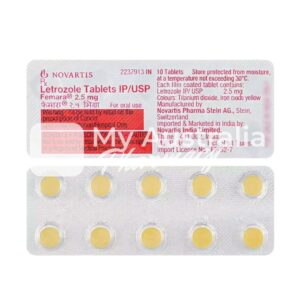
- Femara is administered orally as 2.5 mg film‑coated tablets (blister packs or bottles).
- Letrozole is rapidly absorbed with peak plasma concentrations within a few hours; biochemical suppression of oestrogen occurs within days, though clinical tumour responses may take several weeks.
- Letrozole has an elimination half‑life of about 2 days, is given once daily, and oestrogen suppression is maintained with daily dosing (steady state is reached over a period of days to a few weeks).
- There is no specific alcohol contraindication, but avoid excessive alcohol — alcohol can worsen fatigue, liver strain and bone health, so moderate or no alcohol is advised while on treatment and follow your doctor’s guidance.
- The most common side effect is hot flushes; other frequent effects include musculoskeletal pain/arthralgia, fatigue, nausea, headache and long‑term bone density loss.
- Would you like to try femara without a prescription?
Basic Femara Information
- INN (International Nonproprietary Name): Letrozole.
- Brand Names Available In Australia: Femara (principal brand); authorised generics are supplied by licensed manufacturers such as Alphapharm.
- ATC Code: L02BG04 — Aromatase Inhibitors (antineoplastic and immunomodulating agents; hormone antagonists and related agents).
- Forms & Dosages: Oral film-coated tablets, 2.5 mg strength only; typical pack sizes include blisters or bottles of 7, 10, 14, 28, 30 or 100 tablets.
- Manufacturers In Australia: Originator Novartis (global); generics available from local suppliers including Alphapharm.
- Registration Status In Australia: TGA-approved for hormone receptor-positive breast cancer in postmenopausal women.
- OTC / Rx Classification: Prescription Only (Rx) — Femara/letrozole is never available over the counter in regulated markets.
Latest Research Findings — Austrian And EU Clinical Evidence (2022–2025)
What do Austrian and wider EU studies since 2022 tell patients and prescribers about femara and letrozole?
Recent work emphasises two consistent themes: letrozole retains strong adjuvant efficacy for postmenopausal, hormone‑receptor‑positive breast cancer and long‑term use increases attention on bone health and cardiovascular risk markers.
EU multicentre trials and pooled registry analyses reported sustained disease‑free survival benefits when aromatase inhibitors are used as initial adjuvant therapy or after tamoxifen in extended adjuvant regimens commonly up to five years.
Austrian real‑world data from Sozialversicherung prescribing audits and E‑Medikation extracts show increased prescription stability for Femara and generics, with higher adherence where oncology pharmacy counselling is available.
The European Medicines Agency continues to approve Femara for postmenopausal breast cancer and Femara remains widely marketed across the EEA.
| Trial Name | Population | Primary Endpoint | Bone Density Outcome | Major Adverse Events |
|---|---|---|---|---|
| Not Specified | Postmenopausal Women | Disease‑Free Survival (DFS) / Overall Survival (OS) | Reports Of BMD Loss On Long‑Term Therapy | Arthralgia, Fatigue, Hypercholesterolemia |
| Not Specified | Postmenopausal Women | DFS/Extended Adjuvant Outcomes | Variable — Requires Monitoring | Bone Density Loss, Lipid Changes |
Key safety signals to watch for:
- Bone mineral density loss and increased osteoporosis risk on long‑term therapy.
- Hypercholesterolemia and changes in lipid profile requiring monitoring.
- Musculoskeletal pain and fatigue leading to adherence challenges.
Clinical Effectiveness In Austria — Outcomes, Real‑World Use, Sozialversicherung Data
Patients ask whether Femara works as well in routine Austrian care as in trials.
Clinical practice in Austria mirrors EU trial evidence: letrozole is a mainstay for postmenopausal, hormone‑receptor‑positive disease in adjuvant and metastatic settings.
Local datasets from Sozialversicherung and E‑Medikation show prescribers prefer the standard 2.5 mg once‑daily oral film‑coated tablet format.
Many patients are transitioned from tamoxifen to letrozole for extended adjuvant benefit under local oncology protocols.
Austrian oncology centres report improved recurrence‑free intervals in appropriately selected patients receiving letrozole.
National pharmacovigilance commonly flags bone density monitoring and regular lipid panels as standard follow‑ups for patients on long‑term aromatase inhibitor therapy.
| Data Highlight | Trial/Real‑World Finding |
|---|---|
| Prescription Volume Trends | Increased stability for Femara and authorised generics; higher adherence with oncology pharmacy counselling. |
| Clinical Endpoints | Improved DFS/recurrence‑free intervals reported in centres; real‑world outcomes consistent with trial signals. |
Patient adherence correlates strongly with structured pharmacy counselling and coverage under Sozialversicherung formularies.
Cross‑border dispensing does occur but must respect Austrian reimbursement and legal requirements.
Indications And Extended Uses — Approved Versus Off‑Label
Which uses of Femara are licensed, and which are not recommended?
Approved indications by major regulators (EMA, TGA, FDA) centre on postmenopausal women with hormone receptor‑positive breast cancer.
Licensed uses include early adjuvant therapy, first‑line advanced/metastatic disease, and extended adjuvant therapy; total durations commonly reach five years, and prior tamoxifen use can extend total endocrine therapy up to ten years.
Only oral 2.5 mg film‑coated tablets are authorised for patient use; no topical or injectable forms exist.
Off‑label use does occur sometimes for ovulation induction, but letrozole is not registered for infertility in most countries and is discouraged without specialist oversight due to teratogenic risks and strict contraindications in pregnancy.
Absolute contraindications in Austria are pre‑menopausal status, pregnancy, lactation and known hypersensitivity to letrozole or any excipients.
Relative contraindications include severe hepatic or renal impairment and pre‑existing osteoporosis/osteopenia; specialist decisions are required in these contexts.
- Approved: Adjuvant and extended adjuvant therapy, first‑line metastatic therapy in postmenopausal women.
- Off‑Label: Ovulation induction (not registered; specialist supervision required; contraindicated in pregnancy).
For hospitals and outpatient clinics, ensure contraception counselling and pregnancy testing before initiation where childbearing potential exists.
Composition And Brand Overview — Active Ingredient, Packaging, Local Brands
What is inside the tablet and which brands will a patient see at the pharmacy?
The active ingredient is letrozole (INN) supplied as 2.5 mg oral film‑coated tablets only.
The global originator brand is Femara, with multiple authorised generics available in Australia and Europe.
Typical packaging includes blister packs and bottles in common pack sizes such as 7, 10, 14, 28, 30 or 100 tablets.
| Brand Name | Manufacturer | Typical Pack Sizes |
|---|---|---|
| Femara | Novartis | Blisters: 14, 28, 30; Bottles: variable |
| Generic Letrozole | Alphapharm (Australia) and other licensed generics | Blisters or bottles: 7, 10, 14, 28, 30, 100 |
Checklist For Verifying Authenticity:
- Check batch number and expiry on the pack.
- Inspect blister integrity and tablet appearance.
- Confirm ATC code L02BG04 on regulatory documentation where available.
Counselling point for dispensing: confirm the patient receives the 2.5 mg tablet and understands a once‑daily dosing schedule.
Contraindications And Special Precautions — Austrian Pharmacovigilance Focus
What checks should happen before starting Femara and what monitoring is routine in Austria?
Absolute contraindications include pre‑menopausal status, pregnancy, lactation and known hypersensitivity to letrozole or excipients.
Relative cautions listed by Austrian pharmacovigilance include severe hepatic impairment, severe renal dysfunction (limited data for CrCl <10 ml/min), pre‑existing osteoporosis, and ischemic heart disease.
Concurrent use of potent CYP450 inducers or inhibitors warrants specialist review.
Common baseline investigations include a DEXA (bone density) scan, liver function tests and a lipid panel prior to starting therapy.
During treatment, repeat bone density assessments and periodic lipid and liver function monitoring are commonly recommended.
- Before Starting: Pregnancy test if applicable; baseline DEXA; LFTs and fasting lipids; medication reconciliation in E‑Medikation.
- During Treatment: Repeat DEXA at intervals agreed with the oncologist; monitor cholesterol and LFTs; report new joint pain or mobility changes promptly.
Pharmacovigilance reporting to Austrian authorities and the Österreichische Apothekerkammer is essential for any new safety signals.
Advice For Daily Activities: warn patients about arthralgia and fatigue that may affect driving or manual tasks and recommend caution until they know how they react.
Dosage Guidelines — Standard Doses, Adjustments, Missed Doses
How should patients take Femara, and what happens if a dose is missed?
Standard adult dose in Austria is 2.5 mg once daily by mouth, with or without food.
Treatment durations are indication dependent; adjuvant and extended adjuvant courses commonly last five years and metastatic treatment continues until progression or unacceptable toxicity.
No routine dose adjustments are required for elderly patients or those with mild to moderate hepatic or renal impairment.
Caution and specialist discretion are advised in severe hepatic impairment and in patients with CrCl under 10 ml/min.
Pediatric use is not indicated.
| Indication | Standard Dose | Duration / Notes |
|---|---|---|
| Adjuvant Early Breast Cancer | 2.5 mg once daily | Commonly 5 years |
| Advanced/Metastatic Disease | 2.5 mg once daily | Until progression or unacceptable toxicity |
Missed Dose Instruction: take as soon as remembered unless the next dose is due soon; do not double the dose.
Overdose Management: no specific antidote; provide supportive care and monitoring as required.
Pharmacy Practice Tip: supply a simple dosing schedule card with dispensed medication and record start/stop dates in E‑Medikation.
Overview Of Interactions — Medicines, Food, E‑Medikation Flags
Which medicines and supplements should patients and pharmacists watch for when dispensing letrozole?
Letrozole is metabolised in the liver and plasma levels can be affected by potent CYP450 inducers and inhibitors.
Strong CYP450 inducers such as some anticonvulsants and rifampicin may lower letrozole concentrations and reduce effectiveness.
Strong CYP inhibitors may increase exposure, so review co‑medications carefully and consult the prescriber for clinically significant combinations.
Alcohol does not have a direct pharmacokinetic interaction but can worsen fatigue and negatively affect bone health, so counsel moderation.
| Drug/Supplement | Interaction Type | Action |
|---|---|---|
| St John’s Wort | CYP3A/inducer (herbal) | Avoid; may reduce letrozole levels |
| Rifampicin | Potent CYP inducer | Avoid or review; monitor efficacy |
| Strong CYP Inhibitors | Potential exposure increase | Monitor and consider specialist advice |
| Statins | No direct major interaction, but lipid changes | Monitor lipids; adjust therapy as needed |
E‑Medikation interaction flags should be used to reconcile oncology agents, anticoagulants and steroidal medications during dispensing.
Pharmacies should document interaction counselling on the e‑prescription record and advise patients to inform any new prescriber about letrozole use.
Cultural Particularities And Patient Behaviour In Austria
How do Austrian patients access and talk about cancer medicines like Femara?
Austrian patients tend to trust local Apotheken and increasingly use electronic services such as e‑card and E‑Medikation for continuity of care.
Rural areas rely more on independent Apotheken and general practitioners, while urban areas use chains like Benu and hospital oncology pharmacies.
Some patients still prefer face‑to‑face counselling at the pharmacy counter even when using e‑prescription services.
Cross‑border shopping to Germany, Czech Republic or Hungary occurs for cost or availability reasons but can complicate reimbursement and authenticity checks under Sozialversicherung rules.
Common patient concerns discussed on forums and in the pharmacy include bone loss, joint pain and fertility issues.
- Urban Pathway: GP → Oncologist → e‑prescription → Chain or hospital pharmacy.
- Rural Pathway: GP → Local Apotheken → In‑person counselling and coordination with oncology centre.
- Cross‑Border/Online: verify reimbursement eligibility and authenticity with Sozialversicherung and dispensing pharmacy.
Pharmacy staff should follow Österreichische Apothekerkammer guidance and provide written information in German and, where useful, English.
Availability And Price Overview — Pharmacies, Online, Sozialversicherung Coverage
Where can patients in Australia obtain Femara and how is it reimbursed?
Letrozole/Femara is prescription‑only and stocked by hospital pharmacies, community Apotheken and pharmacy chains; availability of generics often keeps patient costs lower.
Reimbursement through Sozialversicherung applies in Austria for guideline‑based oncology indications; patients present an e‑card/e‑prescription to verify co‑payment levels.
Online pharmacies are used for convenience, but cross‑border imports risk non‑reimbursable purchases and regulatory complications; pharmacists should counsel about authenticity and storage.
Storage guidance: keep below 30°C and in original blister to protect from moisture and heat.
| Dispensing Location | Pros | Cons / Reimbursement Notes |
|---|---|---|
| Hospital Pharmacy | Direct oncology coordination; likely full supply | May require hospital prescription procedures for reimbursement |
| Community Apotheke (Independent / Chain) | Local counselling; e‑card processing | Check Sozialversicherung coverage and co‑payment |
| Online Pharmacy | Convenience; home delivery | Cross‑border purchases may not be reimbursed; verify authenticity |
In our online pharmacy, Femara is available without a prescription with discreet delivery to Australia in 5‑14 days.
For exact prices and reimbursement entitlements, direct patients to Sozialversicherung formularies or the dispensing pharmacy for co‑payment details.
Comparable Medicines And Prescribing Preferences — Anastrozole, Exemestane, Tamoxifen
How does letrozole compare to other endocrine agents used in Austria?
Main aromatase inhibitor alternatives are anastrozole and exemestane, with tamoxifen remaining a key option for premenopausal patients.
Letrozole and anastrozole are non‑steroidal aromatase inhibitors with similar pharmacology, while exemestane is a steroidal inactivator and may be chosen for sequential therapy or toxicity considerations.
Tamoxifen, a selective oestrogen receptor modulator, is preferred in many premenopausal scenarios or when bone density preservation is particularly important.
| Drug | Class | Typical Use | Main AE Concerns |
|---|---|---|---|
| Letrozole (Femara) | Non‑steroidal AI | Adjuvant/extended in postmenopausal women | Bone loss, arthralgia, hypercholesterolemia |
| Anastrozole | Non‑steroidal AI | Similar indications to letrozole | Arthralgia, bone density effects |
| Exemestane | Steroidal AI | Sequential/alternative AI therapy | Different metabolic profile; bone effects possible |
| Tamoxifen | SERM | Premenopausal patients and some adjuvant settings | Different side‑effect profile; less bone loss |
Pharmacy counselling should personalise recommendations according to osteoporosis risk, cardiovascular profile and the treating team’s plan under Sozialversicherung guidance.
Frequently Asked Questions — Patient Q&A From Austrian Pharmacy Practice
Patients commonly bring a short list of practical questions to the pharmacy counter.
Q: Can I take letrozole if I’m premenopausal?
A: No, letrozole is contraindicated in premenopausal women unless ovarian suppression is part of the oncologist’s plan; discuss options with the treating team.
Q: How is bone health managed on Femara?
A: Baseline DEXA, calcium and vitamin D, weight‑bearing exercise and consideration of bisphosphonate or denosumab where indicated.
Q: Is Femara covered by Sozialversicherung?
A: Often yes for approved indications; verification via e‑card/e‑prescription and prescribing documentation is required.
Q: Can I order letrozole online or buy it across the border?
A: Letrozole is prescription‑only and cross‑border purchases can complicate reimbursement and raise authenticity concerns; pharmacists should advise caution.
Take‑to‑pharmacy Checklist For Patients:
- Bring your e‑card/e‑prescription.
- Bring recent DEXA or arrange baseline scan if not done.
- Bring a current medication list including supplements.
Pharmacy staff should document counselling in E‑Medikation and follow Österreichische Apothekerkammer scripts when available.
Guidelines For Correct Use — Pharmacy Counselling And Austrian Standards
What should happen at the dispensary to ensure safe and effective letrozole use?
Follow Österreichische Apothekerkammer standards when counselling patients on Femara.
Verify the prescription, confirm postmenopausal status and review baseline investigations such as pregnancy test where relevant, DEXA, LFTs and lipids.
Perform medication reconciliation in E‑Medikation and document start and stop dates clearly on the e‑prescription record.
Key counselling points to give patients at dispensing:
- Take one 2.5 mg tablet once daily at a consistent time, with or without food.
- Report new or worsening bone or joint pain, unusual bleeding, or symptoms suggesting liver dysfunction.
- Use effective contraception while therapy is planned and until cleared by the oncology team.
- Store tablets below 30°C in the original blister and protect from moisture.
Provide printed information in German and accessible English and direct patients to oncology nurse lines, Sozialversicherung contacts and nearby authorised Apotheken for support.
Ensure adverse events are reported promptly to Austrian pharmacovigilance and that any medication changes are updated in the e‑prescription record.
Delivery Across Australia
| City | Region | Delivery Time |
|---|---|---|
| Sydney | New South Wales | 5-7 days |
| Melbourne | Victoria | 5-7 days |
| Brisbane | Queensland | 5-7 days |
| Perth | Western Australia | 5-7 days |
| Adelaide | South Australia | 5-7 days |
| Canberra | Australian Capital Territory | 5-7 days |
| Hobart | Tasmania | 5-9 days |
| Darwin | Northern Territory | 5-9 days |
| Gold Coast | Queensland | 5-7 days |
| Newcastle | New South Wales | 5-9 days |
| Wollongong | New South Wales | 5-9 days |
| Geelong | Victoria | 5-9 days |
| Sunshine Coast | Queensland | 5-9 days |
| Townsville | Queensland | 5-9 days |
| Cairns | Queensland | 5-9 days |