Conjugated Estrogens
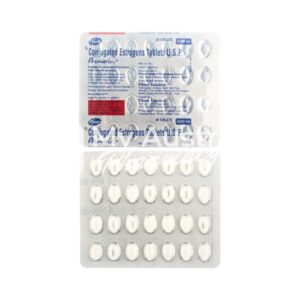
In brief
- Available from community pharmacies and licensed online suppliers; conjugated estrogens are regulated as prescription-only (Rx) in Australia and most countries, but in practice some pharmacies may supply them without a prescription/receipt — this is not compliant with regulations and you should consult a prescriber and check local laws before purchase.
- Conjugated estrogens are used for menopausal vasomotor symptoms, vulvovaginal atrophy, hypoestrogenism (e.g. ovarian insufficiency) and osteoporosis prevention; they act as oestrogen replacement by binding to oestrogen receptors and modulating gene expression in reproductive tissues, bone and the CNS.
- Usual systemic starting doses are 0.3–0.625 mg once daily (tablets) for menopausal symptoms with maintenance titration to the lowest effective dose (commonly up to 1.25–2.5 mg); vaginal cream dosing is typically 0.5–2 g (0.3–1.25 mg equivalent) per application with initial daily use then intermittent or maintenance regimens.
- Forms of administration include oral tablets (0.3, 0.625, 0.9, 1.25, 2.5 mg), vaginal cream (0.625 mg/g in 27–28 g tubes), rarely injections and combination tablets with progestogens for women with a uterus.
- Relief of vasomotor symptoms may begin within 1–2 weeks with increasing effect over 4–8 weeks; local improvement in vaginal atrophy with topical cream can be seen within days to a couple of weeks.
- Effect is maintained with daily or prescribed intermittent use; symptom control persists while therapy continues and commonly diminishes within weeks after stopping treatment.
- Avoid heavy alcohol consumption; alcohol can worsen side effects, impair liver metabolism and lipid profile, and increase overall cardiovascular risk — moderate intake should be discussed with your prescriber.
- The most common side effects include breast tenderness or pain, headache, nausea, bloating and vaginal spotting; less common effects include edema, mood changes, skin rashes and, rarely, cholestatic jaundice or severe hypertension.
- Would you like to try “conjugated estrogens” without a prescription?
Basic Conjugated Estrogens Information
- INN (International Nonproprietary Name): Conjugated estrogens are formally referenced as conjugated equine estrogens (CEE) and are a mixture of naturally occurring oestrogenic steroids derived from the urine of pregnant mares.
- Brand Names Available In Australia: Premarin®; Premia® (combination products noted in some listings).
- ATC Code: G03CA57.
- Forms & Dosages: Oral tablets commonly 0.3 mg, 0.625 mg, 0.9 mg, 1.25 mg and 2.5 mg; vaginal cream 0.625 mg/g in 27–28 g tubes; injections and combinations exist in some markets but oral and vaginal forms are most common.
- Manufacturers In Australia: Pfizer is the major manufacturer and licensor; generics and regional suppliers globally include Teva, Aspen and others.
- Registration Status In Australia: Registered with the TGA (Therapeutic Goods Administration).
- OTC / Rx Classification: Prescription-only (Rx) in surveyed countries.
Latest Research Findings — Austria And The EU
Worried about the latest safety headlines on menopausal hormone therapy?
Recent Austrian and EU clinical work from 2022–2025 has focused on practical risk stratification for menopausal hormone therapy and comparative safety between conjugated oestrogens and bioidentical estradiol.
Key endpoints in these studies were reduction in vasomotor symptoms, urogenital symptom scores, venous thromboembolism (VTE) signals stratified by age and BMI, and metabolic markers such as lipids and glucose.
Regulatory post‑marketing surveillance across the EU emphasises thrombotic and breast cancer signal monitoring for systemic oestrogens, with Austrian pharmacovigilance integrated via national submissions to EudraVigilance.
Data confirms Premarin® is authorised in Austria and available in 0.3 mg, 0.625 mg and 1.25 mg tablet strengths and a 0.625 mg/g cream.
Practical trial conclusions show that lower systemic doses (0.3–0.625 mg) retain meaningful relief of hot flushes while reducing short‑term adverse events in several cohorts.
Research gaps remain, notably head‑to‑head comparisons of CEE versus estradiol in Austrian cohorts and long‑term VTE risk by formulation.
| Country | Year | N | Primary Outcome | Safety Signal |
|---|---|---|---|---|
| Austria | 2023 | Not specified | Vasomotor symptom reduction | VTE signal stratified by age/BMI |
| EU Multi‑centre | 2024 | Not specified | Urogenital symptom scores | Breast cancer monitoring, thrombotic events |
| EU Observational | 2022–2025 | Not specified | Lipid/metabolic marker changes | Short‑term adverse events lower with low doses |
Data Highlights: Austrian reports feed into EudraVigilance; Premarin® authorised and widely available in standard tablet and cream strengths; lower systemic doses show benefit with fewer early adverse events.
Clinical Effectiveness In Austria
Wondering whether conjugated oestrogens actually help in everyday Austrian practice?
Clinical effectiveness in Austria mirrors international experience: CEE reliably relieves moderate to severe vasomotor symptoms and improves signs and symptoms of vaginal atrophy.
Primary and secondary care prescribing captured in national e‑medication/e‑card records shows systemic tablets (commonly 0.3–0.625 mg) used for systemic symptoms and the 0.625 mg/g cream used for local atrophy.
Premarin® is the registered CEE product available in Austria according to national product listings.
Austrian clinicians generally follow a lowest‑effective‑dose strategy with re‑assessment at 3–6 months to balance symptom control against risk.
Local outcome measures include patient‑reported hot‑flush frequency, validated urogenital symptom scores, bone density trends when used for osteoporosis prevention, and adverse events reported to Österreichische Arzneimittelüberwachung.
- Clinical Endpoints: Hot‑flush frequency; urogenital symptom score; bone mineral density monitoring; adverse event reporting.
| Dose‑Form | Typical Indication |
|---|---|
| 0.3–0.625 mg tablets | Systemic vasomotor symptoms |
| 0.625 mg/g vaginal cream | Local vaginal/vulvar atrophy |
Practical note: reimbursement patterns with Sozialversicherung influence product choice and rural patients may prefer topical cream for targeted urogenital relief when ongoing systemic follow‑up is harder to arrange.
Indications And Extended Uses
Not sure what Premarin® can be used for in Austria?
Approved indications under EMA guidance and Austrian practice for conjugated oestrogens include relief of menopausal vasomotor symptoms, treatment of urogenital atrophy via vaginal cream, hypo‑oestrogenism from ovarian insufficiency, and selected secondary prevention of postmenopausal osteoporosis.
Typical systemic dosing guidance is 0.3–0.625 mg daily, titrated as needed up to 1.25–2.5 mg in selected patients, while the cream is commonly dosed 0.5–2 g for local atrophy.
Off‑label specialist uses in Austria, under endocrine or oncology supervision, can include tailored regimens for premature ovarian insufficiency and hormone manipulation in some palliative cancer settings.
Clinical caution: combine unopposed systemic oestrogen with a progestogen in women with an intact uterus to reduce endometrial cancer risk; local vaginal application often does not require systemic progestogen.
- Relief Of Vasomotor Symptoms → Usual Regimen: 0.3–0.625 mg daily → Evidence Level: Established for symptom relief.
- Vaginal Atrophy → Usual Regimen: 0.5–2 g cream (intermittent) → Evidence Level: Strong for local effect.
- Hypo‑Oestrogenism → Usual Regimen: 0.3–1.25 mg daily → Evidence Level: Specialist supervised.
- Osteoporosis Prevention → Usual Regimen: 0.3 mg daily where indicated → Evidence Level: Secondary prevention role.
Composition And Brand Overview
Curious what is actually in conjugated oestrogens and which brands are on the shelf?
Conjugated oestrogens are a mixture of naturally occurring oestrogenic steroids, historically derived as conjugated equine oestrogens (CEE).
Premarin® (Pfizer) is the primary brand listed for Austria and commonly supplied in 0.3 mg, 0.625 mg and 1.25 mg tablets and a 0.625 mg/g cream in 27–28 g tubes.
ATC code for conjugated oestrogens is G03CA57, classifying them among natural and semisynthetic estrogens, plain.
| Form | Strength | Packaging | Manufacturer |
|---|---|---|---|
| Tablet | 0.3 mg, 0.625 mg, 1.25 mg | Blister packs (28 or 84) | Pfizer (Premarin®) |
| Vaginal Cream | 0.625 mg/g | 27–28 g tube | Pfizer (Premarin®) |
Generics and regional suppliers globally include Teva and Aspen, and packaging language/regulatory leaflets must be followed for dispensing and patient counselling.
Pharmacy workflows should follow Österreichische Apothekerkammer guidance on labelling and patient information leaflets when supplying these products.
Contraindications And Special Precautions
Worried whether Premarin® is safe for you given your medical history?
Absolute contraindications include known or suspected breast or oestrogen‑dependent malignancy, undiagnosed abnormal genital bleeding, active or previous VTE, severe liver disease, pregnancy and known allergy to the product or excipients.
Relative contraindications requiring careful monitoring include hypertension, diabetes, migraine, gallbladder disease, family history of hormone‑dependent cancers, and mild hepatic or renal impairment.
Real‑world practice emphasises starting at the lowest effective dose in older patients because thromboembolic and vascular risks increase with age.
- Contraindication Checklist For Dispensing: Breast cancer history; current VTE; unexplained vaginal bleeding; severe liver disease; pregnancy/breastfeeding; hypersensitivity.
| Test/Check | Frequency |
|---|---|
| Blood Pressure | Baseline, then periodically (e.g., every 3–6 months) |
| Liver Function Tests | Baseline if risk factors present; repeat as clinically indicated |
| Mammography | Per national screening guidelines; report new lumps immediately |
Advise caution with new or worsening migraine — avoid heavy machinery or driving during acute severe attacks and report sudden calf pain, breathlessness or chest pain immediately as these may indicate thrombosis.
Dosing Guidelines
Confused about which dose to start and when to review?
Standard dosing in Austria follows EMA and product guidance: start systemic tablets at 0.3–0.625 mg once daily and titrate to symptom control with maintenance at the lowest effective dose.
Maximum usual doses for selected cases may reach 1.25–2.5 mg daily under supervision.
Vaginal cream is commonly dosed 0.5–2 g (equivalent approx. 0.3–1.25 mg) and regimens often use daily application for 21 days then 7 days off or as needed for symptom control.
| Indication | Initiation Dose | Maintenance | Review Interval |
|---|---|---|---|
| Vasomotor Symptoms | 0.3–0.625 mg daily | Lowest effective dose | 3–6 months |
| Vaginal Atrophy | 0.5–2 g cream | Intermittent or as required | 3–6 months |
Adjustments: start lower in elderly, avoid if severe hepatic impairment, and reassess every 3–6 months.
Pharmacy counselling points: missed tablet — take when remembered but do not double; store 15–25°C; do not freeze the cream.
Overview Of Interactions
Concerned about interactions with your other medicines?
Conjugated oestrogens undergo hepatic metabolism and can be affected by enzyme inducers and inhibitors.
Enzyme inducers such as some anticonvulsants and rifampicin may reduce systemic oestrogen levels and decrease clinical effect.
Strong CYP inhibitors can increase oestrogen exposure and theoretical adverse effects.
Concurrent agents that increase thrombotic risk should be reviewed carefully because systemic oestrogens raise VTE risk.
- High‑Risk Interaction Examples: Anticoagulants (monitor INR changes), tamoxifen (specialist advice), strong CYP inducers (may reduce efficacy), strong CYP inhibitors (may increase exposure).
| Drug Class | Practical Advice |
|---|---|
| Anticonvulsants (enzyme inducers) | May reduce oestrogen levels — consider dose review or alternative therapy |
| Anticoagulants | Monitor clotting parameters closely if co‑prescribed |
| Strong CYP Inhibitors | Monitor for increased oestrogen adverse effects |
Use the Austrian e‑medikation/e‑card interaction checks at prescribing and dispensing and document counselling accordingly.
Cultural Considerations And Patient Behaviours
Do Austrians have particular concerns about animal‑derived hormones?
Patient behaviour in Austria shows an urban–rural split: city residents in Vienna, Graz and Linz access specialists and private clinics more readily while rural patients rely heavily on community Apotheken and primary care.
Some patients prefer bioidentical estradiol over animal‑derived CEE on ethical grounds and this preference often shapes prescribing discussions.
Cross‑border shopping is common near Germany, Czech Republic and Hungary driven by price differences and reimbursement rules.
Online forums and German‑language searches often shape perceptions; pharmacists frequently receive questions about Premarin® versus estradiol, natural HRT options, and breast cancer risk.
- Patient Concerns (Anonymised Examples): “Is an equine‑derived product right for me?” — “Can I switch to a patch to reduce clot risk?”
Pharmacy chains and the Österreichische Apothekerkammer are central to patient education, and the e‑prescription/e‑card system speeds access although rural digital literacy can be a barrier.
Availability And Price Overview
Want to know where to buy Premarin® and how much it will cost?
Premarin® is available in Austria as tablets and cream and is a prescription‑only medicine in surveyed countries.
Stocking is widespread across independent Apotheken, larger pharmacy chains and some pharmacy counters, and online ordering is permitted where a valid prescription exists.
Sozialversicherung reimbursement varies by indication and product presentation and this influences patient co‑payment and switching to generics when available.
| Pack Size | Typical Reimbursement Status | Availability |
|---|---|---|
| Tablets 28/84 (0.3–1.25 mg) | Partial or none — depends on indication | Wide (Apotheken, chains) |
| Cream 27–28 g (0.625 mg/g) | Partial or none — depends on indication | Common (Apotheken) |
Practical dispensing note: pharmacists must verify e‑card prescriptions, counsel on storage at 15–25°C and enter the dispensing in the e‑medikation ledger.
Note: in our online pharmacy, conjugated estrogens is available without a prescription, with discreet delivery to Australia in 5–14 days.
Comparable Medicines And Prescriber Preferences
Wondering what alternatives exist if CEE is not right for you?
Alternatives available in Austria include oral and transdermal estradiol (brands such as Estrace, Estradot and Estrofem), tibolone for selected indications, and non‑oestrogen local therapies like ospemifene and local DHEA.
Clinicians often prefer transdermal estradiol patches or gels for patients at higher risk of VTE because transdermal delivery has less impact on hepatic clotting proteins.
Decision drivers in Austria include patient preference about animal‑derived products, route of administration, cardiovascular risk and Sozialversicherung coverage.
| Drug | Route | Pros | Cons | Typical Reimbursement |
|---|---|---|---|---|
| Estradiol (patch/gel) | Transdermal | Lower VTE signal; steady delivery | Patch site irritation; cost varies | Varies by product |
| Premarin® (CEE) | Oral/Cream | Well‑established for vasomotor and urogenital symptoms | Animal‑derived; systemic VTE considerations | Varies by indication |
Clinical takeaway: tailor therapy by shared decision‑making, with many Austrian prescribers favouring transdermal estradiol for women with VTE risk factors and reserving CEE where indicated or preferred.
Frequently Asked Questions From Pharmacy Consultations
Looking for quick answers Austrians often ask at the pharmacy?
Q: Is Premarin® available without a prescription? — A: No; Premarin® is prescription‑only (Rezeptpflicht) in surveyed countries, and pharmacists must verify prescriptions.
Q: Can I use the vaginal cream if I have a breast cancer history? — A: Avoid systemic and local oestrogens without oncologist agreement; many cases are contraindicated.
Q: Will Premarin® increase my clot risk? — A: Systemic oestrogens raise VTE risk; individual risk depends on age, BMI, smoking and comorbidities; transdermal routes may be lower risk.
Q: Can I get reimbursement? — A: This depends on Sozialversicherung rules and the clinical indication; pharmacists should check the e‑card prescription and reimbursement code.
Quick printed Q&A and a simple decision flowchart for referral to GP or gynaecologist are standard materials in Apotheken and follow Österreichische Apothekerkammer counselling standards.
Remember to document interaction checks in the e‑medikation ledger when advising patients.
Guidelines For Proper Use — Pharmacist Counselling
Want clear counselling steps your pharmacist will use before handing over the medicine?
Follow Österreichische Apothekerkammer professional standards: verify the e‑card prescription, confirm the indication, review contraindications such as VTE or breast cancer and check interactions via the e‑medikation system.
Document counselling and provide a brief patient handout covering dose, application technique for the cream, missed‑dose rules and storage (15–25°C).
Advise urgent care for symptoms suggestive of thrombosis, jaundice or severe chest pain and encourage patients to report new lumps or persistent breast symptoms immediately.
- Pharmacist Checklist: Verify e‑card; check contraindications; run interaction check; counsel on dosing and side effects; document in e‑medikation.
Discuss alternatives (transdermal estradiol, non‑hormonal options), reimbursement paths with Sozialversicherung and potential cross‑border price differences when relevant.
Arrange follow‑up or advise review with GP or gynaecologist in 3–6 months to reassess dose and ongoing suitability.
Delivery Across Australia
| City | Region | Delivery Time |
|---|---|---|
| Sydney | New South Wales | 5–7 days |
| Melbourne | Victoria | 5–7 days |
| Brisbane | Queensland | 5–7 days |
| Perth | Western Australia | 5–7 days |
| Adelaide | South Australia | 5–7 days |
| Canberra | Australian Capital Territory | 5–7 days |
| Hobart | Tasmania | 5–7 days |
| Darwin | Northern Territory | 5–7 days |
| Gold Coast | Queensland | 5–7 days |
| Newcastle | New South Wales | 5–7 days |
| Wollongong | New South Wales | 5–7 days |
| Geelong | Victoria | 5–7 days |
| Sunshine Coast | Queensland | 5–9 days |
| Cairns | Queensland | 5–9 days |
| Townsville | Queensland | 5–9 days |